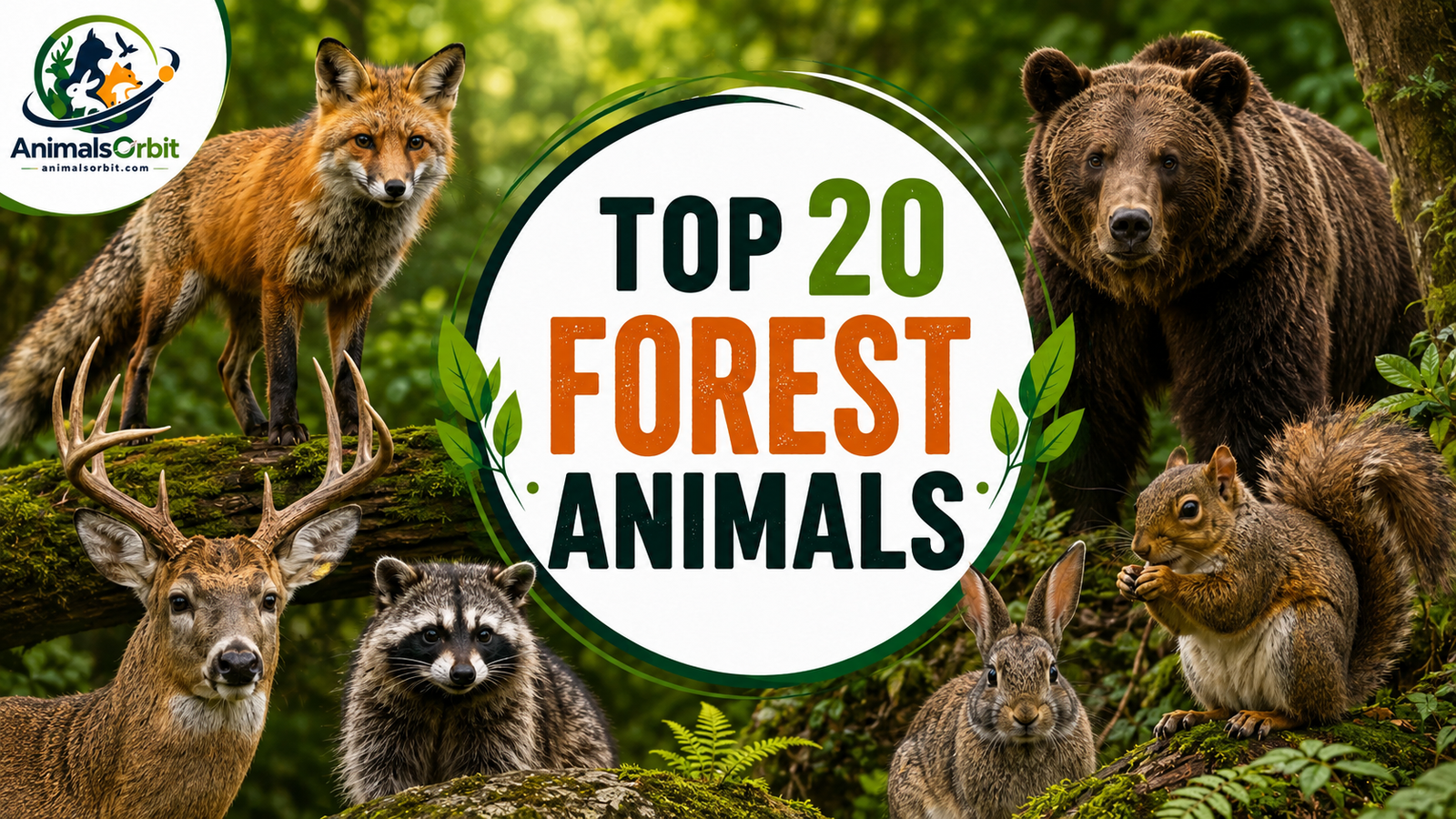
Top 20 Forest Animals: Amazing Animals That Live in Forests
Forests are some of the most important habitats on Earth. From tropical rainforests to cold northern woodlands, these ecosystems provide food, shelter, and breeding grounds for thousands of species. Large mammals, colorful birds, reptiles, insects, and tree-dwelling animals all depend on forest habitats for survival.
The term forest animals covers a huge variety of wildlife. Some species spend their entire lives among trees, while others move between forests, grasslands, rivers, and mountains. We explore 20 fascinating animals that live in forests. You will learn about their appearance, habitat, diet, behavior, and some of the features that make each species unique.
List of Forest Animals
Here are 20 amazing forest animals pictures and list featured in this article:
- African Forest Elephant
- American Black Bear
- Gorilla
- Tiger
- Orangutan
- Wolf
- Moose
- Okapi
- Clouded Leopard
- Sun Bear
- Wild Boar
- Brown-Throated Sloth
- Harpy Eagle
- Great Hornbill
- Proboscis Monkey
- Sugar Glider
- Southern Cassowary
- South American Tapir
- Raccoon
- North American Porcupine
African Forest Elephant
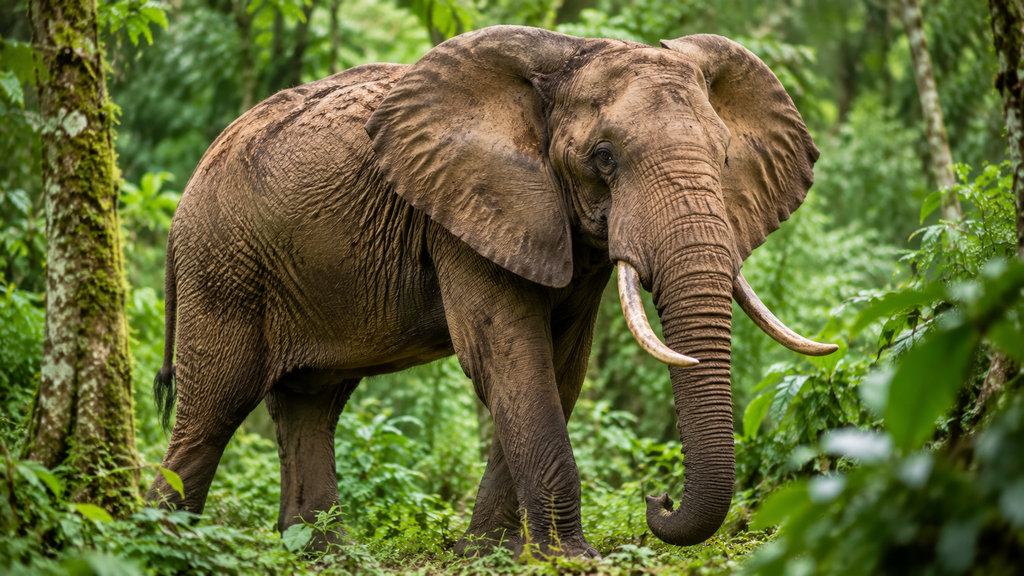
Scientific Name: Loxodonta cyclotis
Type: Mammal
Habitat: Tropical forests of Central and West Africa
Diet: Fruits, leaves, bark, roots, and other vegetation
The African forest elephant is one of the most impressive forest mammals in the world. It is smaller and more compact than the African bush elephant, which helps it move through dense vegetation.
These elephants spend much of their time searching for fruits, leaves, bark, and other plant foods. While feeding, they can disturb vegetation and create paths through thick forests.
One of their most important ecological roles is helping forests regenerate. Seeds from the fruits they eat can travel through their digestive system and later grow in different parts of the forest.
American Black Bear
Scientific Name: Ursus americanus
Type: Mammal
Habitat: Forests, mountains, swamps, and woodland areas of North America
Diet: Plants, berries, nuts, insects, fish, and small animals
The American black bear is a highly adaptable member of wild forest animals. Despite its name, its fur can range from black to brown and even lighter shades.
Black bears are excellent climbers, especially when they are young. Forests provide them with plenty of berries, nuts, insects, fruits, and other foods. Their diet changes according to the season. During warmer months, they can spend hours searching for food to build up energy for winter.
Some populations in colder regions enter a long period of winter dormancy. Their ability to adapt to different environments has helped them survive across a large part of North America.
Gorilla
Scientific Name: Gorilla gorilla and Gorilla beringei
Type: Mammal
Habitat: Tropical forests of Central Africa
Diet: Leaves, stems, fruits, shoots, and other vegetation
Gorillas are among the largest animals that live in forests. They are powerful primates, but their diet is mainly made up of plant material. Gorillas usually live in social groups led by a dominant adult male known as a silverback. The group may include females, young gorillas, and younger males.
Dense forest vegetation provides them with food and cover. Their strong arms and large hands help them move through vegetation and gather food. Gorillas are fascinating temperate forest animals that can also walk upright for short periods. Learn more about animals that walk on two legs and discover how different species use bipedal movement.
Tiger
Scientific Name: Panthera tigris
Type: Mammal
Habitat: Forests, grasslands, wetlands, and other habitats across Asia
Diet: Deer, wild pigs, and other large prey
The tiger is one of the most famous deciduous forest animals. Its orange coat and dark stripes provide excellent camouflage among grasses, shadows, and vegetation. Tigers are solitary hunters. Instead of chasing prey over long distances, they often use cover to get close before making a powerful attack.
Different tiger populations live in different environments, including tropical forests and colder woodland regions. They play an important role in maintaining healthy ecosystems by controlling populations of large herbivores. Forest destruction, prey loss, and illegal hunting remain major threats to wild tigers.
Orangutan
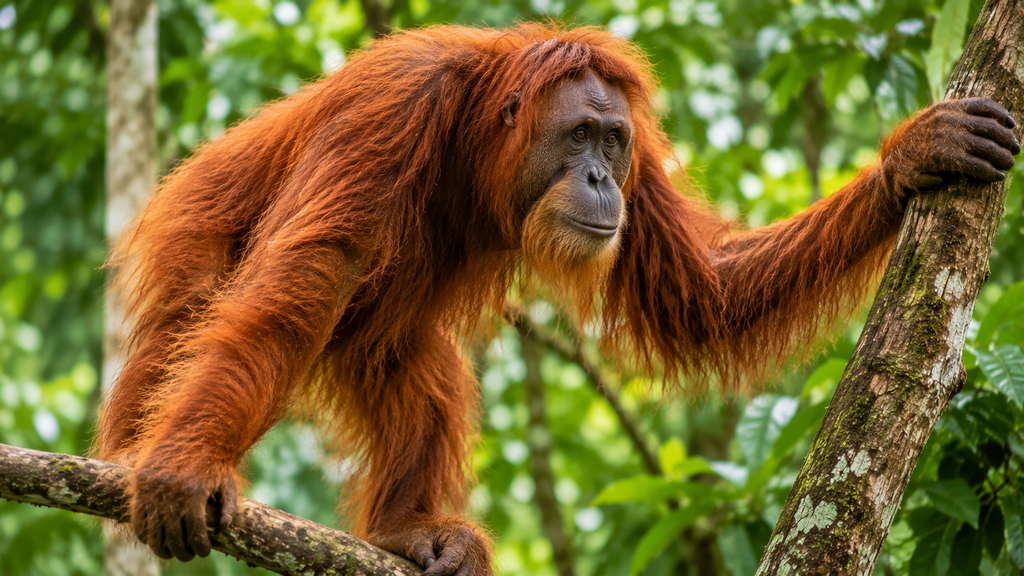
Scientific Name: Pongo abelii, Pongo pygmaeus, and Pongo tapanuliensis
Type: Mammal
Habitat: Tropical forests of Sumatra and Borneo
Diet: Mainly fruits, plus leaves, insects, bark, and other foods
Orangutans are among the most tree-dependent rain forest animals. Their long arms and strong hands allow them to move between branches with impressive control.
Most of their lives are spent high above the forest floor. Fruits are an important part of their diet, although they also eat leaves, insects, bark, and other available foods.
Their movement through the canopy helps them reach food that many ground-dwelling animals cannot access. The destruction and fragmentation of tropical forests have made survival increasingly difficult for orangutans.
Wolf
Scientific Name: Canis lupus
Type: Mammal
Habitat: Forests, grasslands, mountains, and tundra
Diet: Deer, elk, smaller mammals, and carrion
Wolves are highly social forest mammals known for living and hunting in packs. Although they can survive in many habitats, forests provide excellent cover and access to prey. A wolf pack usually consists of related individuals that cooperate when raising young and searching for food.
Wolves have powerful senses of smell and hearing. They can travel long distances while looking for prey and may hunt animals much larger than themselves when working as a group. As predators, wolves help regulate populations of herbivores and contribute to the balance of forest ecosystems.
Moose
Scientific Name: Alces alces
Type: Mammal
Habitat: Boreal and temperate forests of the Northern Hemisphere
Diet: Leaves, twigs, aquatic plants, and other vegetation
The moose is the largest member of the deer family. Its huge body, long face, and impressive antlers make it one of the easiest woodland animals to recognize. Moose prefer areas where forests are mixed with wetlands, lakes, or streams. They feed on leaves, young branches, aquatic plants, and other vegetation.
Adult males grow large antlers that are used during the breeding season. After the season ends, these antlers are shed and later grow again. Their large size allows them to browse on vegetation that smaller herbivores cannot easily reach.
Okapi
Scientific Name: Okapia johnstoni
Type: Mammal
Habitat: Dense rainforests of the Democratic Republic of the Congo
Diet: Leaves, buds, grasses, ferns, fruits, and other vegetation
The okapi is one of the most unusual-looking boreal forest animals. It has a dark brown body and zebra-like stripes on its legs and rear. Despite its appearance, the okapi is actually closely related to the giraffe. It lives deep inside dense forests, where its unusual markings help break up its outline and make it harder to spot.
The okapi mainly feeds on plants and uses its long tongue to reach leaves and other vegetation. Because it depends heavily on intact rainforest habitat, forest destruction is one of its biggest threats.
Clouded Leopard
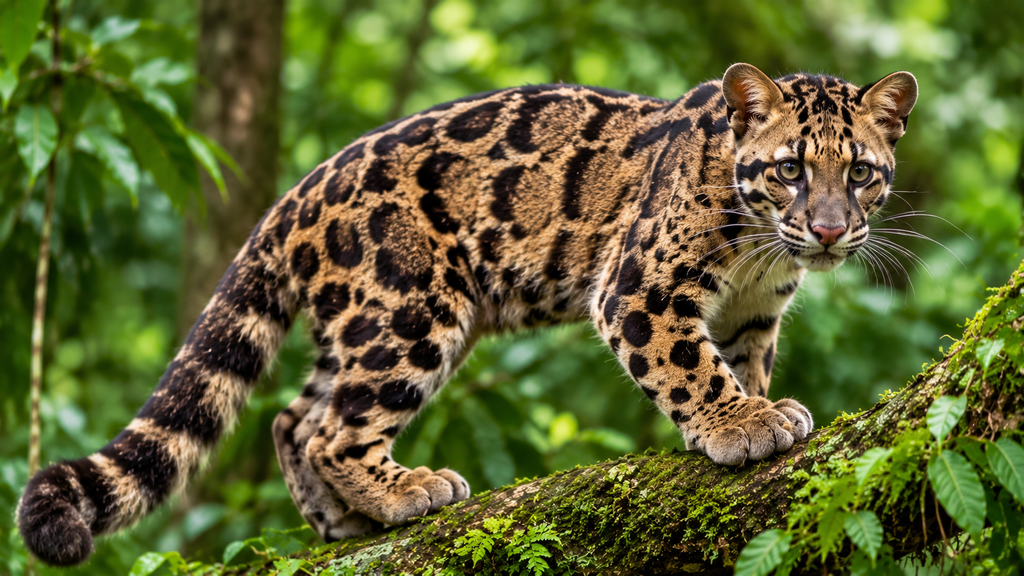
Scientific Name: Neofelis nebulosa
Type: Mammal
Habitat: Forests of South and Southeast Asia
Diet: Small and medium-sized mammals, birds, reptiles, and other prey
The clouded leopard is a secretive cat that spends much of its life in forest environments. Its coat is covered with large cloud-shaped markings that provide natural camouflage. This cat is an excellent climber. Its strong legs, long tail, and flexible ankles allow it to move through branches and even descend tree trunks headfirst.
Clouded leopards hunt a variety of prey and can take advantage of both ground and tree habitats. Their ability to remain hidden in dense vegetation makes them one of the more difficult forest predators to observe in the wild.
Sun Bear
Scientific Name: Helarctos malayanus
Type: Mammal
Habitat: Tropical forests of Southeast Asia
Diet: Fruits, insects, honey, larvae, and other foods
The sun bear is the smallest species of bear and is strongly associated with tropical forests. It has dark fur and a distinctive pale marking across its chest. Sun bears are excellent climbers and spend considerable time in trees. They use their powerful claws to open rotten wood and search for insects.
Their diet is flexible, making them successful coniferous forest animals. Honey, termites, beetle larvae, fruits, and other foods can all become part of their diet. Their forest habitat is threatened by logging, land conversion, and other human activities.
Wild Boar
Scientific Name: Sus scrofa
Type: Mammal
Habitat: Forests, grasslands, shrublands, and other habitats
Diet: Roots, fruits, insects, small animals, and plant material
Wild boars are tough and adaptable tropical forest animals found across large parts of Europe, Asia, and Africa. Their strong snouts allow them to dig through soil while searching for roots, insects, bulbs, and other food. They may also eat fruits, seeds, and small animals.
Female wild boars often live with their young in groups, while adult males are more commonly solitary. Because they can adapt to many environments and eat a wide range of foods, wild boars can survive in forests as well as landscapes changed by humans.
Brown-Throated Sloth
Scientific Name: Bradypus variegatus
Type: Mammal
Habitat: Tropical forests of Central and South America
Diet: Leaves, shoots, and other plant material
The brown-throated sloth is a slow-moving tree-dwelling animal that spends most of its life in the forest canopy. Its long claws help it hang securely from branches. Moving slowly allows the sloth to conserve energy while feeding on leaves.
Sloths have several adaptations for life in trees, including strong limbs and a body suited to hanging upside down. Their slow lifestyle does not mean they are defenseless. Staying high in the canopy and moving carefully helps them avoid many predators.
Harpy Eagle
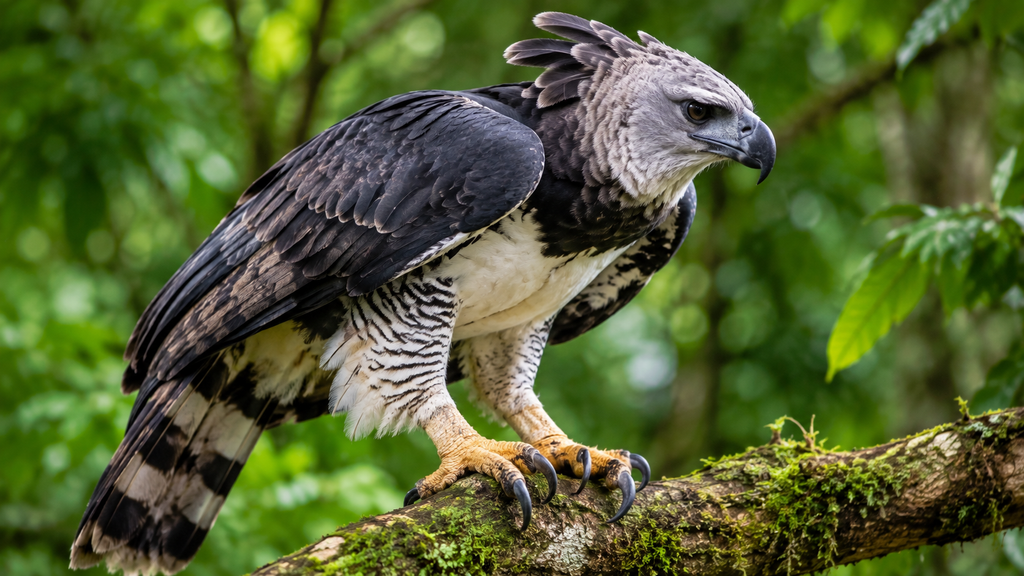
Scientific Name: Harpia harpyja
Type: Bird
Habitat: Tropical forests of Central and South America
Diet: Monkeys, sloths, birds, and other tree-dwelling animals
The harpy eagle is one of the most powerful forest birds. It has enormous talons and strong legs designed for capturing prey among trees. Unlike birds that rely on open landscapes for hunting, the harpy eagle is adapted to maneuver through forest canopies.
Its broad wings and powerful body allow it to move between trees while searching for prey. Because it depends on large areas of mature forest, habitat destruction can have a major effect on its populations.
Great Hornbill
Scientific Name: Buceros bicornis
Type: Bird
Habitat: Forests of South and Southeast Asia
Diet: Mainly fruits, plus insects and small animals
The great hornbill is a striking forest bird recognized by its enormous curved bill and colorful casque. It spends much of its time in trees and feeds heavily on fruits. It may also eat insects and small vertebrates when available.
Its large bill helps it reach and handle food in the canopy. By eating and later dispersing seeds, fruit-eating hornbills can contribute to forest regeneration.The species is closely associated with mature forests containing large trees suitable for nesting.
Proboscis Monkey
Scientific Name: Nasalis larvatus
Type: Mammal
Habitat: Mangrove forests, river forests, and wetlands of Borneo
Diet: Leaves, fruits, seeds, and other plant material
The proboscis monkey is one of the most unusual-looking animals that live in forests. Adult males have an especially large, prominent nose. The species is found naturally on the island of Borneo, where loss of suitable wetland and forest habitat remains a concern.
These monkeys are strongly connected to forest habitats near water. They are good swimmers and may enter rivers when escaping predators or moving between areas. Their diet consists mainly of plant foods, including leaves and fruits.
Sugar Glider
Scientific Name: Petaurus breviceps
Type: Mammal
Habitat: Forests and woodlands of Australia and nearby regions
Diet: Tree sap, nectar, fruits, insects, and other foods
The sugar glider is a tiny nocturnal forest animal famous for its ability to glide between trees. A thin membrane of skin stretches between its limbs and acts like a parachute or gliding surface. This allows the animal to travel from one tree to another without climbing down to the ground.
Sugar gliders are most active after dark. They search for tree sap, nectar, insects, and other foods during the night. Gliding is an efficient way for these small mammals to move through their forest habitat. Some amazon forest animals spend surprisingly long periods resting. Discover the animals that sleep the most and learn why these species need so much sleep
Southern Cassowary
Scientific Name: Casuarius casuarius
Type: Bird
Habitat: Tropical forests of northeastern Australia and New Guinea
Diet: Mainly fruits, plus insects and small animals
The southern cassowary is a large, flightless bird that lives in tropical forest environments. Its dark body, bright blue and red neck, and helmet-like casque make it highly distinctive.
Fruits make up a major part of its diet. As it travels through the forest and eats fruit, it can help spread seeds to different locations. This makes the cassowary an important part of its forest ecosystem.
South American Tapir
Scientific Name: Tapirus terrestris
Type: Mammal
Habitat: Tropical forests, wetlands, and grasslands of South America
Diet: Leaves, fruits, aquatic plants, and other vegetation
The South American tapir is a large herbivorous rainforest animal with a short, flexible nose that works almost like a miniature trunk. It uses this flexible snout to grab leaves, fruits, and other plant foods. Tapirs are often associated with forests near rivers and wetlands.
Despite their heavy bodies, they are capable swimmers and may enter water to escape danger or cool down. As fruit eaters, tapirs can also help move seeds around the forest, supporting plant regeneration.
Raccoon
Scientific Name: Procyon lotor
Type: Mammal
Habitat: Forests, wetlands, urban areas, and other habitats in North America
Diet: Fruits, insects, eggs, small animals, and other available foods
Raccoons are highly adaptable forest mammals with a recognizable black facial mask and ringed tail. They are mainly active at night and use their sensitive front paws while exploring their surroundings and handling food.
Although forests are part of their natural habitat, raccoons have adapted extremely well to human-dominated areas. They can find food in forests, wetlands, farms, suburbs, and cities. Their ability to eat many different foods is one of the main reasons they have such a broad range.
North American Porcupine
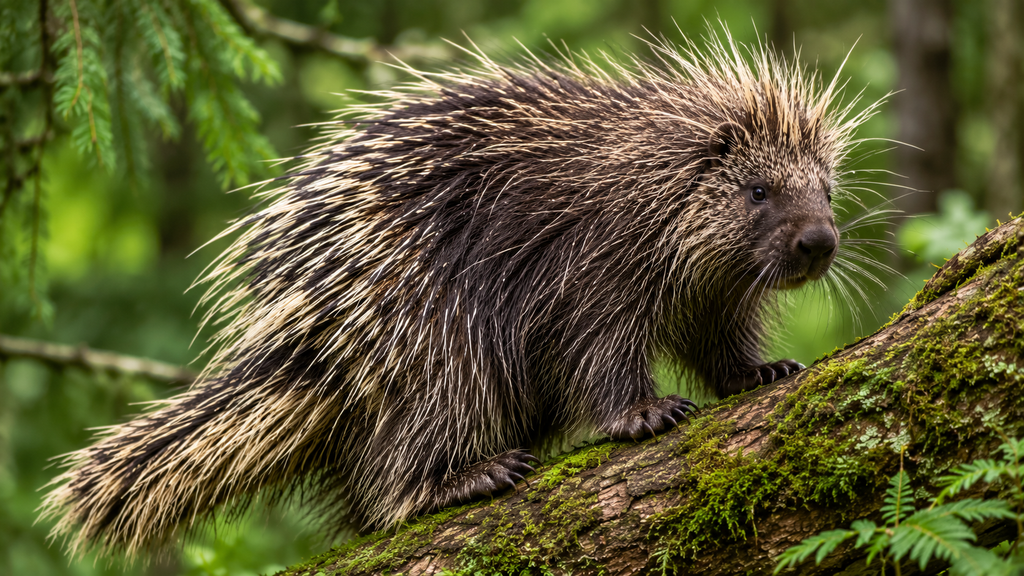
Scientific Name: Erethizon dorsatum
Type: Mammal
Habitat: Forests, woodlands, and rocky areas of North America
Diet: Leaves, bark, twigs, roots, and other vegetation
The North American porcupine is a slow-moving rodent that is well adapted to forest life. It can spend a significant amount of time in trees searching for food. Its most famous feature is its coat of sharp quills. These modified hairs provide protection against predators.
Porcupines mainly eat plant material such as bark, leaves, and twigs. Their strong claws help them climb trees and move around branches. Although they are not fast animals, their defensive quills make them difficult prey for many predators.
Read May Also: Top 15 Adorable Animals Like Hamsters From Around the World
Conclusion
Forests support an incredible variety of life, from enormous elephants and moose to tiny gliding mammals and colorful birds. These forest animals have developed different adaptations that help them find food, avoid predators, raise their young, and survive within their particular forest habitat.
Some, such as orangutans and sloths, spend much of their lives in trees, while animals like wolves and wild boars move mainly across the forest floor. Forest birds such as harpy eagles and great hornbills use the canopy in completely different ways.
Frequently Asked Questions
What Are Some Forest Animals Names?
Some common forest animals include tigers, gorillas, orangutans, wolves, bears, raccoons, moose, wild boars, and sloths.
What Kind Of Animals Live In The Forest?
Many types of animals live in forests, including mammals, birds, reptiles, amphibians, and insects. Different forests support different species depending on their climate and habitat.
What Is A Forest Habitat?
A forest habitat is a natural environment dominated by trees and other vegetation. It provides animals with food, water, shelter, and places to raise their young.
What Are Deciduous Forest Animals?
Deciduous forest animals are animals that live in deciduous forests, where many trees lose their leaves during fall and winter. Common examples include deer, foxes, raccoons, squirrels, rabbits, black bears, owls, and wild turkeys.
What Are Some Common Forest Animals?
Common forest animals include deer, bears, wolves, foxes, squirrels, raccoons, owls, woodpeckers, rabbits, and wild boars. The exact species depend on the type of forest and the region.
What are Some of the Cutest Forest Animals?
Some of the cutest forest animals are red pandas, fawns, hedgehogs, red squirrels, baby foxes, raccoons, chipmunks, dormice, and owlets. Their small size, big eyes, and fluffy fur make them popular favorites.