Top 20 Animals That Walk On Two Legs With Images and Facts
Animals that walk on two legs are known as bipedal animals. While humans are the most well-known example, many birds, mammals, and reptiles also use two legs for movement. Some species walk upright all the time, while others switch between two-legged and four-legged movement depending on the situation.
This article will unveil the top 20 Animals That Walk On Two Legs, featuring stunning visuals and intriguing insights into their behaviors and habitats. Join us as we explore how evolution has shaped these unique species, offering you a new perspective on the animal kingdom.
List of Top 20 Animals That Walk On Two Legs
When we think of 2 legged animals, many of us instantly picture humans or perhaps a few birds. The diverse list of creatures capable of bipedal locomotion is both fascinating and surprising.
list of animals that walk on two legs that walk on two legs are also nocturnal creatures. Species such as penguins, ostriches, and certain birds rely on their excellent vision and balance to survive in challenging environments.
Here are 20 animals that can walk on two legs (bipedal animals) ;
- Kangaroo
- Basilisk Lizard
- Wallaby
- Ostrich
- Emu
- Gorilla
- Penguin
- Chicken
- Turkey
- Chimpanzee
- Flamingo
- Duck
- Kangaroo Rat
- Gibbon
- Goose
- Parrot
- Orangutan
- Human
- Meerkat
- Cassowary
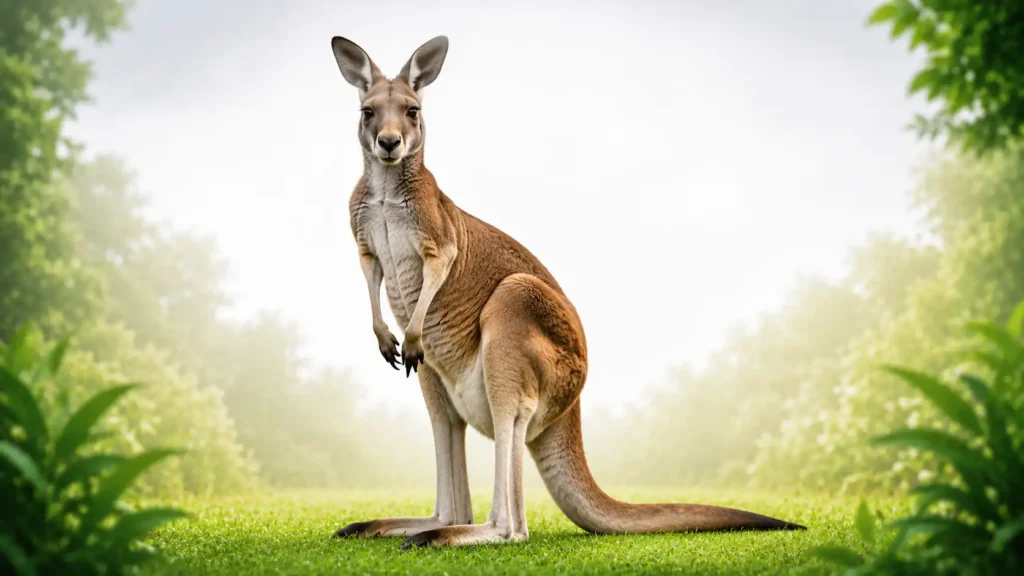
Kangaroo
- Scientific name: Macropus
- Class: Mammalia
- Diet: Herbivore
Kangaroos are fascinating marsupials easily recognized by their powerful hind legs and strong tails. Found primarily in the diverse landscapes of Australia, these unique animals thrive in various habitats, from open grasslands to dense forests.
They are social creatures, often seen bounding in groups or “mobs,” showcasing their playful behavior and agility. With large, intelligent eyes and a soft coat, kangaroos exude an undeniable charm.
These remarkable animals have evolved specific adaptations that aid their survival. Their strong hind legs allow them to cover vast distances effortlessly, making travel efficient in search of food or water.
Kangaroos primarily graze on grasses and foliage, relying on their specialized digestive systems to process fibrous plant material. Their powerful legs help them maintain a high energy-efficient mode of locomotion while bounding swiftly away from predators.
Here are some fun facts about kangaroos:
- They can leap up to three times their own height, reaching heights of over 10 feet in a single bound.
- Kangaroos are the only large animals that stand up use hopping as their primary means of movement.
- Not only do they have strong legs, but their tails serve as a third limb for balance while they hop.
- Baby kangaroos, called joeys, are born tiny and crawl into their mother’s pouch to continue developing.
- Adult kangaroos can weigh between 50 to 200 pounds, depending on the species and habitat.
- Their unique locomotion allows them to cover up to 25 feet in a single leap!
Basilisk Lizard
- Scientific name: Basiliscus basiliscus
- Class: Reptilia
- Diet: Omnivore
The Basilisk Lizard, often dubbed the “Jesus Lizard,” showcases a striking appearance with vibrant green scales and a distinctive crest along its back. Found primarily in the lush, tropical rainforests of Central and South America, this remarkable reptile is known for its unique ability to not just navigate but also sprint across the water’s surface.
Its behavior is nothing short of fascinating, as it utilizes its powerful legs and specialized toes to “walk” on two legs for short distances, creating the illusion of dancing on water.
This fascinating reptile has evolved a range of adaptations that make it a master of its environment. With its remarkable climbing abilities, the Basilisk Lizard can swiftly scale trees to escape predators or capture prey.
Its omnivorous diet often consists of insects, fruits, and leaves, while the flexible wrists allow it to navigate with agility. This adaptability helps it thrive in its natural habitat, blending into the rainforest’s vibrancy.
Fun Facts:
- The Basilisk Lizard can run about 15 feet per second on water, making it one of the fastest creatures in its element.
- Its name comes from the mythical creature, the Basilisk, said to kill with a mere glance.
- These lizards can grow up to two feet long, including their tail.
- During mating season, males exhibit vibrant colors as part of their courtship rituals.
- Basilisk Lizards have excellent vision, which aids in spotting both predators and prey from a distance.
- They can hold their breath underwater for up to 30 minutes, using this skill to evade threats.
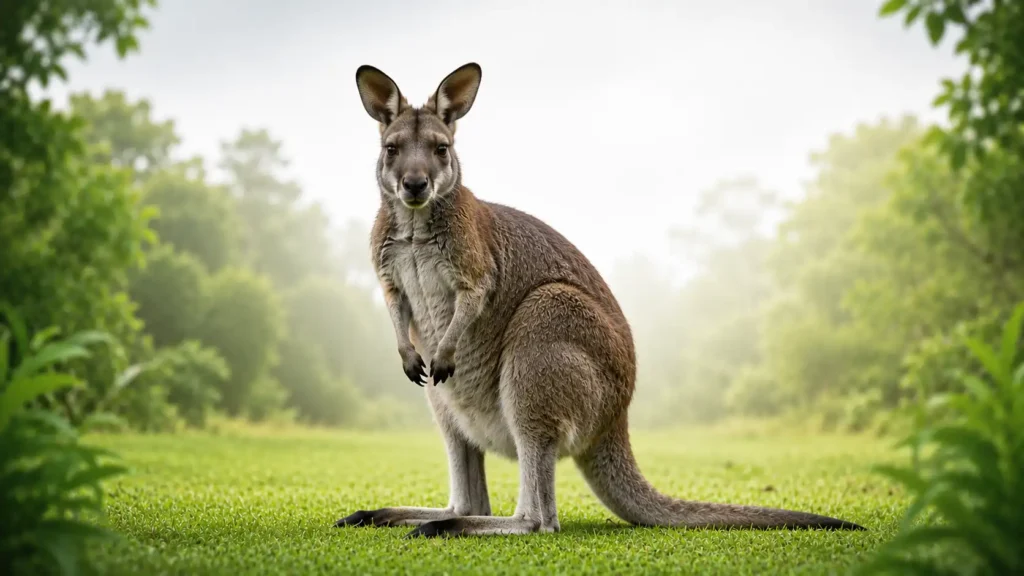
Wallaby
- Class: Mammalia
- Diet: Herbivore
The wallaby, a delightful member of the marsupial family, showcases remarkable agility and an endearing appearance. With its strong hind legs and robust tail, this creature is often spotted in the coastal forests and grasslands of Australia and surrounding islands. Their warm, brown and gray fur blends seamlessly with their natural habitat, providing camouflage from predators.
Wallabies are social animals, often seen hopping together in small groups while grazing on grass and leaves. They exhibit a charming blend of curiosity and caution, making them fascinating subjects for wildlife enthusiasts.
These unique marsupials have adapted wonderfully to their environment. Wallabies possess powerful hind legs that allow them to travel swiftly across rugged terrain. Their impressive balance and agility are not just for show; they’re vital for evading predators.
Unlike many other animals, wallabies have flexible wrists, enabling them to navigate trees and rocky outcrops with ease. Their herbivorous diet primarily consists of grasses and leaves, which adapt to their energy needs, ensuring they thrive in their natural settings.
- Wallabies are known for their strong social bonds and often hop in pairs or small groups.
- Their strong tails offer balance while they move swiftly across uneven ground.
- There are several species of wallabies, each adapted to specific environments.
- Wallabies can cover up to three times their body length in a single leap!
- Their unique pouch is designed for carrying young joeys, keeping them safe as they grow.
- Unlike their larger cousin, the kangaroo, wallabies maintain a more compact size, which helps in navigating dense underbrush.
Ostrich
- Scientific name: Struthio camelus
- Class: Aves
- Diet: Omnivore
The ostrich is an impressive bird, renowned for its long neck and striking black feathers, primarily found in the savannahs and woodlands of Africa. Standing up to 9 feet tall, it’s the largest living bird and has a unique blend of grace and power. With powerful legs designed for running, ostriches can sprint at speeds of up to 45 miles per hour.
Their strong visible features make them stand out, particularly during courtship displays. Typically, they prefer open areas where they can spot predators from a distance, showcasing their keen eyesight.
With a diet that includes herbs, seeds, and even insects, they are true omnivores, and their exceptional vision helps them forage effectively across the vast landscapes they inhabit. Their unique social structures allow them to thrive in groups, offering additional protection.
Fun Facts:
- Ostriches can kick with such force that they can defend themselves against lions.
- Unlike most birds, they cannot fly, but their wings help with balance while running.
- They have the largest eyes of any land vertebrate, offering extraordinary vision.
- An ostrich’s eye is bigger than its brain!
- Their feathers are not only beautiful but also lightweight, aiding in running speed.
Emu
- Scientific name: Dromaius novaehollandiae
- Class: Aves
- Diet: Omnivore
The emu is an iconic flightless bird known for its long neck and towering stature, reaching up to 6.5 feet. Native to Australia, these curious creatures roam open plains, eucalyptus forests, and scrublands, exhibiting a unique hopping locomotion, especially when startled. Emus are social animals, often seen in small groups.
They are characterized by their long, sturdy legs and soft, shaggy feathers that vary from rich brown to gray, allowing them to blend seamlessly into their natural environment.
Adapted for survival, emus possess strong legs that enable them to sprint at impressive speeds of up to 30 miles per hour. Flamingos, ostriches, and emus, are some famous skinny animals and thsese animals are also famous for walking on two legs.
Fun Facts
- Emus are the second-largest birds in the world after ostriches.
- They have excellent eyesight and can detect motion from a great distance.
- Male emus take on the responsibility of incubating eggs and raising chicks.
- Unlike many birds, emus have three toes on each foot, which aids in their unique walking style.
- Their feathers are not only eco-friendly but also highly insulating, making them resilient to various weather conditions.
- Emus can travel long distances in search of food, demonstrating their adaptability to Australia’s diverse landscapes.
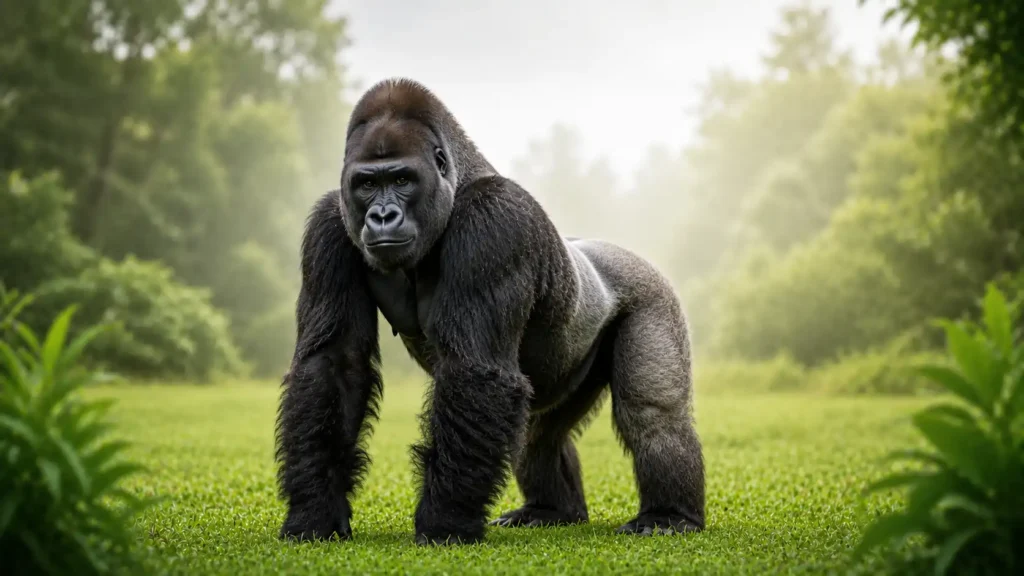
Gorilla
- Class: Mammalia
- Diet: Herbivore
Gorillas are magnificent creatures that exude strength and intelligence. Their powerful bodies are covered in thick, dark fur, and they usually reside in the dense forests of Africa, where they form tight-knit family groups.
Social and expressive, these gentle giants display a range of emotions, from playful antics with their young to serious displays of dominance within their troop hierarchy. They exhibit an impressive balance of strength and gentleness, showcasing a unique combination of wild instincts and social behaviors.
Adapted to a life among towering trees, gorillas possess remarkable climbing abilities and are known for their impressive arm span. Their diet primarily consists of fibrous plants and fruits, which necessitates a strong digestive system adept at processing this bamboo-based fare.
With flexible wrists that aid in climbing and navigating their environment, gorillas utilize survival strategies that include forging strong social bonds and remaining vigilant to potential threats.
Fun Facts:
- Gorillas can communicate through a wide array of vocalizations, including grunts, roars, and chest beats.
- They can walk bipedally for short distances, though they predominantly knuckle-walk.
- Gorillas share about 98% of their DNA with humans, making them one of our closest relatives in the animal kingdom.
- Adult male gorillas, known as silverbacks, are responsible for protecting the group and making decisions for the troop.
- Each gorilla has unique nose prints, much like human fingerprints.
- Some gorillas have been observed using tools, such as sticks, to pull down leaves or reach higher fruits.
Penguin
- Scientific name: Spheniscidae
- Class: Aves
- Diet: Carnivore
Penguins are fascinating creatures that stand out due to their unique appearance and behavior. Clad in black and white feathers, they have a sleek shape that allows them to glide effortlessly through icy waters.
These flightless birds thrive in the southern hemisphere, particularly in Antarctica and surrounding regions, where they form colonies on rocky shores and snow-covered landscapes. Social animals by nature exhibit playful behavior, often seen sliding on ice or diving deep to catch fish.
Adapted for life in extreme conditions, penguins possess several remarkable survival strategies. Their bodies are streamlined, allowing them to swim with agility as they hunt for fish and squid, their primary food sources.
Equipped with dense feathers to insulate against the cold, they also have a unique layer of blubber beneath their skin that provides additional warmth. Ingenious in their approach to survival, penguins huddle together during storms to conserve heat and support each other.
Fun Facts
- Penguins can dive to impressive depths, reaching over 1,500 feet while foraging for food.
- They have the ability to hold their breath for up to 20 minutes underwater.
- Each species has distinct vocalizations, which help them identify and communicate with mates and chicks.
- King penguins can weigh up to 35 kilograms, making them one of the largest species.
- Unlike many birds, penguins use their wings for swimming rather than flying, showcasing their adaptability and unique evolutionary path.
- Adorable baby penguins, called chicks, are covered in soft down feathers and remain dependent on their parents for food and warmth for several months.
Chicken
- Scientific name: Gallus gallus domesticus
- Class: Aves
- Diet: Omnivore
Chickens are fascinating creatures that display a range of colors and feather patterns. Typically found on farms and in backyards, they thrive in a variety of habitats, from grassy fields to wooded areas.
These birds have evolved distinct traits that make them successful in their environments. Chickens possess a unique skeletal structure that allows them to walk on two legs, a characteristic not commonly seen in many other birds.
Their keen vision helps them spot predators, while their foraging skills enable them to enjoy a diverse diet, consuming seeds, insects, and even small plants.
Fun Facts:
- Chickens can recognize over 100 different faces, both animal and human.
- Each hen has a distinct cluck that helps identify her among the flock.
- They experience REM sleep, just like humans, which is vital for their mental health.
- Chickens can run at speeds up to 9 miles per hour, helping them evade predators.
- The world’s oldest chicken lived to be 16 years old, showcasing their potential lifespan.
- Chickens have been domesticated for over 8,000 years, making them one of the earliest farmed animals.
Turkey
- Scientific name: Meleagris gallopavo
- Class: Aves
- Diet: Omnivore
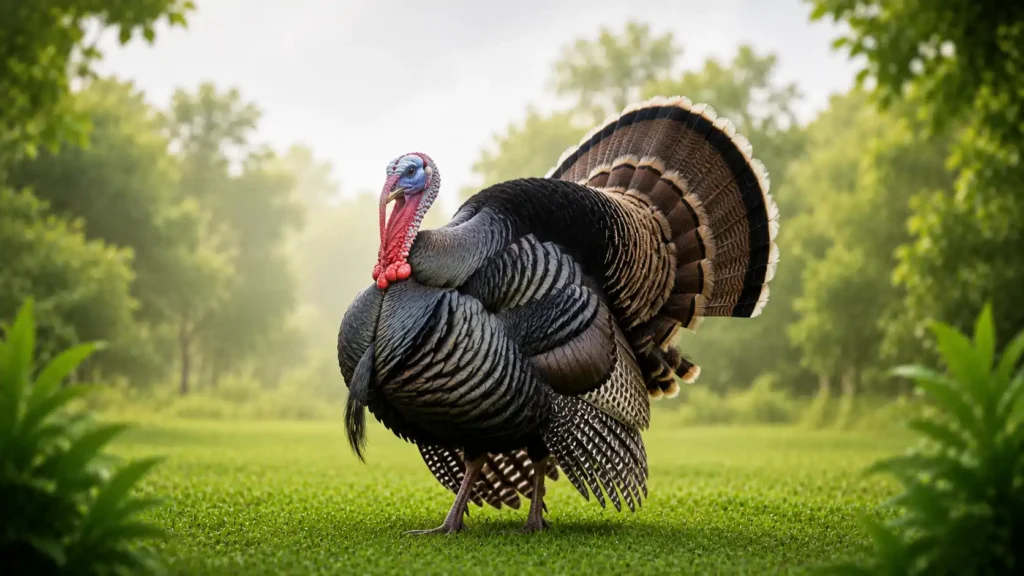
The turkey, a fascinating creature known for its vibrant plumage, is commonly found in forests, grasslands, and near agricultural areas across North America. These birds are often social, displaying an intricate mix of behaviors ranging from foraging in flocks to establishing dominance through elaborate displays, such as puffing up their feathers.
They boast a unique ability to walk on two legs, enabling them to cover ground effectively while foraging. Turkeys have evolved various adaptations that aid in their survival. Their strong legs allow them to run at impressive speeds, a crucial trait when evading predators.
Their diet is diverse, primarily consisting of seeds, nuts, and occasional insects, reflecting their omnivorous nature. With their keen eyesight and awareness of their surroundings, turkeys navigate their habitats with agility, often roosting in trees to escape threats at night.
Fun Facts:
- Turkeys can fly short distances, reaching speeds up to 55 miles per hour!
- Males, known as toms, can weigh more than 25 pounds, while females, called hens, are typically smaller.
- Turkeys communicate through a range of calls, including gobbles and clucks, which serve different purposes, from attracting mates to warning others of danger.
- They have an impressive field of vision, thanks to their uniquely positioned eyes, which can spot potential threats from various angles.
- Wild turkeys were once nearly extinct but successfully rebounded due to wildlife conservation efforts.
- The turkey is not just a holiday centerpiece; it plays a vital role in its ecosystem by dispersing seeds and contributing to the food chain.
Chimpanzee
- Scientific name: Pan troglodytes
- Class: Mammalia
- Diet: Omnivore
Chimpanzees, with their expressive faces and agile bodies, are fascinating primates that inhabit the lush forests of central and West Africa. They are intelligent creatures known for their complex social structures and tool-making abilities.
Standing upright on two legs is not only a fascinating behavior but also an essential skill they employ while foraging or displaying dominance within their groups.
Adapted for both life in trees and on the ground, chimpanzees possess incredible climbing abilities thanks to their long arms and strong muscles. Their diet is primarily omnivorous, often consisting of fruits, leaves, and occasionally insects.
They have flexible wrists that allow them intricate movements, and their social behaviors, such as cooperative hunting, showcase remarkable survival strategies that enhance their existence in the wild.
Fun Facts:
- Chimpanzees share about 98% of their DNA with humans, making them our closest living relatives.
- They can communicate through a variety of vocalizations, gestures, and facial expressions.
- In the wild, chimpanzees can live up to 33 years, while those in captivity may reach over 50 years.
- They have been observed using tools, like sticks to fish for termites or stones to crack open nuts.
- Chimpanzees display a wide range of emotions, from joy to empathy and even grief.
- These social animals often engage in grooming, strengthening bonds within their communities.
Flamingo
- Scientific name: Phoenicopterus
- Class: Aves
- Diet: Omnivore
Flamingos are striking birds known for their vibrant pink feathers and long, elegant necks. They thrive in shallow wetlands, wading through water in search of food, often seen in large, social groups.
These fascinating creatures take on a unique stance, standing on two legs for extended periods, a behavior that surprises many wildlife enthusiasts. With their long legs and curved necks, flamingos present a graceful silhouette against the backdrop of wetlands.
Their adaptations for survival are remarkable. Flamingos have specialized filtering beaks that allow them to sift through mud for crustaceans and algae.
These birds are also equipped with powerful legs that enable them to wade into deeper waters where food may be abundant. Their bone structure and respiratory systems are designed to support long periods of standing and walking on two legs, making them adept at navigating their watery environments.
Fun Facts:
- Flamingos can be found on every continent except Antarctica.
- Their iconic pink color comes from carotenoids in their diet, particularly from algae and shrimp.
- A group of flamingos is called a “flamboyance,” which fits their colorful personalities perfectly.
- They can live for over 30 years in the wild, maintaining their vibrant plumage with a proper diet.
- Interestingly, flamingos perform a synchronized courtship dance, which is vital for attracting mates.
- They are social birds, often forming lifelong bonds with their partners.
Duck
- Class: Aves
- Diet: Omnivore
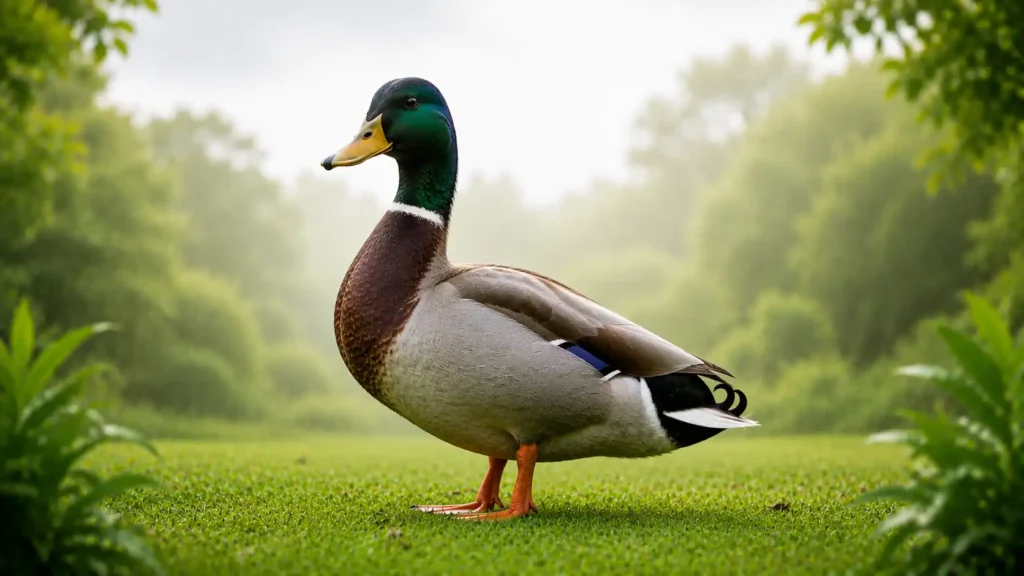
Ducks, known for their distinctive waddling gait, are fascinating creatures that often grace our ponds and lakes. With their vibrant feathers, webbed feet, and rounded bodies, these birds can be spotted in diverse habitats ranging from tranquil wetlands to bustling city parks.
Adapted to a semi-aquatic lifestyle, ducks possess strong, flexible legs that allow them to walk, swim, and even dive effectively. Their unique feeding habits include dabbling and diving, often foraging for aquatic plants, insects, and small fish.
These adaptations enable ducks to thrive in various environments, using their keen senses to locate food and evade predators.
Fun Facts
- Ducks are known to be social animals, often forming large flocks that provide safety in numbers.
- Many species are migratory, traveling thousands of miles between breeding and wintering grounds.
- They can communicate through a range of vocalizations, from quacks to whistles.
- Ducks have waterproof feathers thanks to an oily substance secreted from a gland near their tails.
- Their webbed feet make them proficient swimmers and excellent at navigating through marshy terrains.
- Ducks have a unique way of sleeping; they often rest one eye open to stay alert for predators.
Kangaroo Rat
The kangaroo rat is a fascinating creature, often overlooked in the desert landscape it calls home. With its large ears and powerful hind legs, this small rodent stands out not just for its appearance, but also for its remarkable ability to navigate the harsh terrain.
Found primarily in arid regions of North America, these animals are predominantly nocturnal, coming alive under the cover of night to forage for seeds and other plant materials. Their unique hopping gait allows them to cover ground quickly while minimizing the risk of heat exposure during the day.
Adapted to thrive in environments with limited water, kangaroo rats have developed incredible survival skills. They possess highly efficient kidneys that extract moisture from food, enabling them to go long periods without drinking water.
Their strong hind legs are built for impressive leaps, allowing them to escape predators swiftly. Their keen sense of hearing helps them detect threats from a distance, making them adept at avoiding danger.
Fun Facts:
- They can jump up to three feet in a single bound, thanks to their powerful legs.
- Kangaroo rats have cheek pouches to store food, allowing them to transport it back to their burrows safely.
- These creatures do not drink water; instead, they extract hydration from the seeds they consume.
- Their soft, fur-covered feet help them move silently across the desert floor, evading predators.
- Kangaroo rats communicate through a series of chirps and footdrumming sounds, conveying messages without the need for sight.
- Due to their efficient adaptation to their environment, they can be found in some of the most inhospitable places on Earth.
Gibbon
- Scientific name: Hylobatidae
- Class: Mammalia
- Diet: Omnivore
Gibbons, often classified as lesser apes, are remarkable for their unique blend of agility and charm. With their distinct long arms and slender bodies, these creatures gracefully dominate the tree canopies of Southeast Asia.
Living in lush tropical forests, gibbons thrive in family groups, showcasing fascinating social bonds and playful behaviors that highlight their intelligent nature. Their ingenious adaptations allow them to navigate their arboreal homes effortlessly.
Their flexible wrists and strong shoulders facilitate this acrobatic maneuvering, while a diet rich in fruits and leaves helps them maintain the energy needed for their active lifestyle. These adaptations play a crucial role in their survival, allowing them to evade predators and seek out food in the diverse jungle ecosystem.
Fun Facts:
- Gibbons are known as “the singing apes,” as their vocalizations can travel over long distances, helping them communicate with family members.
- They can leap distances of up to 50 feet between branches, showcasing unmatched agility among mammals.
- Unlike many other primates, gibbons primarily move around using their arms rather than walking on four limbs.
- Their brain-to-body ratio is comparable to that of great apes, indicating high intelligence and problem-solving skills.
- Gibbons are monogamous, often forming strong pair bonds that last for life.
- They play an essential role in their ecosystem by dispersing seeds, aiding in forest regeneration.
Geese
- Scientific name: Hylobatidae
- Class: Mammalia
- Diet: Omnivore
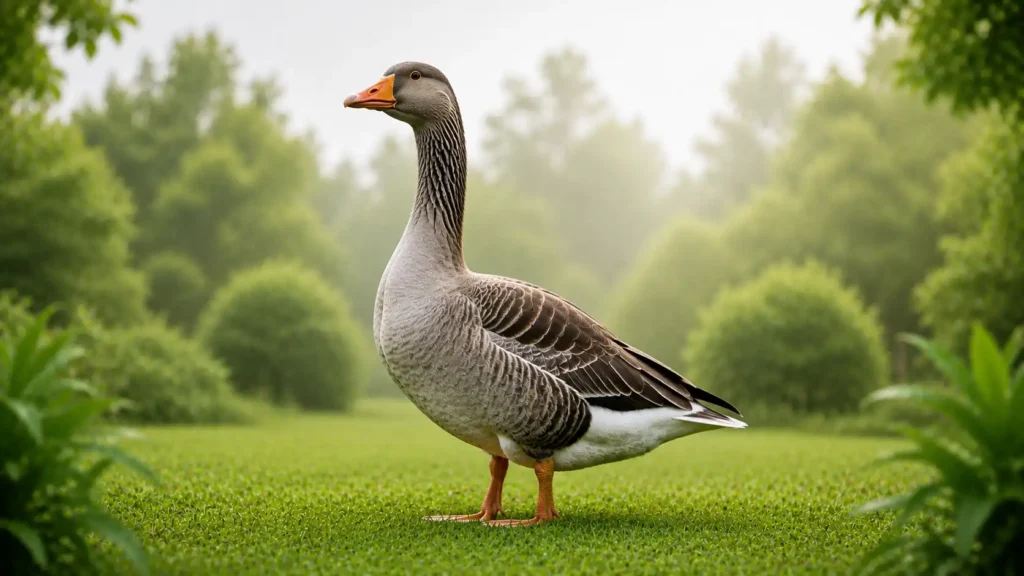
When we think of are there any animals that walk on two legs, geese often come to mind. These charming waterfowl sport sleek bodies covered in feathers, with long necks and distinctive honking calls. Typically found near ponds, lakes, and rivers, geese are social creatures that thrive in flocks.
Their behavior ranges from raucous chatter to graceful swimming, all while showcasing remarkable adaptability to various habitats .Geese have evolved several fascinating adaptations. With powerful legs designed for both swimming and walking, they move seamlessly on land and in water.
Their omnivorous diet consists mainly of grass, seeds, and aquatic plants, allowing them to forage effectively in diverse environments. Notably, geese possess strong flight muscles, which support their migratory habits, enabling them to travel great distances in search of food and suitable nesting grounds.
Fun Facts:
- Geese can recognize their companions and form lifelong bonds with their mates.
- They have excellent vision, allowing them to spot potential predators from afar.
- Some species of geese can fly at altitudes of over 29,000 feet.
- Their honking is a form of communication that helps maintain group cohesion.
- Geese molt their feathers in late summer, becoming flightless for a short period.
- When nesting, female geese will fiercely defend their eggs and young goslings from threats.
Parrot
- Scientific name: Psittaciformes
- Class: Aves
- Diet: Herbivore
Parrots, a vibrant and intelligent group of birds, are known for their striking plumage and exceptional social behaviors. Typically found in warm, tropical environments like rainforests, these colorful creatures have unique personalities that shine through in their playful antics and vocalizations.
With strong, curved beaks designed for cracking seeds, and zygodactyl feet enabling them to grasp and climb, parrots truly showcase nature’s creativity. Their charming nature often leads to deep bonds with humans, making them popular pets worldwide.
To thrive in their lush habitats, parrots exhibit fascinating adaptations. Their keen eyesight and ability to navigate canopies allow them to locate their primary food source, bamboo and fruits while their flexible wrists help them maintain dexterity as they maneuver through branches.
This exceptional climbing ability not only aids in foraging but also provides protection from ground predators. Their social groups enhance their survival, allowing them to communicate warnings and find food more efficiently.
Fun Facts
- Many parrots are capable of mimicking human speech, adding to their allure as companions.
- The African Grey Parrot is renowned for its extraordinary cognitive skills, often solving complex puzzles.
- Some species, like the Kea, thrive in snowy environments and demonstrate playful behavior akin to that of children.
- The Macaw can live up to 50 years in captivity, showcasing their long-term companionship potential.
- Parrots often use tools, like twigs, to extract seeds from tough fruits, highlighting their intelligent problem-solving skills.
- These birds display complex social structures, often forming lifelong bonds with mates and engaging in communal activities.
Orangutan
- Class: Mammalia
- Diet: Omnivore
Orangutans are fascinating creatures, often recognized for their striking red fur and intelligent expressions. These great apes primarily inhabit the dense rainforests of Borneo and Sumatra, where they swing gracefully from branch to branch, showcasing their remarkable adaptations to arboreal life.
One of the orangutan’s key adaptations is their incredible climbing ability, thanks to their long arms and flexible wrists. They thrive on a diet predominantly composed of fruits, especially ripe figs, but their omnivorous nature allows them to consume leaves, insects, and even small vertebrates when necessary.
Fun Facts
- Orangutans can walk on two legs for short distances, especially when they need to carry food or navigate obstacles.
- They are solitary animals, typically spending most of their time alone or with their mothers and offspring.
- A group of orangutans is known as a “congress,” reflecting their occasional social interactions.
- Their intelligence is comparable to that of young children, showcasing problem-solving skills that amaze researchers.
- While primarily arboreal, they are also excellent swimmers, using their long arms to paddle through water.
- They share about 97% of their DNA with humans, highlighting their close evolutionary relationship.
Human
- Scientific Name: Homo sapiens
- Class: Mammalia
- Diet: Omnivore
The red panda, with its striking red-and-white fur, is often mistaken for a raccoon due to its bushy tail and facial markings. Found primarily in the temperate forests of the eastern Himalayas and southwestern China, these adorable creatures are known for their solitary and nocturnal behavior.
They are agile climbers, using their sharp claws to navigate tree branches with ease, showcasing their playful yet elusive nature. Red pandas have unique adaptations that help them thrive in their mountainous habitats. Their diet mainly consists of bamboo, but they can also munch on fruits and small animals when bamboo is scarce.
Their flexible wrists allow them to grip tree trunks and branches effortlessly while navigating their treetop world, making them skilled climbers. They possess thick fur and a specialized metabolism that aid in keeping them warm during chilly nights.
- Red pandas spend most of their day sleeping, only being active for around two to four hours.
- Despite their name, they are more closely related to weasels and skunks than to giant pandas.
- Red pandas communicate through a range of sounds, including squeals and whistles.
- They can descend trees headfirst, a skill that is crucial for escaping predators.
- With their playful antics, red pandas often engage in what appears to be play-fighting, especially among young cubs.
- Their conservation status is “vulnerable,” primarily due to habitat loss and poaching.
Meerkat
- Scientific Name: Suricata suricatta
- Class: Mammalia
- Diet: Carnivore
Meerkats are charming creatures known for their slender bodies and agile movements. These social animals inhabit the arid regions of southern Africa, primarily in the Kalahari Desert. With their distinctive black patches around the eyes, they have an endearing appearance that captures the hearts of many.
Meerkats stand upright on their hind legs, utilizing their keen eyesight to scout for potential threats while foraging or resting in their underground burrows. To thrive in their harsh environment, meerkats have developed remarkable adaptations.
The thin, delicate soles of their feet enable them to move quickly over hot sand, while their excellent digging abilities help them create comprehensive burrow systems. These burrows not only provide shelter from the sun but also serve as a haven during dangerous moments, reflecting their impressive survival strategies.
Fun Facts
- Meerkats are highly social, living in groups called mobs that can consist of up to 50 individuals.
- They communicate through various vocalizations and body postures, strengthening social bonds.
- Unlike many other species, only one pair in the group typically breeds, while others assist in caring for the young.
- Their diet mainly consists of insects, but they also enjoy small reptiles and fruits.
- Meerkats can often be seen sunbathing, taking advantage of the warmth to regulate their body temperature.
- These fascinating animals are closely related to mongooses, showcasing their unique place in the animal kingdom.
Cassowary
- Scientific Name: Casuarius casuarius
- Class: Aves
- Diet: Omnivore
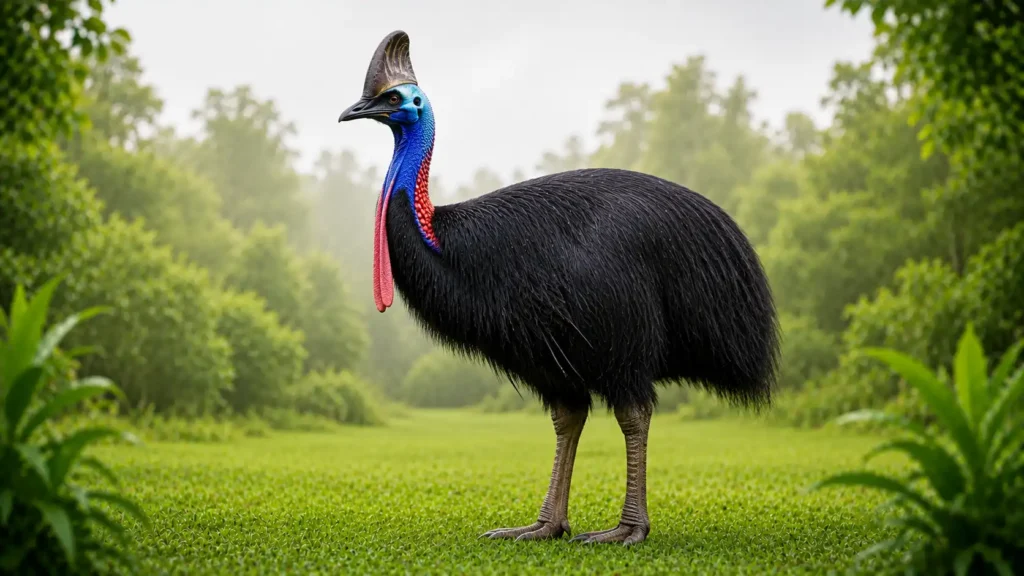
The cassowary is a striking bird, adorned with vibrant blue and black plumage and a distinctive casque atop its head. Found primarily in the dense tropical forests of New Guinea and nearby islands, these flightless giants prefer environments rich in fruit-bearing trees.
Known for their strong legs, cassowaries are surprisingly agile, often moving swiftly through thick brush and undergrowth while keeping a keen eye on their surroundings.
Their unique adaptations enable them to thrive where few other animals can. With powerful legs built for running, cassowaries can outrun most predators and even deliver a swift kick if threatened.
Equipped with flexible wrists, they can navigate through foliage with ease, and their diet largely consists of fallen fruit, making them essential for seed dispersal in their habitat. This incredible bird is not only a master of survival but also a vital part of its ecosystem.
Fun Facts:
- Cassowaries are known as “living dinosaurs” due to their prehistoric appearance and behavior.
- They can reach heights of up to 6 feet and weigh over 130 pounds.
- With a striking blue and black coloration, males and females can often be distinguished by their size, with females being larger.
- Despite being flightless, cassowaries can run up to 30 miles per hour in short bursts.
- They have a keen sense of hearing and vision, which helps them evade potential threats.
- If threatened, a cassowary can be aggressive, using its sharp claws that can inflict serious injuries.
Read May Also: Top 15 Animals like Weasels With Pictures & Hidden Facts
Conclusion
The fascinating world of list of bipedal animals showcases the incredible adaptations and diversity of life on our planet. From the agile kangaroo to the elegant flamingo, each species brings unique traits and behaviors that highlight the evolutionary advantages of walking on two legs.
These animals not only capture our imagination but also remind us of the complex ecosystems they inhabit. As we continue to explore and learn about these remarkable creatures, it’s essential to appreciate their roles in biodiversity and conservation efforts.
FAQs
What Are Some Common Two-Legged Animals?
Common two-legged animals include birds like chickens, ostriches, and penguins, as well as some mammals like kangaroos.
Can All Birds Walk on Two Legs?
Yes, all birds are bipedal; they walk and run on two legs, although their walking styles and abilities vary widely.
What Is the Significance of Bipedalism in Evolution?
Bipedalism allows for better vision to spot predators, frees the hands for tool use, and can be more energy-efficient for traveling long distances.
Are There Any Two-Legged Animals That Can Fly?
Yes, various birds, such as eagles and sparrows, can fly and walk on two legs, showcasing versatility in movement.
What Unique Adaptations Do Two-Legged Animals Have?
Many two-legged animals have strong leg muscles, balance mechanisms, and adaptations in their skeletal structure to support upright walking.
What are Animals that Walk on two Legs called?
Animals that walk on two legs are called bipeds, and this way of moving is called bipedalism or bipedal locomotion. The word comes from Latin: “bi” means two and “ped” means foot.
What is a two Leg Animal called?
A two leg animal is called a biped. Walking or moving on two legs is known as bipedalism.