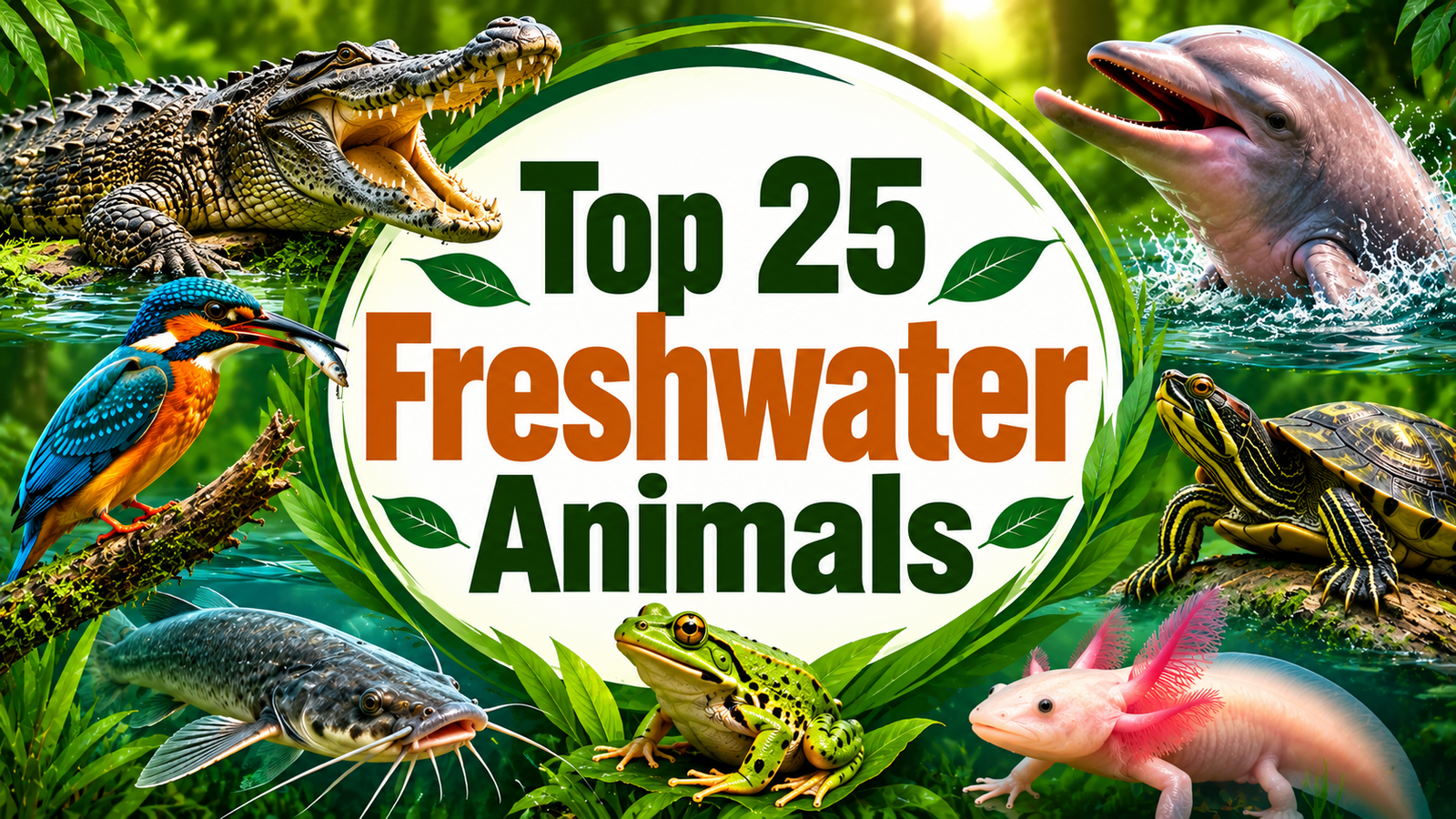
Top 25 Freshwater Animals : Animals That Live in Freshwater
Freshwater habitats may cover only a small part of Earth’s surface, but they support an incredible variety of life. Rivers, lakes, ponds, wetlands, streams, and swamps are home to fish, mammals, reptiles, amphibians, birds, insects, and many other species.
These freshwater animals have developed special adaptations that allow them to survive in water with very little salt. You will discover fascinating freshwater creatures from different parts of the world. From powerful crocodilians and giant river dolphins to tiny insects that walk across the water’s surface, each animal has a unique relationship with its freshwater habitat.
Freshwater Animals List
Here are some of the most fascinating animals that live in freshwater, including species found in rivers, lakes, wetlands, ponds, and streams:
- Alligator
- Amazonian Manatee
- Axolotl
- Caiman
- Capybara
- Crayfish
- Dipper
- Dragonfly
- Electric Eel
- Freshwater Crab
- Freshwater Jellyfish
- Giant Freshwater Stingray
- Green Anaconda
- Hellbender
- Hippopotamus
- Kingfisher
- Northern Pike
- Otter
- Piranha
- River Dolphin
- Freshwater Turtle
- Water Boatman
- Water Strider
- Water Vole
- Mayfly
Alligator
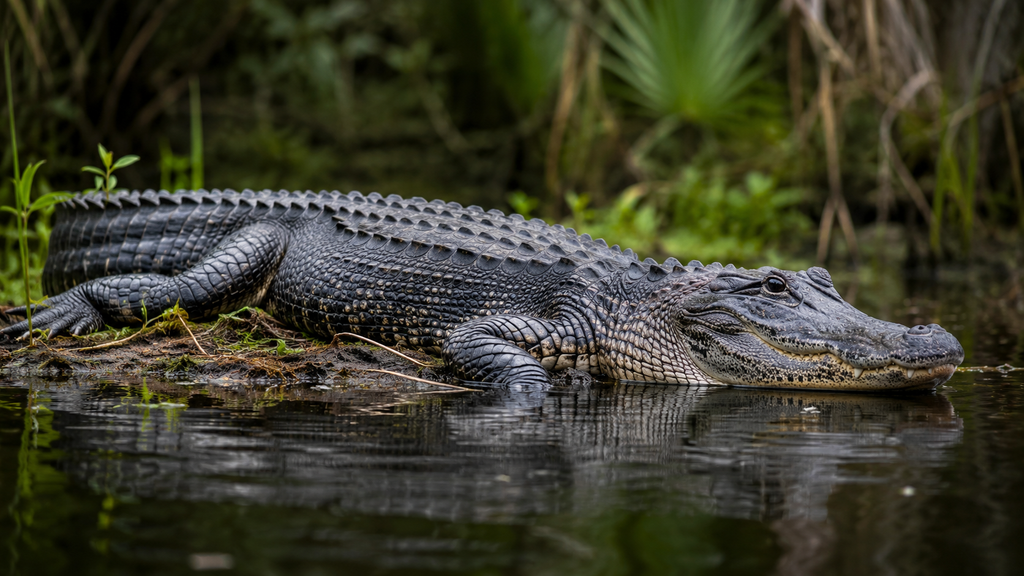
Alligators are large reptiles that spend much of their lives in freshwater habitats such as rivers, lakes, marshes, and swamps. The American alligator is found mainly in the southeastern United States, while the much rarer Chinese alligator occurs in eastern China.
Alligators eat fish, turtles, birds, mammals, and other animals they can catch. They often remain still while waiting for prey to come close before making a sudden attack. As major predators, they help maintain balance among other animals in freshwater ecosystems.
Amazonian Manatee
The Amazonian manatee is a large aquatic mammal that lives in the rivers, lakes, and flooded forests of the Amazon Basin. Unlike marine mammals, it spends its life in freshwater and feeds mainly on aquatic vegetation. Its rounded body, paddle-like flippers, and powerful tail make it well adapted to slow-moving water.
This gentle animal can consume large quantities of plants each day and may move between different water bodies as seasonal conditions change. Amazonian manatees are usually difficult to spot because they spend much of their time underwater. Habitat changes, hunting, and human activity can threaten their populations.
Axolotl
The axolotl is a remarkable aquatic salamander native to the freshwater canals and lakes around Mexico City. Unlike most salamanders, it keeps its juvenile features throughout adulthood and remains fully aquatic.
Axolotls eat worms, insects, small fish, crustaceans, and other tiny aquatic prey. One of their most famous abilities is regenerating lost body parts, including limbs and certain tissues. In the wild, this unusual species faces serious threats from habitat loss, pollution, and invasive species.
Caiman
Caimans are crocodilian reptiles found mainly in the freshwater rivers, lakes, wetlands, and swamps of Central and South America. They have long bodies, muscular tails, powerful jaws, and eyes adapted for watching prey from the water.
Young caimans commonly feed on insects, crustaceans, and small fish, while larger individuals can take much bigger prey. They often remain motionless in shallow water and attack when an opportunity appears. Caimans are important predators that help regulate populations of other freshwater species.
Capybara
The capybara is the largest living rodent and is strongly associated with freshwater environments in South America. It commonly lives near rivers, lakes, marshes, and flooded grasslands where it can find food and escape from predators.
These social animals usually live in groups, which can help them detect approaching predators. Because they spend so much time near water, they are one of the most recognizable semi-aquatic freshwater animals.
Crayfish
Crayfish are freshwater crustaceans related to lobsters and are found in streams, rivers, ponds, lakes, and wetlands across many parts of the world. Their hard outer shell protects the body, while their claws help them capture food and defend themselves.
Many crayfish hide beneath rocks, logs, or underwater vegetation during the day. Their burrowing and feeding activities can influence the movement of nutrients through freshwater habitats. They also provide an important food source for fish, birds, reptiles, and mammals.
Dipper
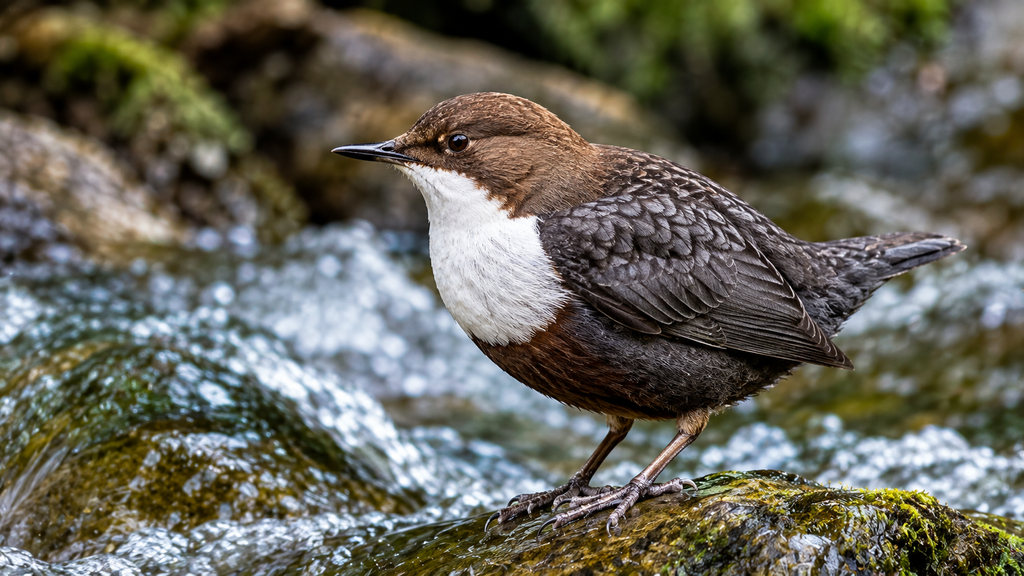
Dippers are unusual birds that are closely associated with fast-flowing rivers and mountain streams. They have compact bodies, strong legs, and specialized feathers that help them survive in cold, moving water. Unlike most songbirds, dippers can walk and swim underwater while searching for food.
They feed on aquatic insects, larvae, small crustaceans, and other tiny organisms found beneath rocks. Their short wings and strong movements help them resist the force of running water. A healthy population of dippers can also indicate that a stream provides suitable conditions for aquatic life.
Dragonfly
Dragonflies are well-known insects that are closely connected with freshwater during the early stages of their lives. Female dragonflies lay their eggs in or near water, and the young develop underwater as aquatic nymphs.
After spending months or sometimes years underwater, the nymph emerges and transforms into the familiar flying adult. Adult dragonflies are extremely agile and can hover, turn quickly, and capture insects in midair. Their dependence on clean freshwater makes them an important part of wetland ecosystems.
Electric Eel
The electric eel is one of the most unusual fish found in freshwater rivers, streams, and flooded forests of South America. Despite its name, it is not a true eel but belongs to a group of knifefishes. Its specialized organs can generate powerful electrical discharges that help it locate prey, defend itself, and stun animals.
Electric eels are particularly well suited to muddy or dark water where normal vision is less useful. They can breathe air at the surface, allowing them to survive in water with low oxygen levels. Their ability to produce electricity makes them one of the most fascinating animals that live in freshwater.
Freshwater Crab
Freshwater crabs are crustaceans that have adapted to living in rivers, streams, lakes, wetlands, and other inland water environments. Unlike most familiar crabs, which are associated with oceans and coastal areas, freshwater species spend much of their lives away from saltwater.
Their strong claws help them collect food and defend themselves from predators. Depending on the species, they may eat plants, algae, insects, small animals, or decaying organic matter. Many freshwater crabs live around rocks, roots, and muddy areas where they can find shelter.
Freshwater Jellyfish
The freshwater jellyfish is a tiny aquatic animal similar to its marine relatives but lives in freshwater. One well-known species, the peach blossom jellyfish, has been recorded in freshwater environments on several continents. It has a transparent, umbrella-shaped body with numerous delicate tentacles.
These tentacles contain stinging cells, but the species is generally harmless to humans because the cells cannot normally penetrate human skin. Freshwater jellyfish feed on microscopic organisms and small aquatic prey. Their appearance can be surprising because most people associate jellyfish exclusively with oceans.
Giant Freshwater Stingray
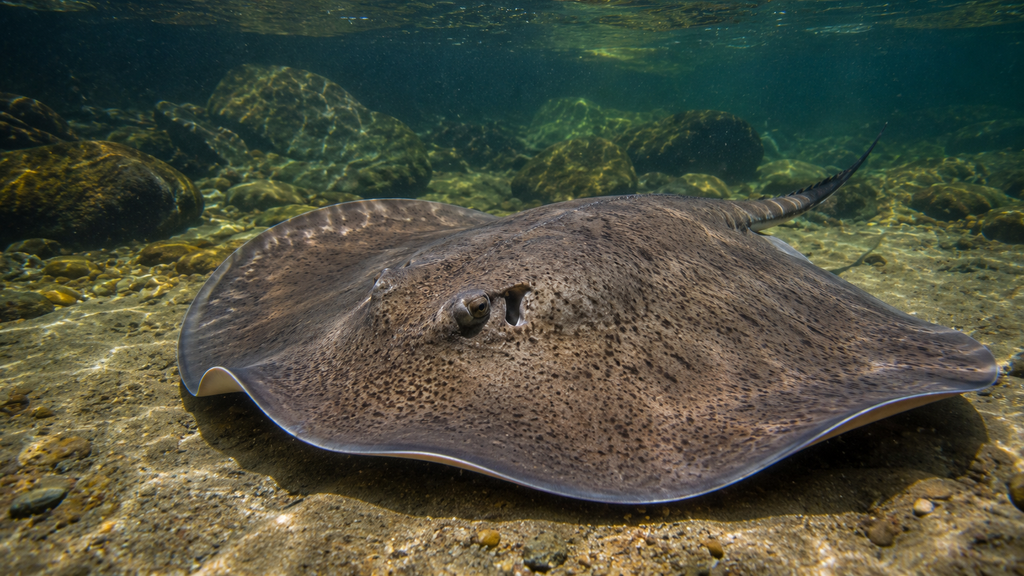
The giant freshwater stingray is one of the largest fish found in freshwater environments and lives in rivers of Southeast Asia. Its enormous flat body allows it to rest on sandy or muddy river bottoms while searching for food. It uses sensory organs to detect prey hidden beneath the sediment, including fish and other aquatic animals.
A long tail extends behind the body and contains a defensive spine. Despite its size, this stingray can move through the water with surprising control. Habitat degradation, fishing pressure, and changes to river systems have placed pressure on some populations.
Green Anaconda
The green anaconda is a huge semi-aquatic snake found in the rivers, swamps, wetlands, and flooded forests of South America. Its heavy body is perfectly suited to water, where it can move more easily than it can on land. The snake uses ambush hunting, often waiting quietly in shallow water before striking passing prey.
Its diet may include fish, birds, turtles, rodents, and other animals. Females are considerably larger than males, making them among the heaviest snakes in the world. The green anaconda is an important predator among South American freshwater creatures.
Hellbender
The hellbender is a large aquatic salamander found in clean, fast-flowing streams and rivers in the eastern United States. It has a flattened body and loose folds of skin along its sides, which increase the surface area available for absorbing oxygen from water.
Hellbenders usually hide beneath rocks and are most active when searching for crayfish and other aquatic prey. Unlike many amphibians, they remain aquatic even as adults. They depend heavily on clean, oxygen-rich water and are sensitive to pollution and habitat disturbance. Their presence can therefore provide valuable information about freshwater ecosystem animals health.
Hippopotamus
The hippopotamus is a massive semi-aquatic mammal found in and around rivers, lakes, and other freshwater habitats in sub-Saharan Africa. Its large body spends much of the day submerged in water, which helps keep the cool freshwater animals in the hot African climate.
Their eyes, ears, and nostrils are positioned high on the head, allowing them to remain mostly submerged while still monitoring their surroundings. Despite their plant-based diet, hippos are powerful and can be highly aggressive when threatened.
Kingfisher
Kingfishers are colorful birds commonly associated with rivers, streams, ponds, and lakes, although not every kingfisher species depends on freshwater. Species that hunt around water often sit quietly on branches before diving rapidly toward fish or other aquatic prey. Their long, pointed bills are ideal for grabbing slippery food.
Some species also eat frogs, insects, crustaceans, and small reptiles. Their sharp eyesight helps them locate prey from above the water. Because they depend on productive aquatic habitats, kingfishers are among the most recognizable animals that live in rivers.
Northern Pike
The northern pike is a large predatory fish found in freshwater lakes, rivers, and streams across parts of the Northern Hemisphere. Its long, streamlined body allows it to accelerate quickly when attacking prey. The fish has a large mouth filled with sharp teeth that help it hold slippery prey securely.
Northern pike often hide among aquatic plants before suddenly rushing toward fish, frogs, or other animals. Their greenish coloration provides useful camouflage among underwater vegetation. As predators, they help control populations of smaller fish and other aquatic species.
Otter
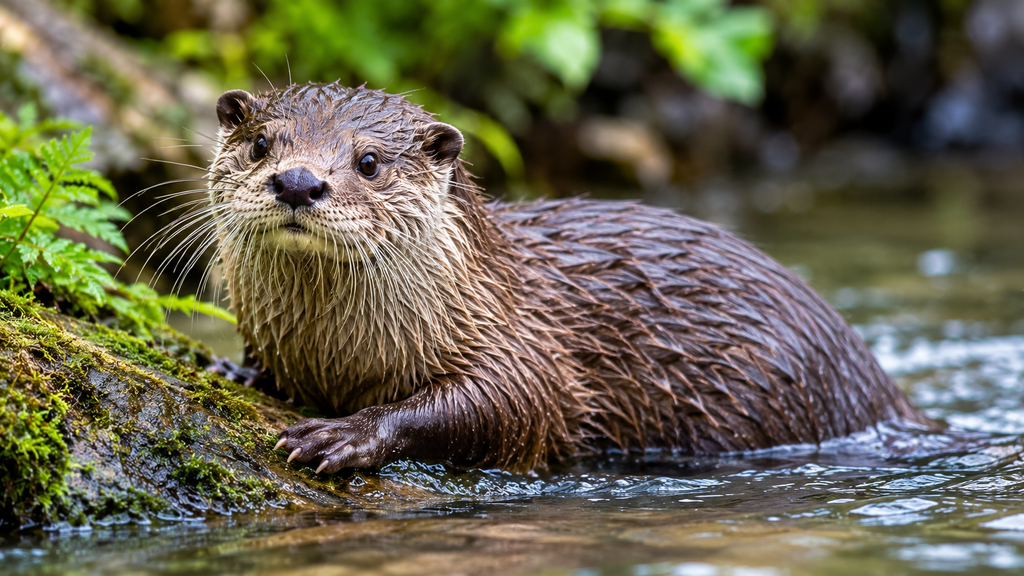
Otters are Weird mammals with long bodies, short legs, webbed feet, and strong tails that help them swim efficiently. Many otter species live around freshwater rivers, lakes, wetlands, and streams where fish and other prey are abundant. Their dense fur provides insulation in cold water, while closable ears and nostrils protect them while diving.
Fish often form an important part of their diet, but otters may also eat frogs, crustaceans, birds, and other small animals. Many species are excellent swimmers and can move quickly underwater. Healthy otter populations are often associated with productive freshwater ecosystems.
Piranha
Piranhas are freshwater fish native mainly to rivers and lakes in South America. Their sharp teeth and strong jaws have created a reputation for being aggressive predators, but many species are actually omnivorous. Depending on the species, they may eat fish, insects, crustaceans, fruit, seeds, and plant material.
Piranhas often live in groups, which can provide protection and help them locate food. They are particularly active in warm, productive waters where food is plentiful. Despite their frightening reputation, piranhas are just one part of the complex food web found in South American freshwater habitats.
River Dolphin
River dolphins are unusual freshwater mammals that have evolved to live in large rivers and their connected waterways. Species occur in parts of South America and Asia, and many have long snouts that help them search for prey in cloudy water. Echolocation is extremely important because visibility can be poor in muddy rivers.
River dolphins feed mainly on fish but may also consume crustaceans and other aquatic animals. Some populations are threatened by pollution, fishing nets, habitat modification, and changes to river systems. Their survival depends heavily on healthy rivers with enough food and safe areas for breeding.
Freshwater Turtle
Freshwater turtles are reptiles that spend much of their lives in ponds, lakes, rivers, marshes, and slow-moving streams. Their hard shells provide protection from many predators, while their webbed feet help aquatic species swim efficiently. Different species have very different diets, with some eating freshwater animals and plants and others feeding on fish, insects, snails, and other small animals.
Many turtles bask on logs or rocks to warm their bodies after spending time underwater. They may also use muddy riverbanks or sandy areas for nesting. Freshwater turtles are important members of aquatic food webs and help connect aquatic and land ecosystems.
Water Boatman
Water boatmen are small aquatic insects that spend much of their lives in freshwater ponds, lakes, and slow-moving water. Their flattened bodies and specialized legs allow them to move efficiently through the water. Many species feed on algae, plant material, and tiny organisms found on underwater surfaces.
They often swim near the bottom but may rise to the surface to obtain air. Their relatively small size makes them an important food source for fish, frogs, birds, and other predators. Although easy to overlook, water boatmen are valuable members of freshwater food chains.
Water Strider
Water striders are remarkable insects famous for their ability to move across the surface of ponds, streams, and other freshwater bodies. Their long legs are covered with tiny hairs that help distribute their weight and prevent them from breaking the water’s surface tension.
They use vibrations on the water surface to detect prey and may feed on small insects trapped on the surface. Their lightweight bodies allow them to move rapidly when escaping predators. Water striders are a great example of how small freshwater creatures can have highly specialized adaptations for their environment.
Water Vole
Water voles are small rodents associated with freshwater environments such as riverbanks, streams, ponds, and wetlands. They have compact bodies, dense fur, and strong hind feet that help them swim when necessary. They feed mainly on grasses, aquatic vegetation, roots, and other plant material.
Water voles often create burrows along riverbanks where they can hide from predators and raise their young. Their populations can decline when riverbanks are damaged or natural vegetation is removed. Because they live closely alongside waterways, they are an important part of many freshwater food webs.
Mayfly
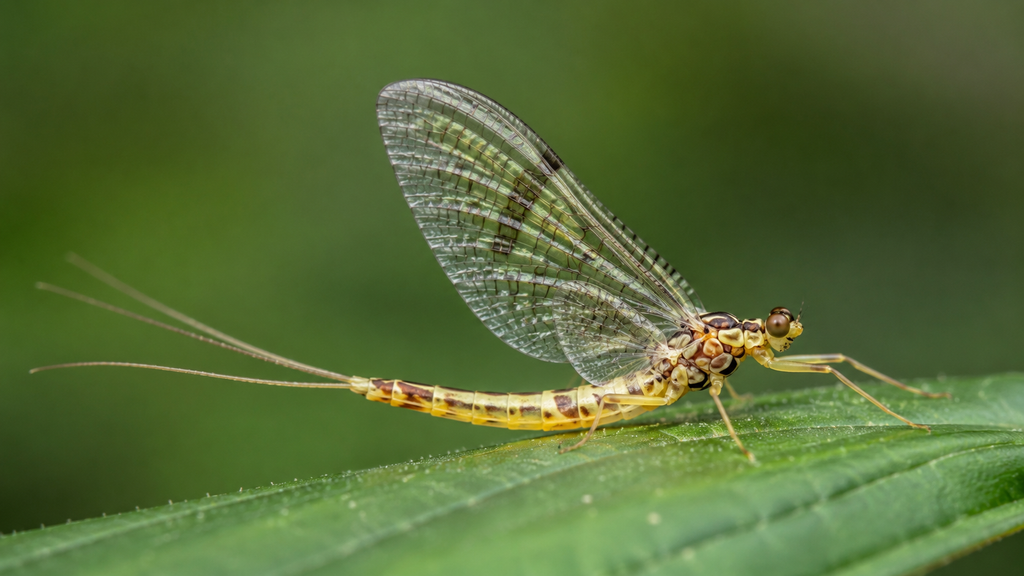
Mayflies are small insects whose early life is strongly connected to freshwater. Their young, called nymphs, live underwater and may remain there for months or even years depending on the species. They feed on algae, plant material, and organic particles in the water.
Adult mayflies focus mainly on reproduction rather than feeding. Because many mayfly nymphs require clean, oxygen-rich water, their presence can be a useful sign of a healthy freshwater environment.
Why Are Freshwater Animals Important?
Freshwater ecosystems support complex food webs in which every species has a role. Predatory fish control populations of smaller aquatic animals, while herbivores influence plant growth and insects provide food for fish, birds, amphibians, and mammals.
Some animals in freshwater also help move nutrients between water and land. For example, animals that feed in rivers and later travel onto land can transport nutrients into surrounding ecosystems.
Freshwater species are also valuable indicators of environmental health. When pollution, habitat destruction, or changes in water flow affect sensitive species, it can be a warning that the entire ecosystem is under stress.
Where Do Freshwater Animals Live?
Not every species spends its entire life underwater. Some, such as otters, hippos, and capybaras, regularly move between water and land, while others, such as many fish and aquatic insects, are much more dependent on the water itself.
Freshwater animals can be found in many different aquatic environments, including:
- Rivers and streams
- Lakes and ponds
- Marshes and wetlands
- Swamps
- Flooded forests
- Freshwater springs
- Slow-moving waterways
- Riverbanks and shallow water
How Do Freshwater Animals Survive?
Freshwater environments can have strong currents, changing water levels, low oxygen, cold temperatures, or muddy conditions. Animals have developed different adaptations to deal with these challenges.
Fish use gills to extract oxygen from water, while some aquatic mammals must regularly surface to breathe air. Animals such as water striders use surface tension to move across the water, while electric eels produce electrical signals to navigate and hunt in dark conditions.
Other species rely on camouflage, powerful swimming muscles, webbed feet, specialized jaws, thick shells, or sensitive senses. These freshwater animals and adaptations allow different species to occupy different parts of the same freshwater ecosystem.
Read May Also: 25 Types of Butterflies: Beautiful Butterflies You Should Know
Conclusion
Freshwater habitats may be smaller than oceans, but they support an amazing range of life. From enormous hippos, river dolphins, and giant freshwater stingrays to tiny mayflies and water striders, these freshwater animals have evolved fascinating ways to survive.
Rivers, lakes, wetlands, and ponds provide food, shelter, breeding grounds, and drinking water for countless species. Learning about animals that live in freshwater also helps us understand why healthy rivers and wetlands matter.
FAQs
What is the Difference Between Freshwater and Saltwater Animals?
Freshwater animals are adapted to environments with very little dissolved salt, such as rivers and lakes. Saltwater animals live in oceans and seas, where salt concentrations are much higher. Their bodies have different adaptations for maintaining the correct balance of water and salts.
Why are Freshwater Animals Important?
Freshwater animals help maintain healthy ecosystems by controlling prey populations, spreading nutrients, influencing vegetation, and serving as food for other species. Many are also indicators of water quality and ecosystem health.
What are Freshwater Animals?
Freshwater animals are species that live in or depend heavily on water with very low salt levels. They include fish, amphibians, reptiles, mammals, birds, insects, and crustaceans found in rivers, lakes, ponds, streams, and wetlands.
What Freshwater Animals Eat Algae?
Many freshwater animals feed on algae, including snails, shrimp, plecos, otocinclus catfish, Siamese algae eaters, mollies, tadpoles, and some species of carp and tilapia.
What Animals live in the Freshwater Biome?
The freshwater biome is home to fish, amphibians, reptiles, birds, mammals, insects, crustaceans, mollusks, and zooplankton. Examples include trout, frogs, turtles, otters, herons, dragonfly larvae, crayfish, and freshwater snails.