

Top 25 Animals Like Foxes With Pictures & Interesting Facts
Foxes are renowned for their agility and wit, but they are part of a much larger animal family filled with equally intriguing species. We will explore the top 25 animals like foxes, each showcasing unique behaviors and adaptations that mirror or contrast with their fox cousins.
Discovering these animals enriches our understanding of the natural world and the dynamics of ecosystems. Join us in this exploration and expand your knowledge about the captivating creatures that share our planet.
List of Animals Like Foxes
Among the myriad of animals that share similarities with foxes, one of the most striking is the raccoon. Known for their curious nature and dexterous paws, raccoons often exhibit a cleverness reminiscent of foxes.
They thrive in urban environments, showing an adaptability that allows them to navigate human-made landscapes with ease, echoing the fox’s own cunning survival strategies.
List of Animals Like Foxes and cats are given below:
- Red Pandas
- Mole Rats
- Dholes
- Dingoes
- Fennec Fox
- Coyotes
- Culpeo
- Mountain Lions
- Jackals
- Civets
- Domestic Dogs
- Margay
- Raccoon
- Wolves
- Skunks
- African Wild Dogs
- Cats
- Bat-Eared Fox
- Bobcats
- Maned Wolf
- Mongooses
- Weasels
- Raccoon Dogs
- Gray Fox
- Ringtail
- Gray Fox
Red Pandas

- Scientific Name: Ailurus fulgens
- Class: Mammalia
- Diet: Omnivore
Red pandas, renowned for their striking reddish-brown fur and bushy tails, possess a unique charm that captivates wildlife lovers. Native to the eastern Himalayas, these adorable creatures have a fox-like appearance, distinguishing them from their more well-known giant panda cousins.
Red pandas often inhabit high-altitude forests, where their playful demeanor and solitary nature shine through, making them both elusive and fascinating to observe.
Fun Facts
- They’re often mistaken for raccoons or small bears due to their appearance.
- A group of red pandas is known as a “culony.”
- Their bushy tails help them maintain balance while climbing and act as blankets in cold weather.
- Red pandas have a special adaptation that allows them to digest bamboo more efficiently than other animals.
- Unlike many other mammals, they have a very vocal communication system, including whistles and squeals.
Mole Rats
- Scientific Name: Heterocephalus glaber
- Class: Mammalia
- Diet: Herbivore
Mole rats, often overlooked, are fox like creatures that dwell underground, primarily in sub-Saharan Africa. They possess a distinctly unique appearance, with a rat-like body and sparse, coarse fur that makes them look somewhat like a small, hairless version of their more famous relatives.
All social animals live in complex burrow systems, showcasing intricate social structures and behaviors that rival even the most sociable of species. Their intriguing traits, such as their lack of pain sensation in their skin, set them apart in the animal kingdom.
Adapted to a life spent underground, mole rats have strong, sharp incisors for digging and feeding on tubers and roots, their primary food source. Their exceptional climbing abilities are not utilized above ground, but rather in navigating their labyrinthine tunnels.
Fun Facts:
- Mole rats are known for their unique social structure, living in colonies led by a single breeding pair.
- Their vision is poor, but they have keen senses of touch and smell, which help them navigate their underground homes.
- These animals have long, spade-like incisors, allowing them to dig efficiently through hard soil.
- Like certain animals that resemble foxes, mole rats can defend their colonies aggressively against intruders.
- They have a surprisingly long lifespan for a rodent, often living more than 30 years in captivity.
- While not typical pets, their fascinating behaviors and social dynamics make them a topic of interest in the study of animal behavior.
Dholes
- Scientific Name: Cuon alpinus
- Class: Mammalia
- Diet: Carnivore
Dholes, also known as Asiatic wild dogs, present a striking animals similar to foxes with their rusty-red coats and bushy tails. Often spotted in the dense forests of Southeast Asia, these social carnivores thrive in packs, showcasing fascinating behaviors through cooperative hunting strategies.
Adapted for survival, dholes possess exceptional climbing abilities and can navigate rugged terrains effortlessly. Their primary diet consists of small to medium-sized prey, with a unique focus on establishing a bamboo-based diet in regions where it is abundant.
Fun Facts:
- Dholes are highly social animals, often living in packs of up to 12 members.
- With keen communication skills, they use a variety of vocalizations to coordinate hunts and establish territory.
- Unlike other canines, dholes lack a distinct “bark,” instead specializing in high-pitched whistles and screams.
- They boast one of the highest hunting success rates of any wild dog, primarily due to their teamwork.
- Their sleek, agile bodies allow them to easily navigate through dense underbrush and steep terrains.
Dingoes
- Scientific Name: Canis familiaris dingo
- Class: Mammalia
- Diet: Carnivore
Dingoes, the wild canines of Australia, are striking creatures with a fox-like appearance. Their sandy or reddish coats, pointed ears, and slender bodies help them blend into diverse habitats, from the grassy plains to dense forests.
These adaptable predators often hunt in packs, showcasing a complex social structure that enhances their survival skills in the wild.
One of the dingo’s remarkable adaptations is its ability to navigate and thrive in various terrains. Equipped with sharp senses, these carnivores primarily feast on small to medium-sized prey, though they can consume fruits and plants when necessary.
Their flexible wrists enable them to navigate rough terrain and climb when required, a skill that aids in hunting and escaping threats.
Fun Facts
- Dingoes can cover up to 20 kilometers a day while searching for food.
- Their howl can be heard over long distances and plays a crucial role in communication.
- Unlike domestic dogs, dingoes tend to avoid human contact.
- They are skilled scavengers and will opportunistically feed on carrion.
- Dingoes have been known to form symbiotic relationships with other wildlife, including rabbits and kangaroos.
- They are closely related to animals like foxes and wolves, sharing many social and behavioral traits.
Fennec Fox
- Scientific Name: Vulpes zerda
- Class: Mammalia
- Diet: Omnivore
The Fennec Fox is a small, nocturnal creature with a fox like animal appearance, characterized by its large ears and sandy-colored fur. Found in the arid deserts of North Africa, these adorable animals are perfectly adapted to their harsh environments with unique behaviors that make them fascinating to observe.
Adaptations play a crucial role in their survival. With specialized kidneys that conserve water, Fennec Foxes thrive in extremely low-water conditions. Their remarkable climbing abilities and flexible wrists allow them to navigate rocky terrains with ease, while their diet primarily consists of insects, plants, and small mammals.
Fun Facts
- Fennec Foxes have ears that can be as long as six inches, helping them dissipate heat and detect prey underground.
- Despite their small size, they can jump up to two feet high, which aids in escaping predators and catching insects.
- Their coat acts as both camouflage and insulation, keeping them cool in the daytime and warm at night.
- Known for their playful nature, Fennec Foxes often engage in intricate social behaviors within their small animal like fox family groups.
- They are excellent diggers, able to create elaborate underground homes to shield themselves from the heat.
- Fennec Foxes communicate through a series of barks, whistles, and growls, showcasing a social complexity akin to larger canid species.
Coyotes
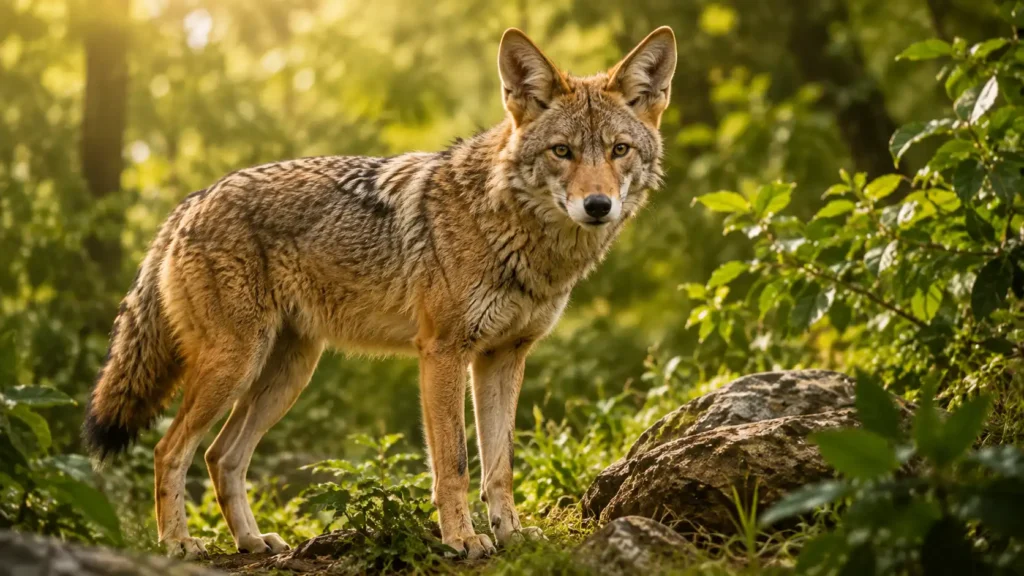
- Scientific Name: Canis latrans
- Class: Mammalia
- Diet: Omnivore
Coyotes, with their striking fox-like appearance, boast sleek bodies, elongated snouts, and a mix of tan, gray, and brown fur. Often found in a range of habitats from deserts to forests, these clever canines are known for their adaptability, often thriving near urban areas.
Coyotes display remarkable adaptations suited for diverse environments. Their keen sense of smell and acute hearing enable them to detect prey from great distances. Agile climbers, they navigate rocky terrains effortlessly, making use of their powerful limbs and coordination.
Fun Facts:
- Coyotes can run up to 40 miles per hour, making them quick predators.
- Their vocalizations include over 11 distinct sounds, creating a complex communication system.
- Coyotes are known to form intricate social structures, often hunting in family units.
- Like many animals that resemble foxes, coyotes can adapt to urban life, often being spotted in cities.
- They have a unique prey-switching behavior, allowing them to shift diets based on availability.
- Coyotes play a vital role in their ecosystem by helping control rodent populations.
Culpeos
- Scientific Name: Lycalopex culpaeus
- Class: Mammalia
- Diet: Carnivore
Culpeos, often noted for their striking fox-like appearance, are fascinating creatures that roam the diverse landscapes of South America. Their markings showcase a mix of reddish and gray fur, setting them apart from other canids.
These adaptable mammals thrive in habitats ranging from arid scrublands to high-altitude mountains, showcasing their resilience.
These animals have developed several unique adaptations for survival, particularly their keen senses and agile movements. Their sharp eyesight and excellent hearing make them formidable predators, ensuring they can detect prey in various environments. A notable trait is their fox-like agility, which aids in navigating rugged terrains while hunting.
Fun Facts:
- Known for their bushy tails, Culpeos can reach up to 50 cm in length!
- They have a geographical range that spans Chile, Argentina, and Peru.
- Unlike many other canids, Culpeos are largely nocturnal, making them effective nighttime hunters.
- Their diet is quite diverse, occasionally including insects and carrion, showcasing their opportunistic feeding habits.
- These animals play a crucial role in their ecosystems, helping control small mammal populations.
Mountain lions
- Scientific Name: Puma concolor
- Class: Mammalia
- Diet: Carnivore
Mountain lions, also known as cougars, are magnificent feline predators with a fox-like appearance, characterized by their lithe bodies and long, muscular tails. Found throughout the Americas, these adaptable creatures thrive in diverse habitats, from dense forests to rugged mountains.
Adaptations have finely tuned these carnivores for survival. Their powerful hind legs enable remarkable agility, allowing them to leap great distances and climb trees with ease. Mountain lions possess flexible wrists, providing them with the dexterity required to navigate varied terrains effortlessly.
Fun Facts:
- Mountain lions can cover up to 150 square miles in search of food.
- They can leap up to 20 feet in a single bound.
- Adult males weigh between 120 to 220 pounds, while females typically weigh 80 to 140 pounds.
- Unlike many other big cats, mountain lions do not roar; they communicate through a range of vocalizations, including screeches and purrs.
- They are one of the most adaptable big cats, thriving in both mountainous and urban areas.
- Mountain lions have an extensive range, found from Canada all the way to the southern Andes in South America.
Jackals
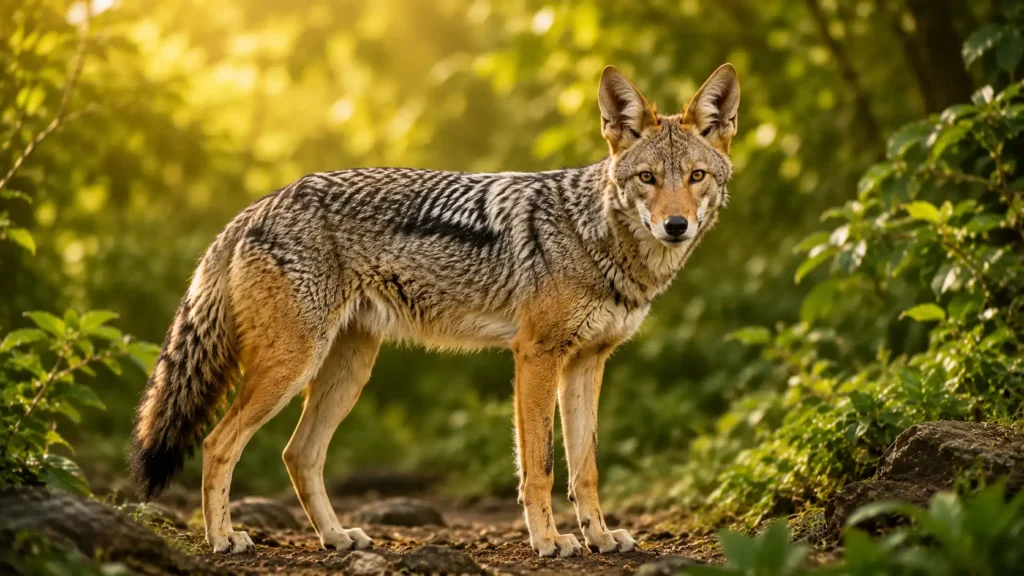
- Scientific Name: Canis aureus
- Class: Mammalia
- Diet: Omnivore
Jackals, often likened to foxes due to their striking physical resemblance, are intriguing creatures that roam a variety of habitats across Africa, the Middle East, and parts of Asia. With their slender bodies, pointed ears, and bushy tails, they are agile opportunists that thrive in diverse environments, from savannas to deserts.
These clever canines boast remarkable survival strategies, allowing them to flourish in challenging terrains. Their keen senses and agile movements aid in hunting and scavenging, which is crucial since they have a varied diet consisting of small mammals, birds, and even fruits and carrion.
Jackals are equipped with exceptional hearing that helps them locate prey, and their fox-like appearance allows them to blend into their surroundings, making them efficient hunters.
Fun Facts:
- Jackals are master scavengers, often following larger predators like lions to feed on leftovers.
- They have a unique vocalization that sounds like a series of high-pitched yips, adding to their social charm.
- Unlike most canines, jackals can be found in both solitary and social packs, adapting their behavior based on environmental conditions.
- They play an essential role in their ecosystems by helping control rodent populations.
- Jackals have been observed using tools, like stones, to crack open eggs, showcasing their problem-solving skills.
- In some cultures, they are viewed with both reverence and superstition, highlighting their complex relationship with humans.
Civets
- Scientific Name: Civettictis civetta
- Class: Mammalia
- Diet: Omnivore
Civets, often likened to foxes for their sleek, elongated bodies and sharp features, boast a striking coat adorned with distinctive spots and stripes. These nocturnal creatures thrive in the forests and savannas of Africa and parts of Asia, adapting seamlessly to their surroundings.
These fascinating mammals have evolved several traits that help them thrive in diverse environments. Their flexible wrists enable them to grasp branches securely, essential for their climbing escapades.
While civets are omnivores, their diet leans heavily towards fruits, insects, and small vertebrates, showcasing their adaptability. Their unique scent glands also play a crucial role in marking territory and attracting mates, adding to their intriguing survival strategies.
Fun Facts:
- Civets have a fox-like appearance, featuring pointy snouts and bushy tails.
- They are known for their unique coffee habit, often consuming coffee cherries, which contribute to the famous Kopi Luwak coffee.
- Civets have excellent night vision, allowing them to be effective hunters after sundown.
- These animals are solitary, preferring to roam alone rather than in groups.
- Civets communicate through various vocalizations and scents, using their keen sense of smell to interact with their environment.
- They play a vital role in their ecosystem by aiding in seed dispersal, impacting the growth of local flora.
Domestic Dogs
- Scientific Name: Canis lupus familiaris
- Class: Mammalia
- Diet: Omnivore
Domestic dogs, known for their diverse appearances, can range from tiny Chihuahuas to towering Great Danes. These adaptable animals thrive in human homes around the globe, showcasing affectionate behavior and a unique bond with their owners.
With their varied coat colors and textures reminiscent of fox-like features, dogs bring charm and loyalty to our lives. Whether romping in backyards or snuggling on couches, their versatility knows no bounds.
Their incredible adaptability is one reason domestic dogs have become such beloved companions. Equipped with sharp senses and instincts, they excel at various tasks, from hunting to providing comfort as therapy animals. Their ability to understand human emotions adds a layer of connection that few other animals, including animals like foxes, can achieve.
Fun Facts:
- Dogs have been bred for thousands of years, resulting in over 340 distinct breeds worldwide.
- They communicate using a mix of vocalizations and body language, including wagging tails and playful barks.
- The Basenji dog is known as the “barkless dog” due to its unique vocalizations that resemble a yodel.
- Dogs possess an extraordinary sense of smell, estimated to be 10,000 to 100,000 times more sensitive than humans.
- Contrary to popular belief, dogs do not see only in black and white; they can perceive certain colors, like blue and yellow.
- The Labrador Retriever has topped the American Kennel Club’s list of most popular dog breeds for over two decades.
Margays
- Scientific Name: Leopardus wiedii
- Class: Mammalia
- Diet: Carnivore
With their striking fox-like appearance, Margays embody a unique blend of charm and adaptability. These elusive cats inhabit the lush forests of Central and South America, where they skillfully navigate the trees with remarkable agility. Known for their nocturnal nature, Margays are primarily solitary hunters, using their keen senses to stalk a variety of prey.
Margays are extraordinary climbers, thanks in part to their flexible wrists and specialized limb structure. These adaptations allow them to leap and maneuver effortlessly from branch to branch, a skill that is essential in their forested habitats.
Fun Facts:
- Margays can leap over six feet in a single bound.
- They have an impressive range of vocalizations, including meows, growls, and purrs.
- Unlike many other felines, Margays can descend trees headfirst.
- Their striking coat features a spotted pattern, which provides excellent camouflage.
- These captivating animals often hunt at night, capitalizing on their excellent night vision.
- Margays are sometimes referred to as “tiger cats” due to their small size and markings, further emphasizing their resemblance to animals like foxes.
Raccoons
- Scientific Name: Procyon lotor
- Class: Mammalia
- Diet: Omnivore
Raccoons are easily recognizable due to their fox-like appearance, featuring a masked face and a distinctive ringed tail. Found across North America, these clever creatures thrive in both urban and rural environments. Their adaptability allows them to make homes in various habitats, from forests to city parks.
These animals possess fascinating adaptations that enhance their survival. Their incredible climbing abilities come from strong limbs and flexible wrists, allowing them to maneuver effortlessly among trees.
From animals like foxes and raccoons and weasels to jackals and mongooses, many fox-like animals possess the same sleek and slender body structures found in numerous skinny animals around the world.
Fun Facts
- Raccoons have incredibly dexterous front paws that can open locks, jars, and even doors.
- They have highly sensitive whiskers that help them navigate in the dark.
- Despite their size, these animals can run up to 15 miles per hour.
- Raccoons are mostly nocturnal, making their nighttime foraging an interesting spectacle.
- They communicate with a variety of sounds, including purrs, growls, and chirps.
- Raccoons can remember solutions to tasks for up to three years, showcasing their remarkable memory.
Wolves
- Scientific Name: Canis lupus
- Class: Mammalia
- Diet: Carnivore
Wolves, with their striking fox-like appearance, roam diverse habitats ranging from icy tundras to sun-drenched deserts. These majestic creatures are social animals, often seen in packs that work together to hunt and raise their young.
Wolves have adapted to their environments in fascinating ways. Their keen sense of smell helps them locate prey even from miles away, while their impressive endurance allows them to travel great distances in search of food. Unlike most carnivores, wolves can be quite communal.
Fun Facts:
- Wolves can run up to 40 miles per hour in short bursts.
- They communicate through a variety of vocalizations, including howls, growls, and barks.
- A wolf pack typically consists of a family unit, closely bonded and working together.
- The average lifespan of a wolf in the wild is around 6 to 8 years.
- Wolves play a crucial role in maintaining the balance of their ecosystems.
- They can eat up to 20 pounds of meat in a single meal when they have the opportunity!
Skunks
- Scientific Name: Mephitis mephitis
- Class: Mammalia
- Diet: Omnivore
Skunks are striking creatures, often recognized by their unique black and white patterns. With a fox-like appearance, these mammals have a stocky build and a bushy tail, making them both endearing and notorious.
They are primarily found in North and Central America, thriving in woodlands, grasslands, and suburban areas. Known for their playful yet cautious nature, skunks are mainly nocturnal and prefer to roam under cover of darkness.
Adaptations play a crucial role in skunk survival. Their remarkable sense of smell helps them identify food and detect danger, while their bold coloration serves as a warning to potential threats.
Skunks can also climb well, albeit not as adeptly as their tree-dwelling cousins, thanks to their sturdy claws. Their diet is omnivorous, allowing them to feast on vegetables, insects, and small animals, which further enhances their adaptability in various environments.
Fun Facts:
- Skunks can spray their notorious foul-smelling liquid up to 10 feet away.
- They are often misunderstood; despite their strong odor, skunks are generally non-aggressive.
- The scent is their primary defense mechanism, and they only spray as a last resort.
- Baby skunks, called kits, are born blind and rely heavily on their mothers for care.
- Skunks are excellent diggers, often creating burrows to sleep or raise their young.
- Unlike many other nocturnal animals, skunks have poor eyesight but a superior sense of smell.
African Wild Dog
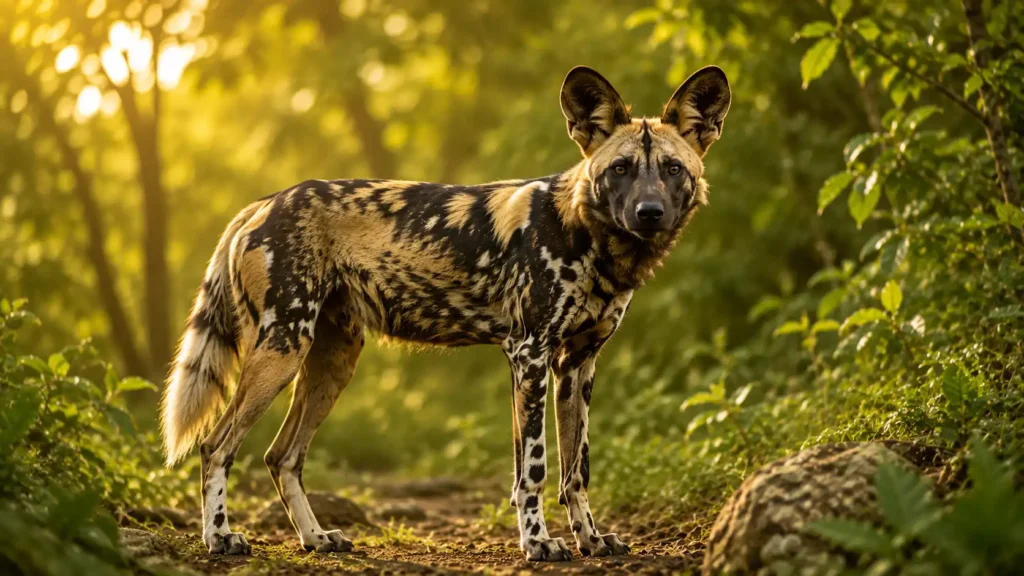
- Scientific Name: Lycaon pictus
- Class: Mammalia
- Diet: Carnivore
The African wild dog, with its captivating fox-like appearance, thrives across the savannas and grasslands of sub-Saharan Africa. Known for their unique patchy coat of brown, black, and white fur, these social animals often travel in packs, displaying complex behaviors and hierarchies.
They are skilled hunters, utilizing teamwork to chase down prey, showcasing both agility and intelligence in their methods. Their strong social bonds lead to cooperative feeding and nurturing of young, making them one of the most fascinating canids in the wild.
Adapted to their environment, African wild dogs have developed remarkable survival strategies. Their long legs allow for high endurance during hunts, while their large ears help with heat regulation.
Unlike many solitary carnivores, these are pack animals, relying on each other not only for hunting but also for social interaction. Their diet primarily consists of antelope and other creatures, and their cooperative hunting techniques enhance their success rate.
Fun Facts:
- They are sometimes called “painted wolves” due to their colorful, mottled fur.
- African wild dogs have a success rate of over 80% when hunting in a pack, much higher than that of lions.
- Each dog has a unique coat pattern, making it easy to identify individuals.
- They communicate using a series of chirps and squeaks, which helps coordinate during hunts.
- Unlike many predators, they often take turns watching over their pups while others hunt.
- Their social structure is matriarchal, with the alpha female leading the pack.
Cats
- Scientific Name: Felis catus
- Class: Mammalia
- Diet: Carnivore
Cats are fascinating and most cleanest creatures that elegantly blend wild instincts with domestic charm. With their striking appearance often sporting a sleek coat and piercing eyes these agile felines can thrive in various habitats, from bustling homes to serene farms.
Their behaviors range from gentle purring to playful antics, showcasing both their affectionate nature and independent spirit. Cats possess a unique fox-like appearance, with their pointed ears and fluffy tails, embodying a mysterious allure that captivates many.
These agile animals are well adapted to their environments. Their climbing abilities are impressive; equipped with retractable claws and flexible wrists, they can navigate trees and furniture with ease.
Cats primarily hunt smaller animals, thriving on a diet rich in proteins, while their keen senses guide them through the night. These survival strategies allow them to excel in both wild and urban settings, showcasing their versatility.
- Cats can rotate their ears 180 degrees, allowing them to hear in all directions.
- They have a specialized collarbone that enables them to fit through tight spaces.
- A cat’s whiskers are roughly as wide as its body, helping it navigate in darkness.
- The world’s oldest cat lived to be 38 years old!
- In ancient Egypt, cats were revered and even depicted in art, symbolizing protection.
- Their unique vocalizations can vary; a cat can make over 100 different sounds!
Bat-Eared Fox
- Scientific Name: Otocyon megalotis
- Class: Mammalia
- Diet: Insectivore
The Bat-Eared Fox, known for its striking fox-like appearance, is a delight to observe. These small mammals, with large, expressive ears and a sleek, slender body, inhabit open grasslands and savannas across eastern and southern Africa.
Their social behavior often has them engaging in playful antics with their mates or family as they forage for food, focusing primarily on insects a diet that provides them with essential nutrients.
Remarkably, the Bat-Eared Fox has adapted to its environment in more ways than one. Its large ears serve a dual purpose: they not only help in dissipating heat but also aid in locating the faint sounds of insects underground.
Their nocturnal lifestyle gives them a unique advantage, helping them avoid predators while remaining adept at catching termites and other bugs that comprise most of their diet.
Fun Facts:
- They can consume up to 3,000 termites in one night!
- Their keen sense of hearing allows them to detect prey buried underground.
- Despite their small size, Bat-Eared Foxes are known to stand their ground against larger predators to protect their young.
- They use a variety of vocalizations, including barks and whines, to communicate with one another.
- Their social structure is often matriarchal, with females leading their family groups.
Bat-Eared Fox
- Scientific Name: Otocyon megalotis
- Class: Mammalia
- Diet: Insectivore
The Bat-Eared Fox, known for its striking fox-like appearance, is a delight to observe. These small mammals, with large, expressive ears and a sleek, slender body, inhabit open grasslands and savannas across eastern and southern Africa.
Their social behavior often has them engaging in playful antics with their mates or family as they forage for food, focusing primarily on insects and a diet that provides them with essential nutrients.
The Bat-Eared Fox has adapted to its environment in more ways than one. Its large ears serve a dual purpose: they not only help in dissipating heat but also aid in locating the faint sounds of insects underground.
Their nocturnal lifestyle gives them a unique advantage, helping them avoid predators while remaining adept at catching termites and other bugs that comprise most of their diet.
Fun Facts:
- They can consume up to 3,000 termites in one night!
- Their keen sense of hearing allows them to detect prey buried underground.
- Despite their small size, Bat-Eared Foxes are known to stand their ground against larger predators to protect their young.
- They use a variety of vocalizations, including barks and whines, to communicate with one another.
- Their social structure is often matriarchal, with females leading their family groups.
Bobcats
- Scientific Name: Lynx rufus
- Class: Mammalia
- Diet: Carnivore
Bobcats, with their distinctive tufted ears and short, stubby tails, are truly a sight to behold. These agile animals thrive in diverse habitats, from wooded areas to open fields. Their fur, a beautiful mixture of browns and blacks, helps them blend seamlessly into their surroundings.
With keen eyesight and exceptional hearing, bobcats are master predators. Their powerful legs enable impressive leaps, making them swift and stealthy as they pounce on unsuspecting prey.
Unlike their larger cousins, the lynx, bobcats are more versatile in their diet, preying on small mammals, birds, and rodents. Their keen sense of smell and unique hunting strategies ensure they thrive in various environments.
Fun Facts:
- Bobcats are often mistaken for small cougars due to their fox-like appearance.
- They can weigh between 15 to 35 pounds, with males typically larger than females.
- Their territory can span up to 5 to 50 square miles, depending on food availability.
- These animals have a wide range of vocalizations, including growls and screams, which they use to communicate.
- Bobcats can leap up to 10 feet in a single bound when hunting or escaping danger.
- Unlike domestic cats, bobcats are highly territorial and will defend their space aggressively against intruders.
Maned Wolf
- Scientific Name: Chrysocyon brachyurus
- Class: Mammalia
- Diet: Omnivore
The Maned Wolf, an intriguing blend of canine and fox-like features, roams the grasslands and savannas of South America. With its long legs, reddish coat, and distinctive mane, this solitary creature captures the imagination. Often spotted at dusk, it displays unique behaviors, such as its signature howl, which echoes in the silence of twilight.
Adapted perfectly to its environment, this remarkable animal boasts slender limbs that help it navigate tall grasses with ease. The Maned Wolf’s keen sense of smell aids in hunting, while its diet, rich in fruits like the lobeira berry, showcases its omnivorous nature.
Fun Facts:
- With a height of up to three feet, the Maned Wolf stands taller than most true wolves.
- Its fox-like appearance makes it one of the most unusual canines, earning it the nickname “the fox on stilts.”
- The Maned Wolf has a unique courtship ritual that includes vocalizations, creating a symphony of sounds.
- Unlike other canines, it primarily uses its scent to communicate and mark territory.
- It possesses a remarkable ability to adapt to changing habitats, making it a resilient species.
- The Maned Wolf is crucial for the ecosystem, as it helps manage small rodent populations while dispersing seeds from the fruits it consumes.
Mongoose
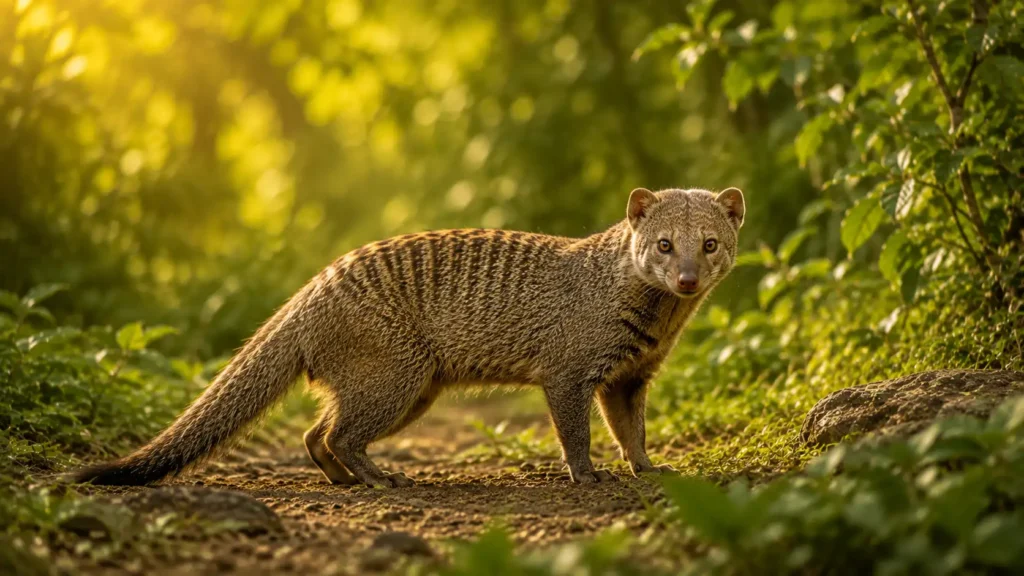
- Scientific Name: Herpestes edwardsi
- Class: Mammalia
- Diet: Carnivore
Mongooses are fascinating creatures that strike a resemblance to foxes with their slender bodies, pointed snouts, and bushy tails. Primarily found in Africa, Asia, and parts of Europe, these agile mammals thrive in diverse habitats, ranging from savannahs to forests.
They live in social groups known as mobs or gangs, displaying remarkable teamwork when hunting. Mongooses are known for their playful nature and curious behavior, which adds an extra layer of charm to their already striking appearance.
With specialized immune systems, mongooses can even withstand venom from snakes, giving them a distinct survival edge in the wild. This fearless attitude, paired with agility, makes them efficient predators.
- Mongooses can be solitary or social, depending on the species, with some living in large family groups.
- They can be quite vocal, communicating through a range of sounds, from chattering to hissing.
- These animals have a natural instinct to fight off snakes and often do so with remarkable precision.
- Mongooses are excellent diggers, using their strong paws to excavate burrows for shelter.
- Some species have developed a close relationship with birds, benefiting from mutual scavenging.
- Their bushy tails help with balance, especially when climbing trees or navigating through their habitats.
Weasels
- Scientific Name: Mustela nivalis
- Class: Mammalia
- Diet: Carnivore
Weasels are small, agile mammals that evoke a fox-like appearance, with their long bodies and short legs. They thrive in various habitats, from woodlands to grasslands, often choosing places rich in cover for hunting.
Known for their playful behavior, these clever creatures are remarkable hunters, using their speed and cunning to outmaneuver prey.
Adapted for life in the wild, weasels have a unique set of abilities that help them thrive. Their slender bodies allow them to navigate narrow spaces while hunting small rodents and other prey.
With a flexible wrist structure and sharp claws, they are excellent climbers, making them versatile hunters in both terrestrial and arboreal environments. These skills are crucial for their survival, allowing them to escape predators and find food even in challenging situations.
Here are some fun facts about weasels that highlight their fascinating nature:
- Weasels are known for their incredible speed, capable of reaching up to 10 miles per hour.
- Their fur changes color with the seasons, turning white in winter to blend in with snow.
- Weasels have a voracious appetite and can eat up to 40% of their body weight in one day.
- They communicate using a range of vocalizations, including chirps and screams.
- Despite their small size, weasels are fierce hunters and often take down prey larger than themselves.
- These animals are mostly solitary, maintaining large territories to ensure a steady supply of food.
Raccoon Dogs
- Scientific Name: Nyctereutes procyonoides
- Class: Mammalia
- Diet: Omnivore
Raccoon dogs, with their fox-like appearance and distinctive facial markings, are fascinating creatures that inhabit various parts of East Asia. These canines thrive in diverse habitats, from forests to farmlands, showcasing adaptability in both rural and urban environments.
This incredible adaptability is highlighted by their ability to climb trees, a skill that aids in foraging and escaping predators. Their diet primarily consists of fruits, small mammals, and, interestingly, insects showcasing an omnivorous palate.
Fun Facts:
- Raccoon dogs are the only canids known to hibernate.
- Their excellent sense of smell aids them in foraging.
- They communicate through a range of vocalizations, including barks and growls.
- Unlike most canids, raccoon dogs have a more rounded face and bushy tail.
- They’re often mistaken for raccoons due to their facial markings.
- Raccoon dogs have a unique way of walking, using their entire foot instead of just their paw pads.
Ringtail
- Scientific Name: Nyctereutes procyonoides
- Class: Mammalia
- Diet: Omnivore
The ringtail is an intriguing creature that captivates with its fox-like appearance and enigmatic behaviors. Found primarily in wooded areas, grasslands, and deserts, this animal thrives in diverse habitats. Social by nature, ringtails often display a playful demeanor, climbing trees with ease and agility a hallmark of their adaptability.
Although they enjoy a varied diet, their penchant for fruits, insects, and small mammals aligns them closely with the bamboo-based diet of red pandas. With flexible wrists acting as mini-pivots, ringtails navigate their environment effortlessly, showcasing the elegance of nature’s design.
Fun Facts
- Ringtails are nocturnal, making them most active during the night.
- They can weigh up to 5-10 pounds and are known for their bushy tails that can measure up to 16 inches.
- Communal living is common among ringtails; they often share dens and display social behaviors.
- Unlike many other mammals, ringtails exhibit a unique ability to rotate their feet, providing them with exceptional climbing skills.
- Their fur color can change slightly with the seasons, offering them added camouflage.
- Despite their name, ringtails are more closely related to raccoons than to foxes, though their appearance certainly resembles the latter.
Gray Fox
- Scientific Name: Nyctereutes procyonoides
- Class: Mammalia
- Diet: Omnivore
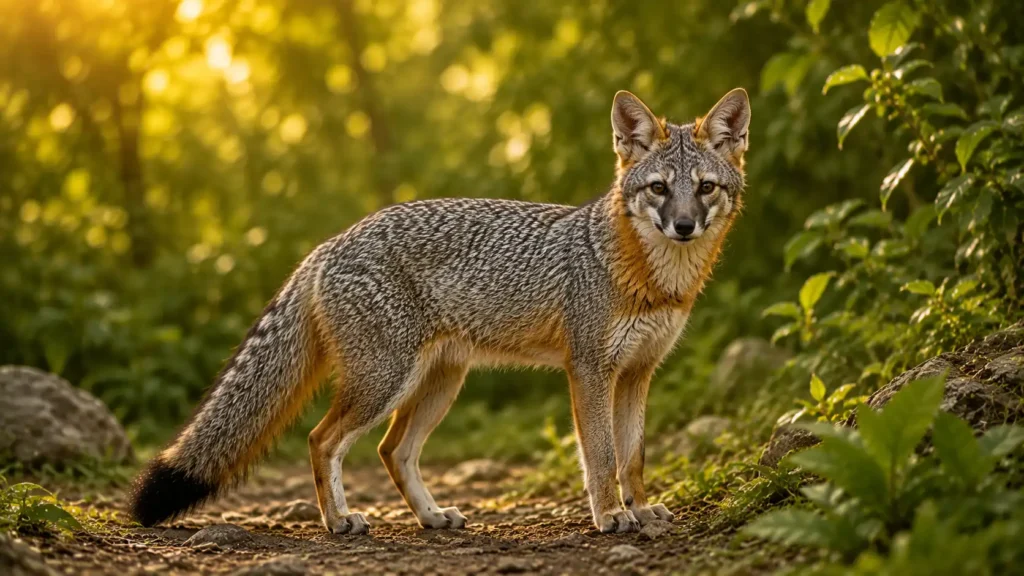
The gray fox, with its striking mix of gray and reddish fur, embodies the essence of the wild. This small canine prefers terrains ranging from woodlands to scrublands, making it adaptable to a variety of environments.
Known for its unique climbing abilities, these foxes can scale trees with ease, often retreating to higher ground to escape predators or find solitude.
This remarkable animal showcases a set of adaptations that enhance its survival. Its flexible wrists allow for nimble movements, making it an adept climber.
Although primarily focused on small mammals and fruits, the gray fox thrives on a diverse diet, reflecting its omnivorous nature. This flexibility in diet helps it navigate changing environments and food availability, ensuring its survival across various landscapes.
Fun Facts:
- Unlike other canids, the gray fox can climb trees, thanks to its unique limb structure.
- Their coat can change color seasonally, offering better camouflage.
- They can run at speeds of up to 28 miles per hour when hunting.
- Gray foxes are less vocal than other fox species, often communicating through body language.
- These foxes have been known to create dens in tree hollows, showing their resourcefulness.
- Their fox-like appearance sets them apart, making them easily recognizable in the wild.
Read May Also: What Animal Starts With X– Complete List With Pictures & Facts
Final Thoughts
The diverse world of animals similar to foxes offers a fascinating glimpse into nature’s adaptability and charm. From the majestic wolf to the playful raccoon, each of these creatures carries unique traits that echo the cunning and agility of foxes.
Understanding their behaviors and habitats not only enriches our appreciation for wildlife but also highlights the importance of conservation efforts. By learning about these captivating animals, we become advocates for their preservation and the delicate ecosystems they inhabit.
FAQs
What Types of Animals Will I Find on This List?
You’ll discover a diverse range of animals that share similarities with foxes, including canids and other small mammals such as raccoons and weasels.
Are the Images Provided High-Quality?
Yes, all images are high-resolution and carefully selected to showcase each animal’s unique features.
How Were the Animals Chosen for This List?
The animals were selected based on their physical traits, behavior, and ecological roles that resemble those of foxes.
Is There Detailed Information About Each Animal?
Absolutely! Each entry includes fun facts, habitat information, and distinguishing characteristics.
What Animal Looks Like a Fox?
Several animals look like foxes, including coyotes, jackals, raccoon dogs, maned wolves, dholes, and red pandas. Most of them belong to the dog family (Canidae), and they share features such as pointed ears, a narrow snout, and a bushy tail.
What Animal Looks like a Fox with Big Ears?
The fennec fox is the best-known answer. Other fox-like animals with large ears include the bat-eared fox, the kit fox, the swift fox, Blanford’s fox, and the maned wolf.
What Wild Animal is like a Fox?
Wild animals similar to foxes include coyotes, jackals, raccoon dogs, dholes, maned wolves, and red pandas. Most of them belong to the dog family (Canidae) and share a pointed snout, upright ears, and a bushy tail.