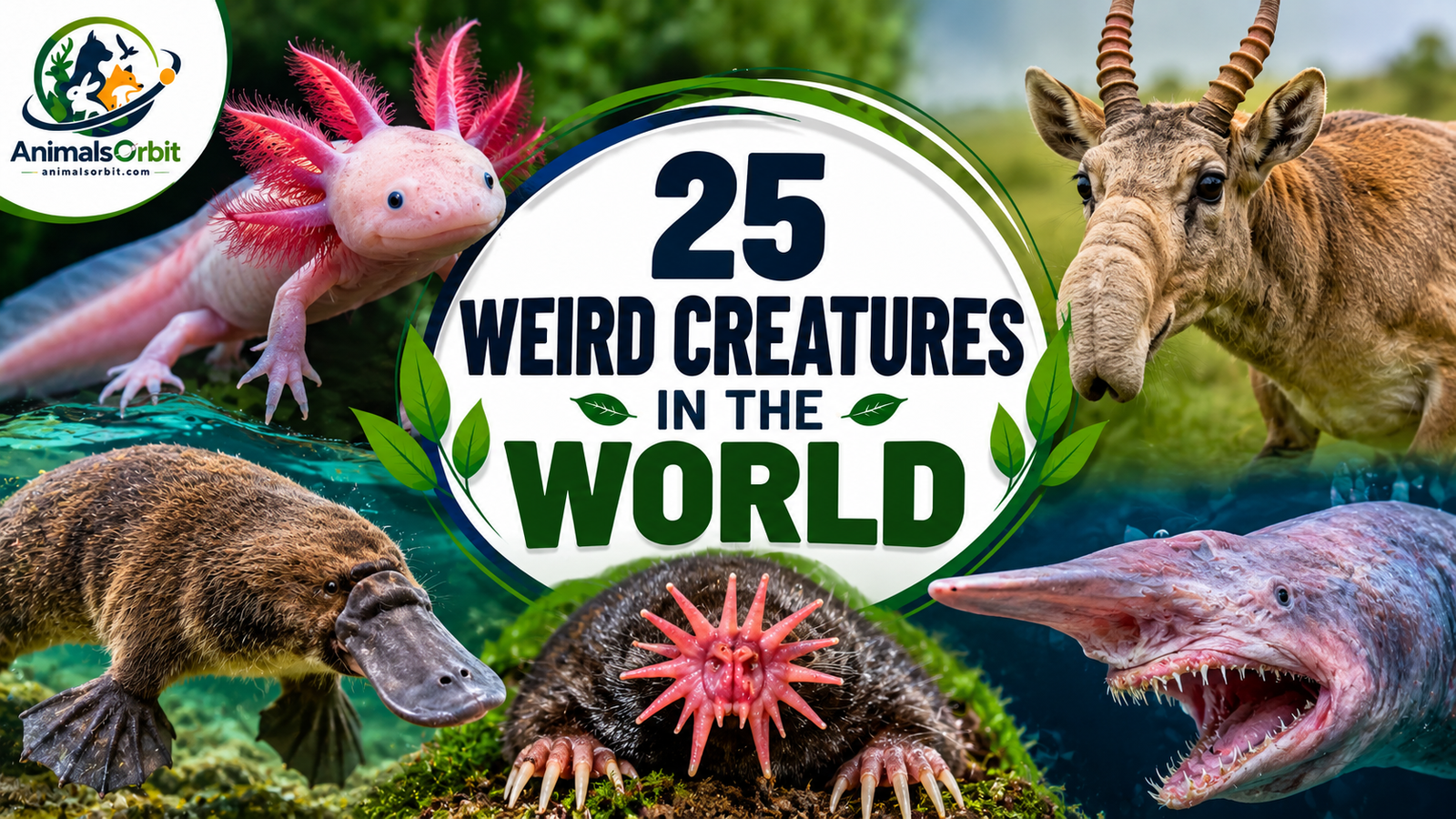
25 Weird Creatures in the World: Strange Creatures With Amazing Features
The animal world is full of creatures that look, behave, or survive in ways that seem almost unbelievable. Some have unusual body shapes, while others have strange feeding habits, special defenses, or adaptations that help them live in extreme environments.
You will discover some of the Weird Creatures in the world, including strange mammals, bizarre birds, unusual reptiles, fascinating amphibians, and mysterious sea creatures.
Weird Creatures List: Strange Animals
Here are 25 of the most weird creatures in the world you can find around the world:
- Aye-Aye
- Axolotl
- Platypus
- Saiga Antelope
- Star-Nosed Mole
- Goblin Shark
- Dumbo Octopus
- Red-Lipped Batfish
- Glass Frog
- Shoebill
- Okapi
- Pangolin
- Naked Mole Rat
- Thorny Devil
- Pink Fairy Armadillo
- Maned Wolf
- Mata Mata Turtle
- Hoatzin
- Japanese Spider Crab
- Blue Dragon
- Echidna
- Narwhal
- Chinese Water Deer
- Giant Isopod
- Proboscis Monkey
Aye-Aye
Scientific Name: Daubentonia madagascariensis
Type: Mammal
Habitat: Madagascar
Diet: Insects, fruits, seeds, and larvae
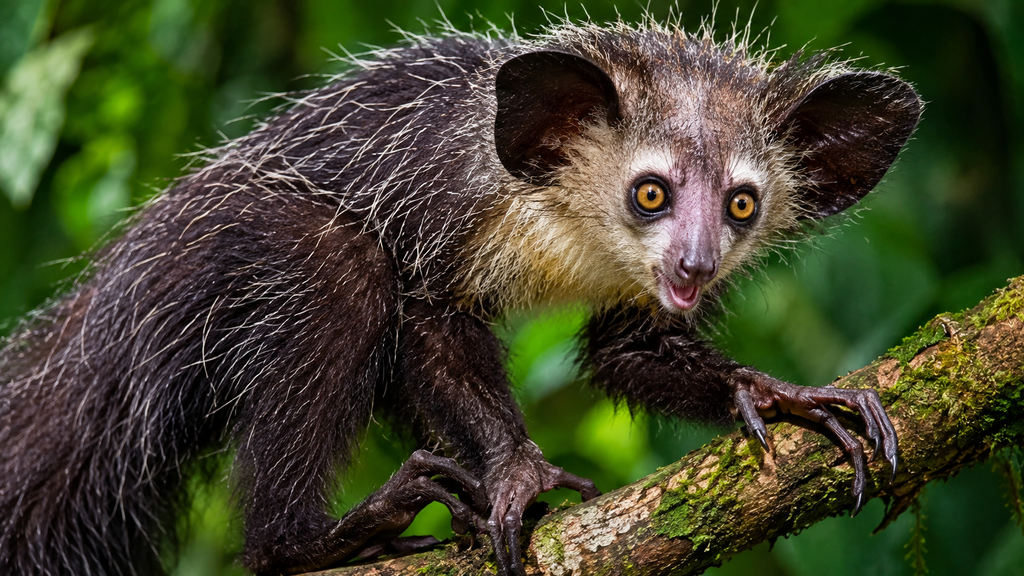
The aye-aye is one of the strangest primates on Earth. It has huge eyes, large ears, rodent-like teeth, and an unusually long middle finger that makes its appearance very distinctive.
This nocturnal animal spends much of its life in trees. It uses its long finger to tap on tree branches and listen for sounds made by insects hiding inside wood. Once it detects prey, it gnaws through the bark and pulls the insect out.
Its unusual finger is not just a strange-looking feature. It is a highly specialized adaptation that helps the aye-aye find food in the darkness of Madagascar’s forests.
Axolotl
Scientific Name: Ambystoma mexicanum
Type: Amphibian
Habitat: Freshwater habitats in Mexico
Diet: Worms, insects, small fish, and crustaceans
The axolotl looks like an animal from a fantasy movie. This unusual salamander has a wide head, small eyes, and feathery external gills that remain visible throughout its adult life.
One of the most fascinating things about the axolotl is its ability to regenerate certain lost body parts. It can regrow limbs and repair several types of damaged tissue, making it especially interesting to scientists.
Unlike many salamanders, axolotls usually remain aquatic instead of completing the typical transformation into a land-dwelling adult.
Platypus
Scientific Name: Ornithorhynchus anatinus
Type: Mammal
Habitat: Eastern Australia
Diet: Insects, worms, crustaceans, and small aquatic animals
The platypus is one of the most unusual mammals in the world. It has a duck-like bill, webbed feet, dense fur, and a broad tail that gives it a combination of features rarely seen in one animal.
It is also an egg-laying mammal. Platypuses belong to a small group of mammals called monotremes that reproduce by laying eggs rather than giving birth to live young. Another amazing adaptation is its ability to detect weak electrical signals produced by prey while hunting underwater.
Saiga Antelope
Scientific Name: Saiga tatarica
Type: Mammal
Habitat: Central Asian grasslands and semi-deserts
Diet: Grasses, herbs, and other vegetation
The saiga antelope is famous for its oversized, flexible nose. At first glance, its face may look unusual, but its nose serves several important purposes. These strange-looking antelopes can also travel long distances in search of food and water.
The large nasal structure helps filter dust and can also help control the temperature of air before it reaches the lungs. This is especially useful in the dry and dusty environments where saiga antelopes live.
Star-Nosed Mole
Scientific Name: Condylura cristata
Type: Mammal
Habitat: Wetlands and underground habitats of North America
Diet: Insects, worms, and other small invertebrates
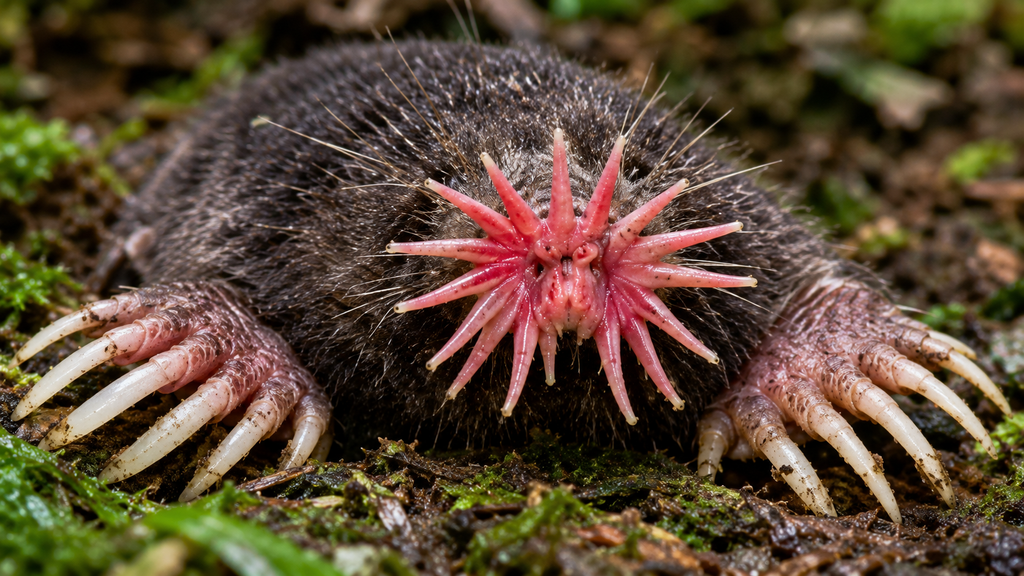
The star-nosed mole has one of the strangest noses in the animal kingdom. Instead of having a normal-looking snout, it has 22 fleshy tentacles arranged around its nose.
These sensitive structures help the mole identify and locate food in dark underground tunnels. Because the animal has poor eyesight, its unusual nose is extremely important for finding prey.
Goblin Shark
Scientific Name: Mitsukurina owstoni
Type: Fish
Habitat: Deep ocean waters
Diet: Fish, squid, crustaceans, and other marine animals
The goblin shark looks very different from the familiar sharks seen near the ocean surface. It has a long, flattened snout, pale skin, and jaws filled with sharp teeth they are among the Creatures that eat frogs.
Its most unusual feature is its highly extendable jaw. When prey comes close, the jaws can move forward rapidly to grab it. This deep-sea predator is rarely seen because it spends most of its life in dark ocean environments.
Dumbo Octopus
Scientific Name: Grimpoteuthis species
Type: Mollusk
Habitat: Deep ocean
Diet: Worms, crustaceans, and other small marine animals
The dumbo octopus gets its name from the two ear-like fins on the sides of its head. These fins resemble the ears of the famous cartoon elephant. Unlike many shallow-water octopuses, dumbo octopuses live deep below the ocean surface.
Their soft bodies and unusual fins allow them to move through the deep sea. These fascinating deep-sea creatures use their arms and webbing to help capture small prey.
Red-Lipped Batfish
Scientific Name: Ogcocephalus darwini
Type: Fish
Habitat: Pacific Ocean near the Galápagos Islands
Diet: Small fish and marine invertebrates
The red-lipped batfish is one of the strangest fish in the ocean. Its bright red lips, flattened body, and unusual fins make it look more like a creature from another planet than an ordinary fish. Instead of swimming constantly like many fish, it can use its modified fins to move along the seafloor.
It also has a specialized structure called an illicium that can help attract prey. Its unusual appearance is a great example of how ocean animals evolve specialized body features.
Glass Frog
Scientific Name: Family Centrolenidae
Type: Amphibian
Habitat: Tropical forests of Central and South America
Diet: Small insects and other invertebrates
Glass frogs are famous for their partially transparent bodies. In some species, you can see internal organs through the skin, giving these tiny frogs their unusual name.
They usually live on vegetation near streams and rivers. Their eggs are often placed on leaves above water, allowing the young to enter the water after hatching. Their transparent appearance makes glass frogs some of the most fascinating forest animals.
Shoebill
Scientific Name: Balaeniceps rex
Type: Bird
Habitat: Freshwater swamps of East Africa
Diet: Fish, eels, frogs, and other aquatic animals
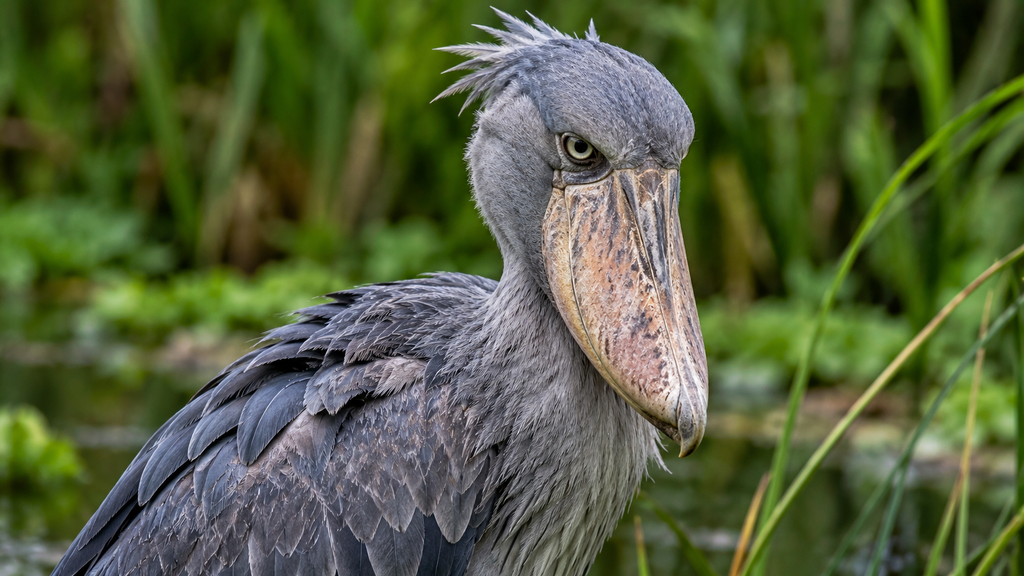
The shoebill is a huge African bird with an enormous bill that looks similar to a shoe. Its prehistoric appearance has made it one of the most recognizable strange birds.
Shoebills often stand almost motionless while waiting for prey. When the right moment comes, they can strike quickly with their powerful bill. Their slow movements, tall body, and giant beak make them look almost like a bird from prehistoric times.
Okapi
Scientific Name: Okapia johnstoni
Type: Mammal
Habitat: Dense forests of Central Africa
Diet: Leaves, fruits, buds, and other vegetation
The okapi looks like a mixture of several familiar animals. It has a body shape somewhat similar to a giraffe but has dark-and-white striped legs that resemble a zebra.
The okapi is actually the closest living relative of the giraffe. Its long tongue helps it reach leaves and vegetation in dense forests. Its unusual stripes may also help break up its outline in the forest, making it harder for predators to spot.
Pangolin
Scientific Name: Family Manidae
Type: Mammal
Habitat: Africa and Asia
Diet: Ants and termites
The pangolin is one of the few mammals covered in large protective scales. These scales are made from keratin, the same material found in human fingernails.
Pangolins have long, sticky tongues that help them collect ants and termites from nests. When threatened, they can curl their bodies into a tight ball, using their scales as armor.
This combination of scales, a long tongue, and defensive behavior makes the pangolin one of the most unusual mammals in the world.
Naked Mole Rat
Scientific Name: Heterocephalus glaber
Type: Mammal
Habitat: Underground tunnels in East Africa
Diet: Roots, tubers, and underground plant parts
The naked mole rat has nearly hairless, wrinkled skin, large front teeth, and a body adapted for life underground. Unlike most mammals, naked mole rats live in large colonies with a social system that resembles those of ants and bees. A breeding female can be the central member of the colony.
Their unusual biology allows them to tolerate harsh underground conditions, including environments with limited oxygen.
Thorny Devil
Scientific Name: Moloch horridus
Type: Reptile
Habitat: Australian deserts and dry regions
Diet: Mostly ants
The thorny devil looks like a miniature dinosaur covered in spikes. Its body has numerous sharp projections that make it difficult for predators to swallow.
Its strange skin also helps with water collection. Moisture from dew or wet surfaces can be directed across its skin toward its mouth through tiny channels.
The thorny devil’s appearance is therefore more than just unusual. Its body is specially adapted for surviving in Australia’s dry environment.
Pink Fairy Armadillo
Scientific Name: Chlamyphorus truncatus
Type: Mammal
Habitat: Sandy plains of Argentina
Diet: Insects, worms, and plant material
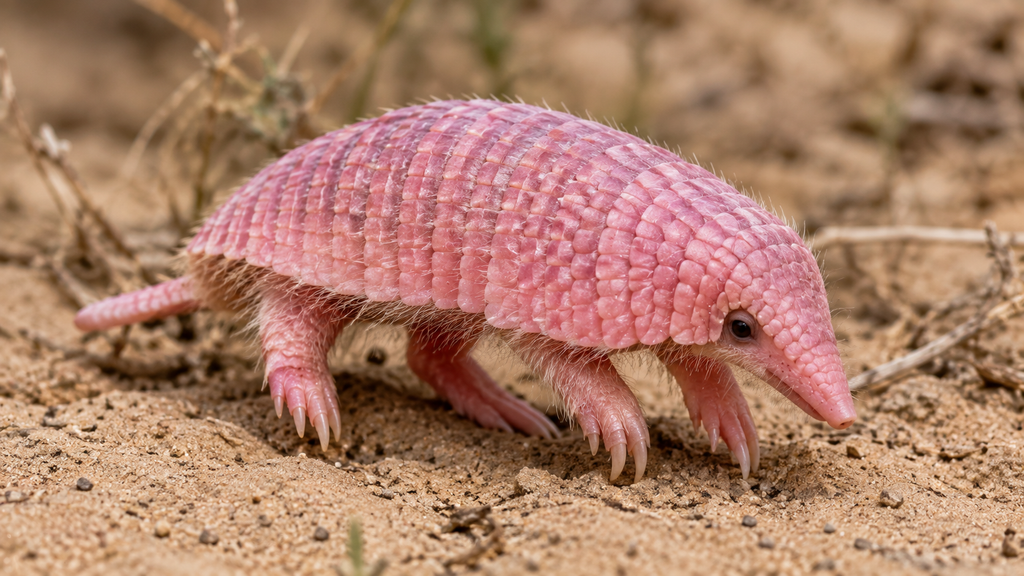
The pink fairy armadillo is the smallest armadillo species. It has a pinkish shell, a pointed face, tiny eyes, and strong digging claws. This unusual animal spends much of its time underground. Its small body allows it to move through loose soil and sand.
Because it is rarely seen and spends so much time beneath the ground, the pink fairy armadillo remains one of the more mysterious strange mammals.
Maned Wolf
Scientific Name: Chrysocyon brachyurus
Type: Mammal
Habitat: Grasslands and open habitats of South America
Diet: Fruits, plants, small mammals, birds, and insects
The maned wolf looks like a fox standing on extremely long legs. Despite its name, it is not a true wolf and does not belong to the same genus as gray wolves.
Its long legs help it move through tall grass and vegetation. It is an omnivore, meaning it eats both plant and animal foods. One of its favorite fruits is the wolf apple, a plant strongly associated with the species.
Mata Mata Turtle
Scientific Name: Chelus species
Type: Reptile
Habitat: Slow-moving freshwater habitats of South America
Diet: Fish and aquatic animals
The mata mata turtle has an appearance unlike almost any other turtle. Its rough, ridged shell, wrinkled skin, wide head, and long pointed snout help it blend into its surroundings.
Its body often resembles a piece of floating bark. This natural camouflage allows the turtle to remain still while waiting for prey. When a small aquatic animal comes close, the mata can quickly draw it into its mouth.
Hoatzin
Scientific Name: Opisthocomus hoazin
Type: Bird
Habitat: Amazon and Orinoco rainforest wetlands
Diet: Mostly leaves
The hoatzin is an unusual tropical bird with a spiky crest, bright facial skin, and a very distinctive digestive system. It mainly eats leaves, which are processed through fermentation in its digestive tract.
This unusual diet gives the bird a strong odor and has earned it the nickname stink bird. Young hoatzins are also unusual because they have claws on their wings. These claws can help them climb through vegetation when they leave or fall from the nest.
Japanese Spider Crab
Scientific Name: Macrocheira kaempferi
Type: Crustacean
Habitat: Pacific waters around Japan
Diet: Dead animals, small marine organisms, and plant material
The Japanese spider crab has an enormous leg span and an extremely unusual body shape. Its long, thin legs make it look similar to a giant underwater spider.
It lives on the ocean floor and can feed as a scavenger. Its long legs allow it to move across the seafloor while searching for food. Its size makes it one of the most impressive and strange-looking crustaceans in the ocean.
Blue Dragon
Scientific Name: Glaucus atlanticus
Type: Marine mollusk
Habitat: Open ocean waters
Diet: Venomous jellyfish and other floating marine animals
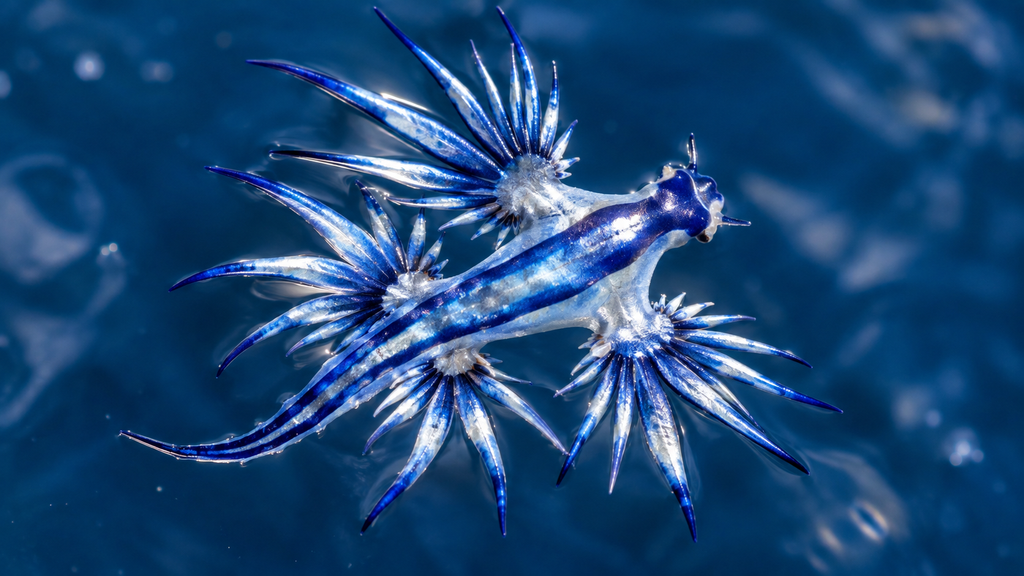
The blue dragon is a tiny sea slug with a beautiful but unusual appearance. Its body is blue and silver, helping it blend into the ocean surface.
Despite its delicate appearance, it can feed on dangerous marine animals such as Portuguese man o’ war. It can retain stinging cells from its prey and use them as a defense.
This makes the blue dragon one of the most fascinating examples of an animal turning its prey’s defenses to its own advantage.
Echidna
Scientific Name: Tachyglossus aculeatus and related species
Type: Mammal
Habitat: Australia and New Guinea
Diet: Ants and termites
The echidna is another unusual egg-laying mammal. It has a long snout, spines covering much of its back, and strong claws designed for digging.
Its sticky tongue helps it collect ants and termites. When threatened, it can use its spines and digging ability as protection. Along with the platypus, echidnas are among the only living mammals that lay eggs.
Narwhal
Scientific Name: Monodon monoceros
Type: Marine mammal
Habitat: Arctic Ocean
Diet: Fish, squid, shrimp, and other marine animals
The narwhal is sometimes called the unicorn of the sea because of its long spiral tusk. The tusk is actually an elongated tooth that can grow several feet long.
Narwhals live in Arctic waters and are highly adapted to life around sea ice. They use sound and other senses to navigate through their underwater environment. Their unique tusk makes them one of the most recognizable strange sea animals.
Chinese Water Deer
Scientific Name: Hydropotes inermis
Type: Mammal
Habitat: Wetlands and grasslands of China and Korea
Diet: Grasses, aquatic plants, and other vegetation
The Chinese water deer looks like a small deer with vampire-like canine teeth. Unlike most deer, males do not have antlers.
Instead, adult males have long upper canine teeth that extend outside the mouth. These unusual teeth can be used during competition between males. The species is also a strong swimmer and is closely associated with wet habitats.
Giant Isopod
Scientific Name: Bathynomus species
Type: Crustacean
Habitat: Deep ocean floor
Diet: Dead animals and other organic material
Giant isopods look like enormous versions of the small woodlice commonly found on land. Their flattened bodies are covered by a hard outer shell and they have several pairs of legs.
They live in deep ocean environments where food can be scarce. As scavengers, they help consume dead animals and other organic material that reaches the seafloor. Their ability to survive with limited food is one of the most interesting parts of their biology.
Proboscis Monkey
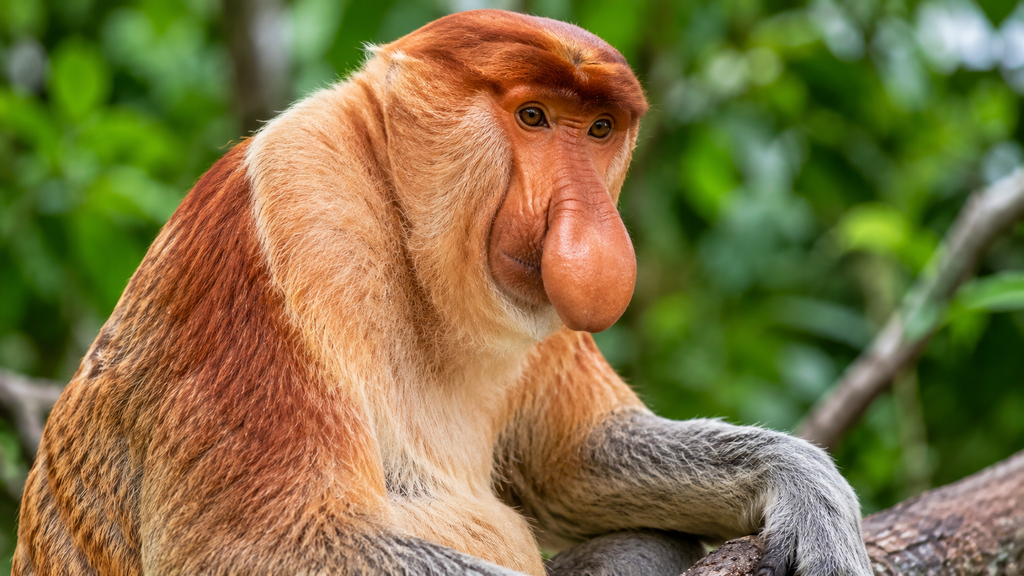
Scientific Name: Nasalis larvatus
Type: Mammal
Habitat: Borneo’s mangroves and forests
Diet: Leaves, fruits, and seeds
The proboscis monkey has one of the strangest faces among primates. Adult males have a large, hanging nose that can make their face look almost cartoon-like.
Its unusual nose is more than an interesting physical feature. It is thought to play a role in communication and may help make the male’s calls louder. Proboscis monkeys are also excellent swimmers and are strongly associated with wetland environments.
Why Do Some Animals Look So Weird?
An animal may look strange because its body has evolved to solve a particular survival problem. Features that seem unusual to humans can help an animal find food, hide from predators, attract a mate, or survive extreme environments.
For example, the star-nosed mole’s unusual nose helps it find food underground, while the thorny devil’s body helps it survive in a dry desert habitat. The pangolin’s scales provide protection, and the goblin shark’s unusual jaws help it catch prey in the deep ocean.
What Makes an Animal Weird?
There is no scientific rule that defines a “weird looking animals.” The term is usually used for species with unusual physical features, behaviors, or survival adaptations.
Some animals look strange because of their body shape. Others have rare abilities or live in extreme habitats. Deep-sea animals, rainforest creatures, desert reptiles, and unusual mammals often have adaptations that make them look very different from familiar species.
Read May Also: Top 20 Animals Like Raccoons With Pictures and Hidden Facts
Conclusion
The animal kingdom is filled with creatures that challenge our idea of what an animal should look like. From the transparent glass frog and long-nosed saiga antelope to the armored pangolin and bizarre goblin shark, every species has its own story.
Many of these strange animals in the world have unusual features for a reason. Their bodies have evolved to help them survive specific environments, find food, avoid predators, or reproduce.
These unique animals and weirdest animals in the world remind us that nature does not follow a single design. The more we explore the animal world, the more incredible adaptations we discover.
FAQs
Why Does Australia Have Weird Animals?
Australia has many unusual animals because it has been geographically isolated for millions of years. This allowed species to evolve in unique ways and develop special adaptations not commonly found elsewhere.
What Are Cute Weird Animals?
Cute weird animals include the axolotl, quokka, fennec fox, sugar glider, and pink fairy armadillo. Their unusual features make them both adorable and fascinating.
What Are Cool Weird Animals?
Cool weird animals include the platypus, axolotl, goblin shark, narwhal, pangolin, and red-lipped batfish. These animals have unique appearances, behaviors, or survival adaptations.
What Are Extinct Weird Animals?
Extinct weird animals are species that no longer exist today but had unusual physical features or behaviors. Examples include the thylacine, dodo, and giant ground sloth.
What are some Animals with Weird Names?
Some animals with unusual names include the aye-aye, blobfish, pangolin, axolotl, quokka, narwhal, platypus, numbat, dik-dik, and gerenuk.
What are some Weird Animals people keep as Pets?
Some unusual pets include hedgehogs, sugar gliders, axolotls, tarantulas, bearded dragons, hermit crabs, chinchillas, ferrets, fennec foxes, and pet rats.
What are some of the Weirdest Animals in Australia?
Some of the strangest Australian animals are the platypus, echidna, wombat, Tasmanian devil, cassowary, frilled-neck lizard, thorny devil, koala, quokka, and kangaroo.