Top 20 Animals Like Raccoons With Pictures and Hidden Facts
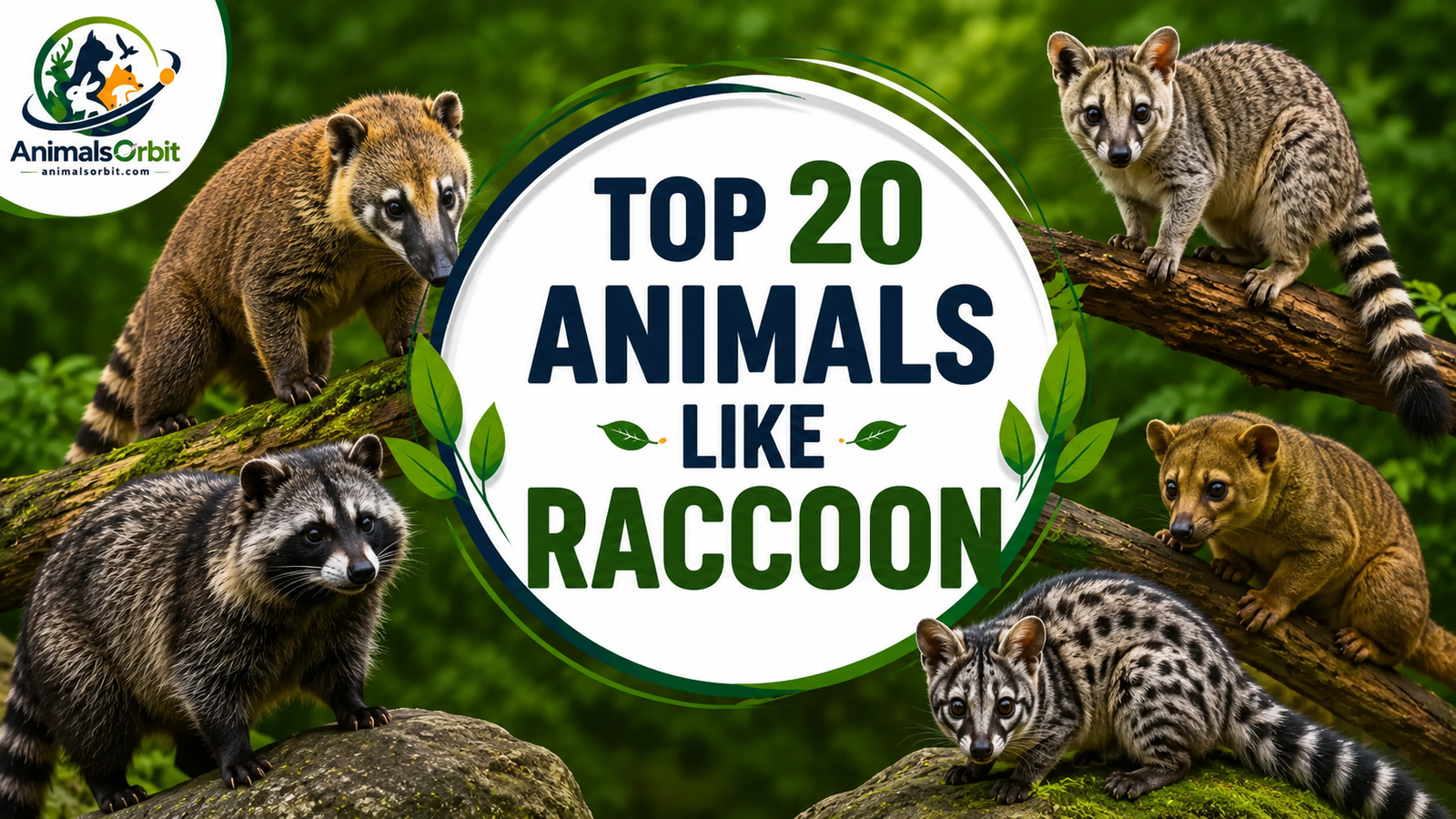
Raccoons are among the most recognizable small mammals, thanks to their dark facial markings, ringed tails, clever behavior, and ability to adapt to different environments. But they are not the only animals that have similar features or behaviors.
Some of these animals are close relatives of raccoons, while others simply resemble them because they developed similar adaptations. From the tree-dwelling kinkajou to the secretive olinguito, each species has its own characteristics that make it interesting.
We will look at 20 animals like raccoons, including their scientific names, appearances, habitats, diets, and the traits that make them comparable to raccoons.
List of Animals Like Raccoons
Here is the list of other animals like raccoons that share physical or behavioral similarities with raccoons:
- Coati
- Ringtail
- Kinkajou
- Cacomistle
- Olingo
- Olinguito
- Red Panda
- Common Genet
- Palm Civet
- Japanese Raccoon Dog
- Marten
- Fisher
- Wolverine
- Skunk
- Badger
- Ferret-Badger
- Fox
- Crab-Eating Raccoon
- White-Nosed Coati
- African Civet
Coati
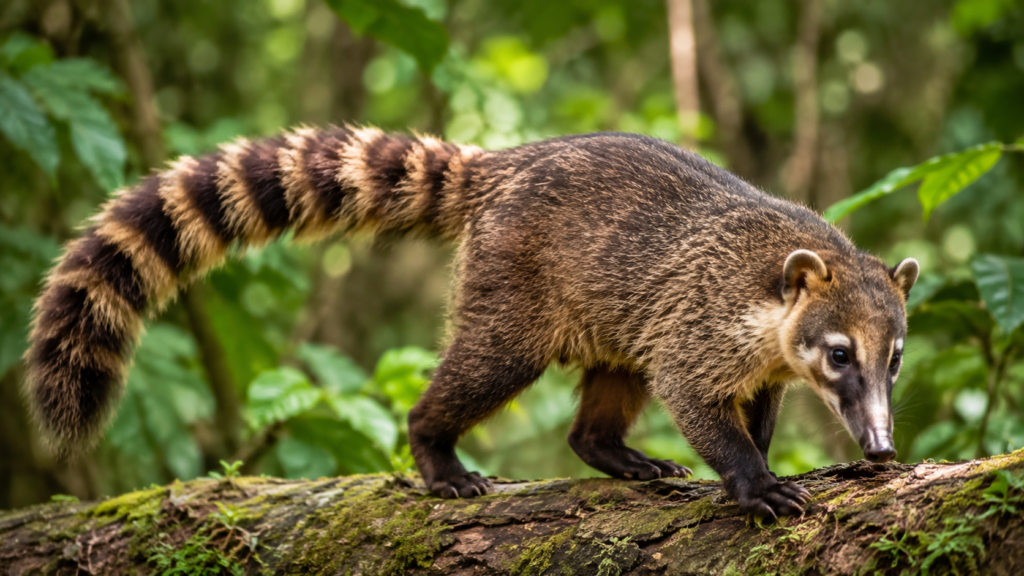
Scientific Name: Nasua nasua
Coatis are some of the animals like raccoons in mexico, especially because of their pointed faces, dark facial markings, long tails, and active personalities. They belong to the same family, Procyonidae, which explains many of their physical similarities.
Unlike raccoons, coatis are often seen moving around in groups. They use their long noses to search through soil, leaf litter, and vegetation for food. Their diet includes fruits, insects, eggs, small animals, and other available foods. Their flexible feeding habits help them survive in forests as well as areas affected by human activity.
Ringtail
Scientific Name: Bassariscus astutus
The ringtail is a small mammal with one of the most obvious raccoon-like appearances. Its large eyes, pointed face, and long tail marked with alternating dark and light bands make it easy to understand why people sometimes associate it with raccoons.
Ringtails are mainly nocturnal and are excellent climbers. They can move through rocky areas, trees, and narrow spaces with impressive agility. Their food consists of insects, rodents, birds, fruits, and other small prey. They are particularly well adapted to dry regions of the southwestern United States and Mexico.
Kinkajou
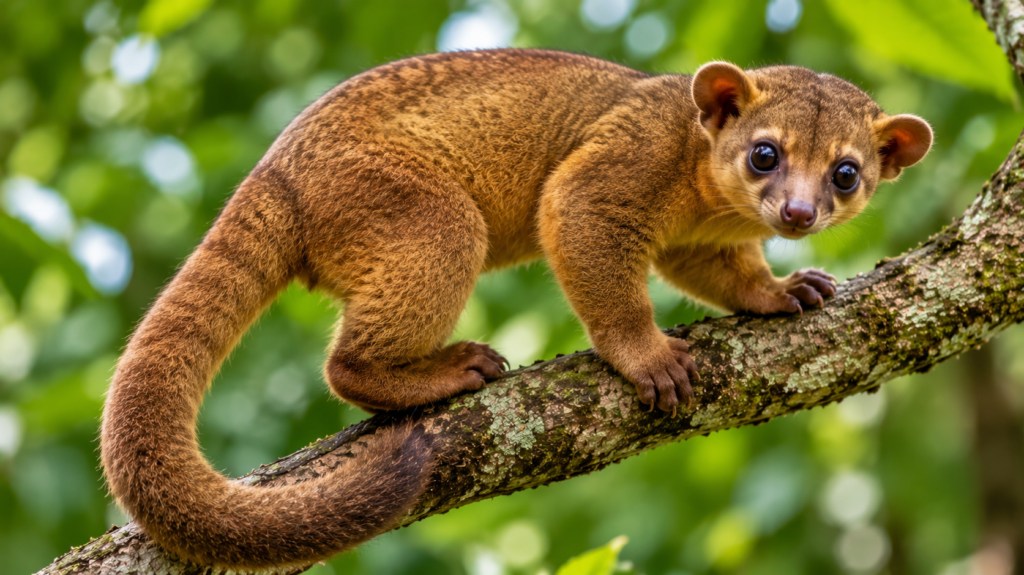
Scientific Name: Potos flavus
The kinkajou is a rainforest mammal that looks somewhat different from a raccoon but shares an important family connection. It has a rounded face, soft golden-brown fur, and a long tail that helps it move through trees.
Kinkajous spend much of their lives in the forest canopy. They mainly eat fruit, nectar, and other plant material, although they may also consume insects and small food items. Their flexible tail is especially useful when climbing and reaching food among branches. Their nighttime activity also gives them a behavioral similarity to raccoons.
Cacomistle
Scientific Name: Bassariscus sumichrasti
The cacomistle is a small Central American mammal with a slender body, large eyes, and a long ringed tail. Its facial appearance and tail pattern can make it look surprisingly similar to a small raccoon.
This animal is primarily active at night and spends considerable time in trees. It feeds on fruits, insects, and other small food sources that it encounters while moving through forest vegetation. Its climbing ability allows it to reach food and escape many ground-based predators.
Olingo
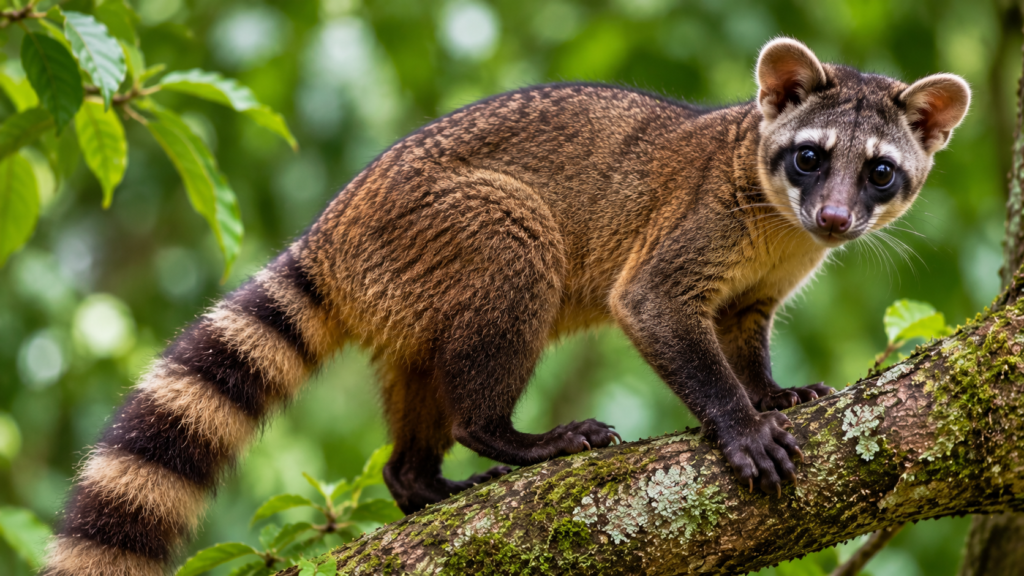
Scientific Name: Bassaricyon gabbii
Olingos are tree-dwelling mammals found in the forests of Central and northern South America. They have rounded faces, thick fur, and long tails, giving them a gentle appearance that can remind observers of raccoon relatives.
These animals are mostly nocturnal and spend much of their time searching for food in the canopy. Fruits form an important part of their diet, although insects and other foods may also be eaten. Their strong climbing skills are essential because life in the forest canopy requires constant movement between branches.
Olinguito
Scientific Name: Bassaricyon neblina
The olinguito is a small mammal from the cloud forests of the Andes. It is closely related to olingos and belongs to the same broader group of procyonids as raccoons.
With its reddish-brown coat, rounded face, and bushy tail, the olinguito can look like a smaller and more delicate relative of familiar raccoon-like animals. It is mainly active at night and feeds largely on fruits, although other foods may supplement its diet. Its restricted mountain habitat makes forest conservation particularly important for this species.
Red Panda
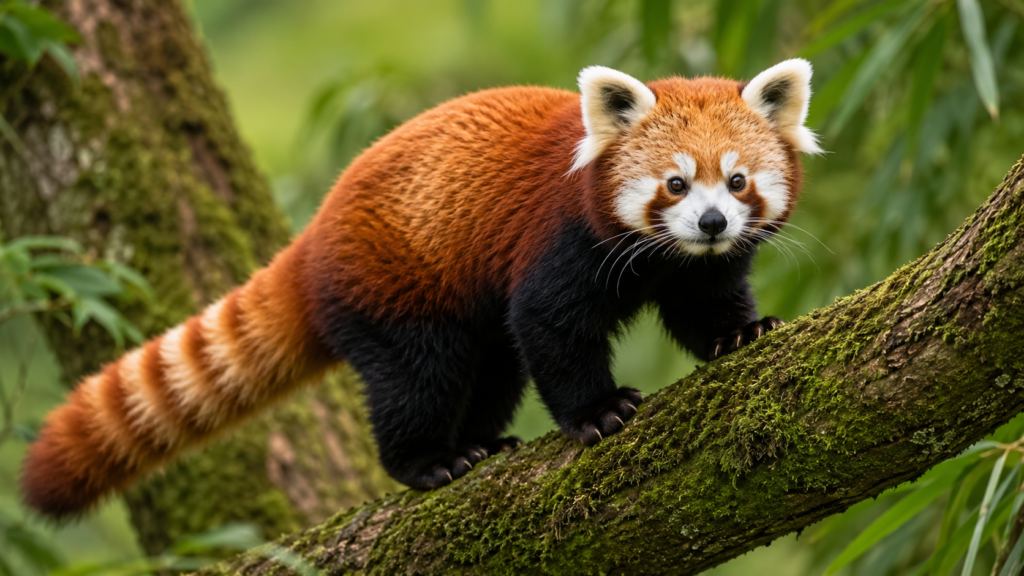
Scientific Name: Ailurus fulgens
The red panda is not a member of the raccoon family, but its appearance and lifestyle have caused people to compare the two animals. It has a reddish coat, a striped bushy tail, a small face, and remarkable climbing abilities.
Red pandas spend much of their time in trees and are especially associated with mountain forests. Bamboo makes up a large portion of their diet, but they can also eat fruits, insects, eggs, and other available foods. Their flexible wrist structure helps them grip branches and handle food efficiently.
Common Genet
Scientific Name: Genetta genetta
The common genet is a slender mammal with spots along its body and a long, patterned tail. Although it is not closely related to raccoons, its body shape, nighttime habits, and climbing ability can make it seem similar.
Genets are skilled predators and feed on rodents, birds, insects, reptiles, and other small animals. They can also consume fruits when available. Their flexible bodies and sharp claws allow them to climb trees and move quietly while hunting.
Palm Civet
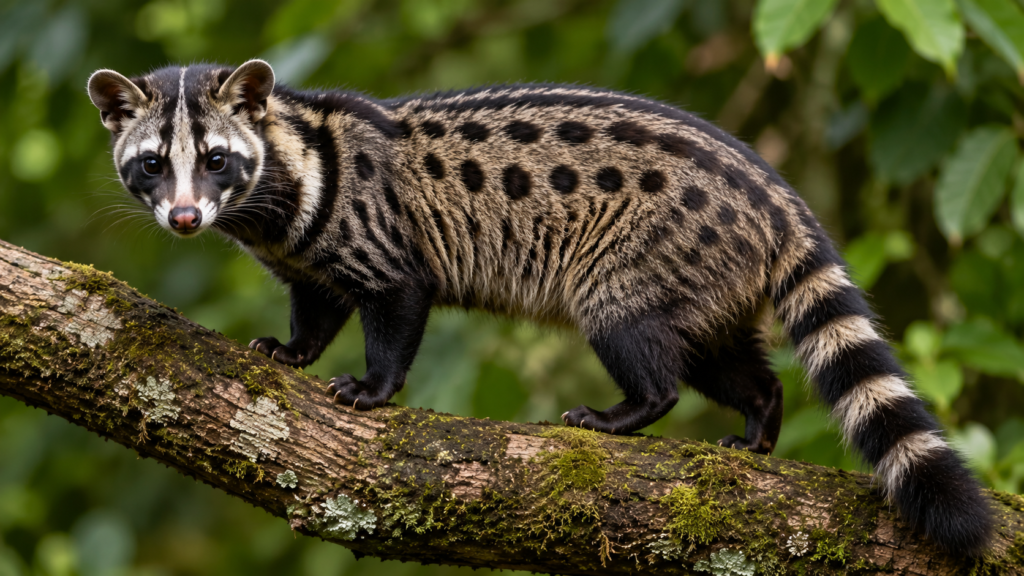
Scientific Name: Paradoxurus hermaphroditus
The Asian palm civet is a nocturnal mammal found across parts of South and Southeast Asia. It has a long body, pointed face, dark markings, and a tail that can contribute to its raccoon-like appearance.
Palm civets are highly adaptable feeders. They eat fruits, berries, insects, small vertebrates, and other foods depending on what is available. They are also capable climbers and can live in forest environments as well as landscapes modified by people.
Japanese Raccoon Dog
Scientific Name: Nyctereutes procyonoides viverrinus
The Japanese raccoon dog, commonly called a tanuki, is often confused with a raccoon because of its dark facial markings, rounded body, and thick fur. Despite its name and appearance, it is actually a member of the canine family.
Tanukis are omnivorous and have a varied diet that may include fruits, insects, small animals, and plant material. They are adaptable animals that can occupy forests, farmland, and areas near human settlements. Their resemblance to raccoons is mainly visual rather than based on close biological relationship.
Marten
Scientific Name: Martes martes
Martens are slender members of the weasel family with long bodies, bushy tails, and excellent climbing abilities. Their facial features and tail can sometimes remind people of other small forest mammals, including raccoon-like species.
They are active hunters and may eat rodents, birds, insects, eggs, and fruits. Martens often move through woodland habitats using trees as well as the ground. Their agility gives them an advantage when searching for prey or escaping danger.
Fisher
Scientific Name: Pekania pennanti
The fisher is a powerful forest-dwelling mammal from North America. Although it does not have the classic raccoon mask, its dark fur, bushy tail, and agile movements can make it part of the wider group of animals people compare with raccoons.
Fishers are opportunistic predators. Their diet can include rodents, rabbits, birds, insects, fruits, and other animals. They are particularly well known for their ability to move through dense woodland and climb trees when necessary.
Wolverine
Scientific Name: Gulo gulo
Wolverines are much larger and more powerful than raccoons, but both are adaptable mammals with broad diets. Wolverines have compact bodies, strong jaws, thick fur, and large paws that help them survive in cold environments.
They can hunt prey but are also effective scavengers. Wolverines may consume mammals, birds, carrion, and plant foods. They are generally solitary and can travel long distances while searching for food, making them remarkably resilient animals.
Skunk
Scientific Name: Mephitis mephitis
Skunks are another group of mammals frequently compared with raccoons because both can live near human settlements and have flexible feeding habits. The striped skunk, for example, has a distinctive black-and-white pattern that makes it immediately recognizable.
Skunks eat insects, grubs, small animals, fruits, eggs, and other available foods. Their powerful digging ability helps them locate underground prey. When threatened, they rely on their famous defensive spray rather than trying to fight larger predators.
Badger
Scientific Name: Meles meles
Badgers are sturdy mammals known for their powerful claws, broad bodies, and impressive digging skills. Their facial markings can create a masked appearance, although their body shape is quite different from that of a raccoon.
They spend considerable time searching for worms, insects, small mammals, roots, fruits, and other foods. Their digging behavior can also influence the soil by turning over layers of earth. Like raccoons, badgers are adaptable and can occupy several types of habitats.
Ferret-Badger
Scientific Name: Melogale personata
The Burmese ferret-badger is a small carnivorous mammal found in parts of South and Southeast Asia. It has a narrow body, short legs, a pointed face, and distinctive facial markings.
Its diet is varied and may include insects, small vertebrates, fruits, and other food items. Ferret-badgers generally spend much of their time searching through vegetation and soil. Their combination of a masked face and compact body makes them an interesting raccoon-like animal.
Fox
Scientific Name: Vulpes vulpes
Foxes are not close relatives of raccoons, but they share several behavioral characteristics. Both are intelligent, opportunistic feeders that can adapt to rural areas, forests, farmland, and even urban environments.
Red foxes have a highly varied diet. Depending on their surroundings, they may eat rodents, rabbits, birds, insects, fruits, and food obtained from human environments. Their ability to take advantage of different food sources is one reason foxes have become successful in many parts of the world.
Crab-Eating Raccoon
Scientific Name: Procyon cancrivorus
The crab-eating raccoon is one of the closest matches to the familiar North American raccoon because it belongs to the same genus, Procyon. It is found primarily in Central and South America.
This species has the characteristic masked face and ringed tail associated with raccoons. It is an adaptable omnivore that can feed on crabs, insects, fruits, amphibians, small animals, and other available foods. Its ability to use both terrestrial and aquatic food sources helps it survive in diverse habitats.
White-Nosed Coati
Scientific Name: Nasua narica
The white-nosed coati is another procyonid that shares many characteristics with raccoons. It has a long flexible nose, a prominent tail, and strong claws that help it explore the forest floor and climb trees.
These coatis are energetic foragers. They use their noses and claws to uncover insects, larvae, roots, fruits, eggs, and small animals. Females and young animals commonly travel together in groups, while adult males may be more solitary.
African Civet
Scientific Name: Civettictis civetta
The African civet is a nocturnal mammal with a distinctive spotted coat, long body, and dark facial markings. It belongs to a different family than raccoons, but its nighttime activity and opportunistic feeding habits make it an interesting comparison.
African civets consume a wide range of foods, including fruits, insects, small vertebrates, eggs, and carrion. Their flexible diet allows them to exploit whatever resources are available in their environment. They are mostly solitary and rely on their senses to locate food after dark.
Read May Also: Top 15 Animals That Sleep the Most: Hours of Sleep Revealed
Conclusion
Animals that resemble raccoons can be found in many different parts of the world, and their similarities do not always mean they are closely related. Coatis, ringtails, kinkajous, and other procyonids share evolutionary connections with raccoons, while animals such as foxes, civets, martens, and badgers only share certain physical or behavioral traits.
What makes these animals especially interesting is their ability to adapt. Many are skilled climbers, nighttime foragers, opportunistic feeders, or successful survivors in changing environments. Looking beyond the familiar raccoon reveals a much larger group of fascinating mammals with their own unique roles in nature.
FAQs
What Are Wild Animals Like Raccoons?
Wild animals like raccoons include mammals that share similar features, behaviors, or habitats with raccoons. Some may have similar body shapes, facial markings, climbing abilities, or nocturnal habits.
What Are Animals That Look Like Raccoons But Aren’t?
Animals That Look Like Raccoons But Aren’t include species such as raccoon dogs, coatis, ringtails, and some types of civets. These animals may resemble raccoons because of their facial markings, body shape, or ringed tails.
What Animal That Looks Like A Raccoon But Bigger?
An Animal That Looks Like A Raccoon But Bigger could be a coati or a raccoon dog, depending on its appearance and location. Some coatis can appear larger because of their long bodies, extended snouts, and distinctive tails.
What Animal Looks Like A Raccoon But Is Brown?
An Animal That Looks Like A Raccoon But Is Brown could be a coati, raccoon dog, or certain species of civet. Their brown or reddish-brown coats can make them look somewhat similar to raccoons.
What Animals Are In The Raccoon Family?
Animals In The Raccoon Family include raccoons, coatis, ringtails, kinkajous, and olingos. These animals belong to the family Procyonidae and are found mainly in the Americas, with some related species occurring in different regions.
What Animals Are Like Raccoons And Possums?
Animals Like Raccoons And Possums include a variety of small to medium-sized mammals with similar nocturnal lifestyles. Examples can include coatis, ringtails, skunks, and some types of civets, although they do not all belong to the same animal family.
What Animal looks like a Raccoon?
Several animals look like raccoons, including the ring-tailed cat, coati, red panda, tanuki (raccoon dog), badger, and kinkajou. They share features such as a masked face, a ringed or bushy tail, or a similar body shape.
What are Some Pets like Raccoons?
Pets that share raccoon traits, such as curiosity, nimble paws, and a mischievous nature, include ferrets, sugar gliders, skunks, coatis, kinkajous, and genets. Some of these are exotic animals and need special care or permits.
Are Raccoons Dangerous?
Raccoons are usually not aggressive and avoid people, but they can become dangerous if they feel cornered, are protecting their young, or are sick. They can bite and scratch, and they can carry diseases, so it is best to keep your distance.