Explore Top 15 Animals With Long Legs (With Pictures)
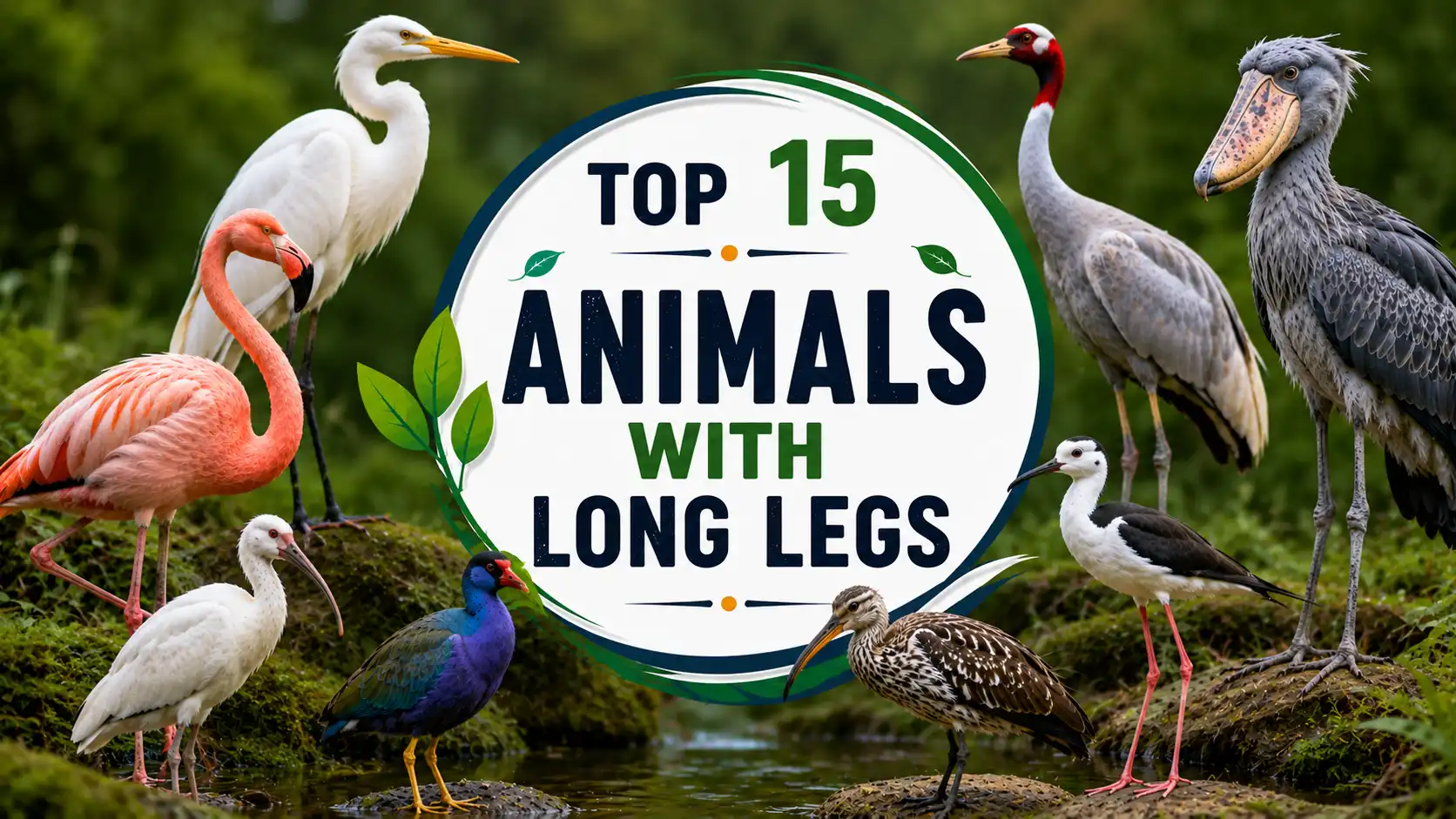
Animals with long legs are some of the most fascinating creatures in the animal kingdom. From the towering giraffe to the swift ostrich and graceful flamingo, long limbs can give animals important advantages in their daily lives. Depending on the species, unusually long legs may help an animal run faster, walk through deep water, move across snow, reach vegetation, or see above tall grasses.
Let’s explore 15 remarkable animals with long legs, including mammals, birds, and even a few unusual marine animals with extremely elongated limbs. Each species has developed its distinctive body shape to survive in its particular environment.
List of Animals With Long Legs
Animals with long legs come in many different shapes and sizes, and their elongated limbs serve different purposes depending on their habitat and lifestyle. Some species rely on long legs for speed and agility, while others use them to wade through shallow water, walk across snow, reach vegetation, or keep their bodies above muddy terrain.
Here is the list and pictures of animals with long legs:
- Shire Horse
- Giant Sea Spider
- African Elephant
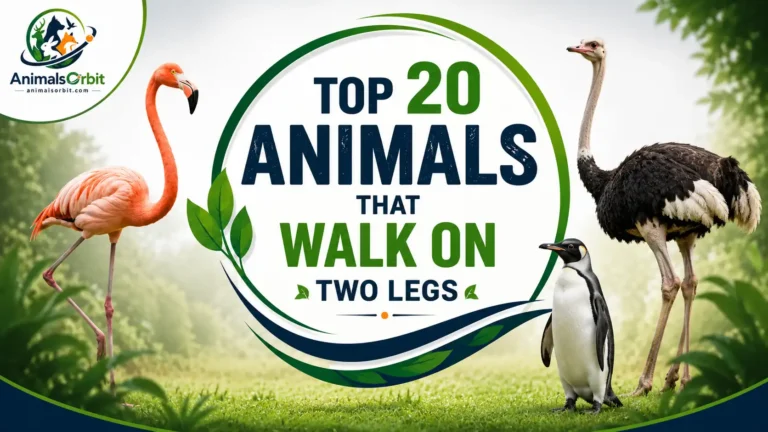
- Ostrich
- Japanese Spider Crab
- Secretary Bird
- Flamingo
- Giant Pacific Octopus
- Red Kangaroo
- Arabian Camel
- Alaskan Moose
- Maned Wolf
- Black-Winged Stilt
- Giraffe
- Gerenuk
Shire Horse
- Scientific Name: Equus ferus caballus
- Class: Mammalia
- Diet: Herbivore
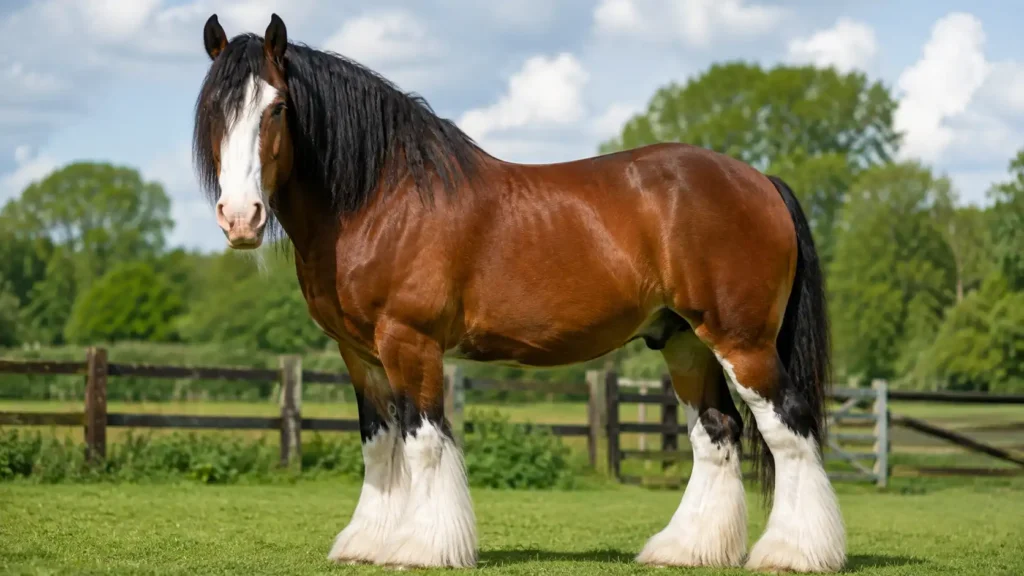
The Shire Horse is one of the most recognizable giant horse breeds in the world, famous for its enormous body, feathered lower legs, and powerful build. Its long, sturdy legs support a substantial body and give the breed the height and strength that historically made it valuable for demanding farm and hauling work.
Unlike wild animals that develop long legs mainly for escaping predators or finding food, the Shire Horse’s impressive limbs are closely associated with its history as a working horse. Strong legs and large hooves helped these horses pull heavy loads, work agricultural land, and move equipment over difficult ground.
Their height also contributes to their distinctive appearance. Standing beside a Shire Horse makes it easy to appreciate how much of its impressive stature comes from its long limbs. The lower legs are covered with characteristic feathering, which gives the breed an especially elegant appearance.
Giant Sea Spider
- Scientific Name: Colossendeis colossea
- Class: Pycnogonida
- Diet: Carnivore
The Giant Sea Spider is one of the strangest examples of extremely elongated limbs in the animal kingdom. Despite its name, it is not a true spider like the familiar spiders found on land. Instead, it belongs to the marine group Pycnogonida, commonly known as sea spiders.
Its body is relatively small compared with its exceptionally long legs. This unusual body plan allows the animal to move across the ocean floor while keeping its body elevated above the seafloor. Giant sea spiders are found in cold marine environments, where they use their elongated appendages to explore their surroundings and handle food.
Their long limbs can be particularly useful when moving over uneven underwater surfaces. Rather than having a compact, heavily built body, the animal has a delicate appearance that allows its legs to spread widely across the seafloor.
African Elephant
- Scientific Name: Loxodonta africana
- Class: Mammalia
- Diet: Herbivore
The African Elephant is the largest living land animal and one of the most impressive animals with long, powerful legs. Its enormous body requires an exceptionally strong skeletal and muscular system, and its column-like legs are built to support that tremendous weight.
African elephants live across a variety of habitats, including savannas, woodlands, and forests. Their legs help them travel long distances while searching for food and water. During dry periods, herds may need to move considerable distances between feeding areas and reliable water sources.
Their height also gives elephants a useful visual advantage. An adult elephant can see over much of the surrounding vegetation, helping it monitor its herd and detect potential dangers. Their large feet spread their weight over a broad surface, which helps support their heavy bodies while they walk.
Ostrich
- Scientific Name: Struthio camelus
- Class: Aves
- Diet: Omnivore
The Ostrich is the largest and heaviest living bird and one of the most famous long-legged animals on Earth. Native to the grasslands and savannas of Africa, this flightless bird has evolved powerful legs that allow it to run at remarkable speeds. The Smithsonian’s National Zoo describes the ostrich as the fastest two-legged animal on Earth.
Unlike most birds, an ostrich cannot fly. Instead, its survival depends heavily on its ability to run. Its long, muscular legs provide the power needed to cover large distances quickly, while its two-toed feet give it a distinctive structure compared with other birds.
Another fascinating feature is the ostrich’s running technique. Its wings do not provide flight, but they can help with balance and changing direction while the bird is moving quickly. Its powerful legs and specialized feet work together to produce efficient movement across open terrain.
Japanese Spider Crab
- Scientific Name: Macrocheira kaempferi
- Class: Malacostraca
- Diet: Omnivore
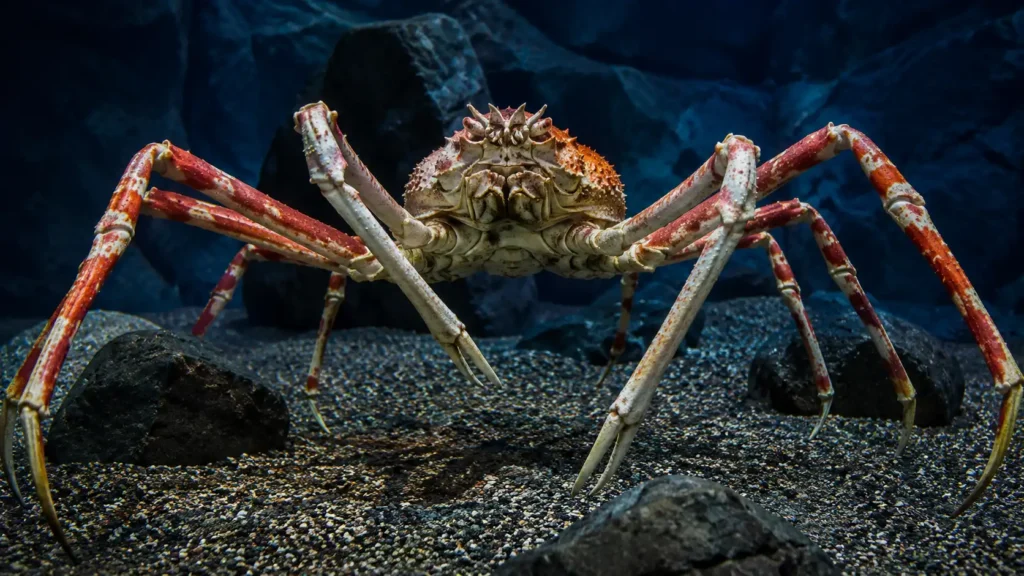
The Japanese Spider Crab is famous for its extraordinary leg span and spider-like appearance. It is one of the largest arthropods in the world, and its exceptionally long legs make it look almost otherworldly.
This marine crab lives in waters around Japan and spends much of its time moving along the ocean floor. Its long walking legs allow it to cover a broad area while searching for food. The legs also give the crab an enormous overall reach compared with the relatively compact body enclosed inside its hard shell.
The Japanese Spider Crab is an opportunistic feeder. It can consume a variety of food, including plant material, shellfish, mollusks, and other available marine organisms. Its claws help it handle food and defend itself.
The Japanese Spider Crab proves that exceptionally long legs are not limited to land animals. Beneath the ocean surface, an entirely different body design can produce an equally remarkable example of elongated limbs.
Secretary Bird
- Scientific Name: Sagittarius serpentarius
- Class: Aves
- Diet: Carnivore
The Secretary Bird is one of Africa’s most distinctive birds, easily recognized by its exceptionally long legs, upright body, long tail, and striking crest of feathers. Unlike many long-legged birds that spend most of their time wading in water, the Secretary Bird is primarily a terrestrial hunter.
It lives mainly in open grasslands and savannas, where its long legs help it move through tall vegetation while searching for prey. Its elevated body position allows it to look across grassland habitats and locate small animals.
The Secretary Bird is especially famous for hunting snakes and other reptiles. It can use its powerful legs to stomp and kick prey with remarkable precision. This hunting technique is one of the main reasons its long legs are so important.
Its legs therefore serve two purposes at once: they help the bird move efficiently across open ground and provide powerful weapons for hunting. This makes the Secretary Bird quite different from long-legged wading birds such as flamingos and stilts.
Flamingo
- Scientific Name: Phoenicopterus roseus
- Class: Aves
- Diet: Omnivore
The Flamingo is one of the world’s most recognizable long-legged birds. Its combination of pink plumage, animals with long legs and neck, slender legs, and curved bill gives it a unique appearance that is difficult to confuse with any other bird.
Flamingos are closely associated with shallow lakes, lagoons, mudflats, and other wetlands. Their long legs allow them to stand and walk through water that would be too deep for many shorter-legged birds.
This height is particularly useful while feeding. Flamingos often place their heads underwater and use their specialized bills to filter small food particles from the water and mud. Their diet can include algae, small aquatic organisms, and other tiny food sources depending on the species and habitat.
Their long legs also help them move through soft, muddy environments without needing to keep their entire bodies close to the water surface. This allows them to exploit food-rich wetlands that may be difficult for other birds to access.
Giant Pacific Octopus
- Scientific Name: Enteroctopus dofleini
- Class: Cephalopoda
- Diet: Carnivore
The Giant Pacific Octopus is an unusual addition to a list of animals with long legs because its elongated appendages are technically called arms rather than legs. Nevertheless, its eight long, flexible arms make it one of the most remarkable examples of an animal with extremely elongated limbs.
Found in the North Pacific, the Giant Pacific Octopus is the largest known octopus species. Its animals with long legs and arms can extend to an impressive span, giving the animal extraordinary reach and flexibility. Wildlife Informer reports a limb span ranging from approximately 168 to 348 inches in large individuals.
Each arm contains a complex network of nerves, allowing the octopus to control its limbs with remarkable flexibility. Its suckers are also highly sensitive and help the animal interact with its surroundings while handling food.
Its soft body and flexible arms are particularly valuable in rocky marine habitats. The octopus can hide inside crevices, investigate narrow spaces, and use its arms to reach prey that may be difficult for animals with rigid limbs to access.
Red Kangaroo
- Scientific Name: Osphranter rufus
- Class: Mammalia
- Diet: Herbivore
The Red Kangaroo is Australia’s largest terrestrial mammal and one of the most impressive examples of powerful hind legs. Its legs are built not simply for walking but for an efficient hopping movement that allows it to travel across Australia’s open and often dry landscapes.
The kangaroo’s hind legs are long, muscular, and highly specialized. Its large feet and powerful muscles work together to generate the force required for hopping. Instead of taking many small steps like a typical mammal, the kangaroo can cover significant distances with each leap.
This form of movement can be especially useful in Australia’s open habitats, where animals may need to travel considerable distances while searching for vegetation and water. Hopping can also be an efficient way of moving at moderate to high speeds.
Young kangaroos develop their coordination gradually as they grow, eventually learning to control their powerful hind limbs. Adult males can become particularly large and muscular, with strong legs that also play a role in defensive behavior.
Arabian Camel
- Scientific Name: Camelus dromedarius
- Class: Mammalia
- Diet: Herbivore
The Arabian Camel, or dromedary, is one of the best-adapted animals for life in hot desert environments. Its long legs lift its body well above the scorching ground, while its broad feet help it move across loose sand.
Dromedary camels are native to arid regions and have historically been essential to human life across desert areas. Their ability to travel long distances through difficult environments has earned them the nickname “ships of the desert.”
Long legs provide an important advantage by keeping much of the camel’s body away from the hottest surface layer of sand. They also give the animal a high viewpoint, allowing it to see across open desert landscapes.
The camel’s feet are especially important. Rather than having narrow hooves designed for hard ground, camels have broad, padded feet that spread their weight over the sand. This helps reduce sinking as they walk.
Alaskan Moose
- Scientific Name: Alces alces gigas
- Class: Mammalia
- Diet: Herbivore
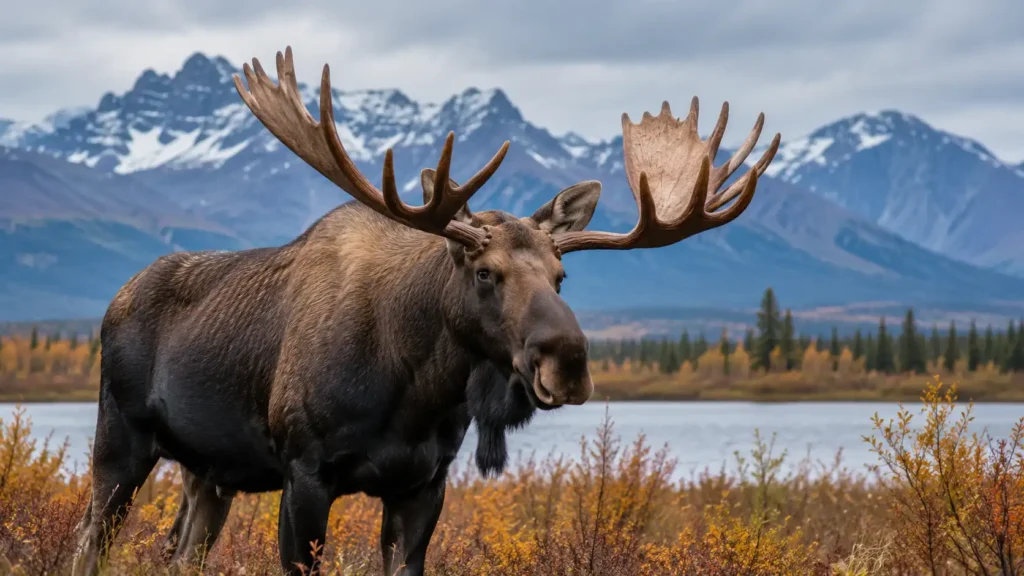
The Alaskan Moose is one of the largest members of the deer family and is especially well adapted to the rugged environments of Alaska. Its unusually long legs give it a distinctive tall appearance and help it move through deep snow, wetlands, and uneven terrain.
For a large animal, navigating deep snow can be challenging. The moose’s long legs allow its body to remain relatively high above the ground while it walks through snow-covered landscapes. This can provide a practical advantage during Alaska’s long winters.
Despite their massive bodies, moose can move surprisingly quickly when threatened. Their long legs contribute to their ability to cross rough terrain and escape danger when necessary. The Alaskan Moose therefore combines height, strength, and mobility in a body designed for challenging northern environments. Its legs are not merely long; they are powerful tools for moving through snow, vegetation, water, and rugged landscapes.
Maned Wolf
- Scientific Name: Chrysocyon brachyurus
- Class: Mammalia
- Diet: Omnivore
The Maned Wolf is one of the most unusual members of the canid family. Despite its name, it is not a true wolf. It is a distinctive South American canid recognized by its reddish coat, black mane, oversized ears, and exceptionally long legs.
Its long legs are closely connected to the environment where it lives. Maned Wolves inhabit open grasslands, savannas, and other areas where tall vegetation can obstruct visibility. Their elevated body position allows them to see over grasses more easily while moving through their habitat.
This unusual height also gives the Maned Wolf its characteristic appearance. It has a slender body supported by remarkably long limbs, making it look taller and more delicate than many other canids.
The species has an unusual diet as well. Although it eats animal prey such as small mammals and birds, plant foods are also important. Fruits and other vegetation can form a significant part of its diet, making it different from many carnivorous canids.
Black-Winged Stilt
- Scientific Name: Himantopus himantopus
- Class: Aves
- Diet: Carnivore
The Black-Winged Stilt is a slender wetland famous bird for long legs. Its black-and-white body and delicate appearance make it one of the easiest wading birds to recognize.
Its long legs allow it to walk through shallow water while keeping most of its body above the surface. This is especially valuable when searching for aquatic insects, small crustaceans, larvae, and other tiny organisms.
The stilt’s feeding behavior is closely connected to its body shape. It can walk through shallow wetlands and mudflats, probing the water and mud for food. Birds with shorter legs may be unable to reach the same feeding areas without getting their bodies wet.
Long legs also help the species move across muddy and shallow-water habitats where different depths can contain different food resources. In this way, the stilt can exploit a specialized ecological niche.
During the breeding season, Black-Winged Stilts can become highly vocal and territorial. They may defend nesting areas from other birds and respond strongly when potential threats approach their chicks.
Giraffe
- Scientific Name: Giraffa camelopardalis
- Class: Mammalia
- Diet: Herbivore
The Giraffe is perhaps the first animal that comes to mind when people think about stuffed animals with long legs. It is the tallest living land animal, with an extraordinary body plan that combines a very long neck with exceptionally long legs.
Research on giraffe anatomy shows that their height results from both elongated neck and leg structures, with mature males capable of reaching around 5 meters in total height. Living mainly in African savannas and woodlands, giraffes use their height to browse on leaves that are high above the ground.
Their long legs also provide an elevated viewpoint. From high above the surrounding vegetation, giraffes can scan their environment and may detect approaching predators or other animals at a greater distance. Increased height can also reduce competition for food because giraffes can feed at levels unavailable to many other herbivores.
Gerenuk
- Scientific Name: Litocranius walleri
- Class: Mammalia
- Diet: Herbivore
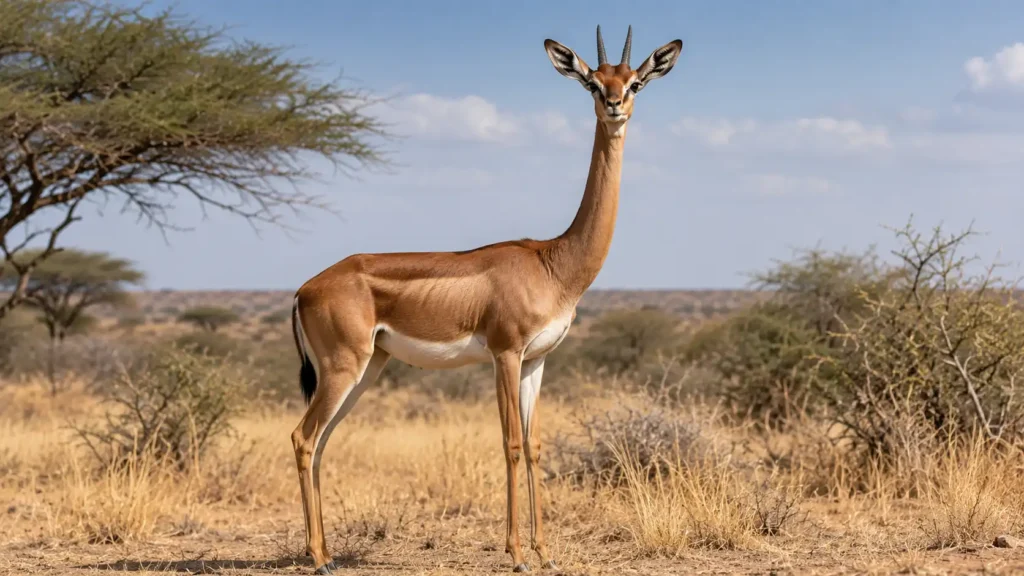
The Gerenuk is one of the most specialized long-legged antelopes in Africa. Also known as the giraffe-necked antelope, it has a slender body, long legs, and an unusually elongated neck that help it reach vegetation above the normal browsing height of many other antelopes.
Gerenuks live primarily in dry regions of East Africa, where competition for vegetation can be intense. Their body shape gives them an advantage because they can feed on leaves and shoots growing higher on shrubs and bushes.
One of their most remarkable behaviors is standing upright on their hind legs. By balancing on two legs and stretching their long necks upward, gerenuks can reach foliage that would otherwise be inaccessible.
Their long legs also contribute to their overall slender appearance and help them move efficiently across dry terrain. Combined with their long neck and small head, the result is one of the most unusual body shapes among African antelopes.
Read May Also: Top 25 Animals Like Foxes With Pictures & Interesting Facts
Conclusion
Animals with long legs have evolved their unusual proportions for many different reasons. For some species, long legs provide speed and running efficiency. For others, they make it possible to walk through deep water, snow, mud, or tall vegetation. In animals such as the giraffe and gerenuk, extra height creates access to food that is difficult for shorter animals to reach.
Birds provide some of the clearest examples of this diversity. Ostriches use powerful legs for high-speed running, flamingos use theirs for wading and feeding, while Secretary Birds have transformed their long legs into effective hunting tools.
FAQs
Which Is The Longest Leg?
The Ostrich has the longest legs among living birds. Its powerful legs can reach around 4 feet (1.2 meters) long and help it run at very high speeds.
Which Animal Has 42 Legs?
Some Millipedes can have around 42 legs, depending on the species and the number of body segments. The exact number varies greatly among different species.
What Is A Long-Legged Creature?
A Long-Legged Creature is an animal with unusually long legs compared with its body size. Examples include Giraffes, Ostriches, Flamingos, Herons, and Cranes.
What Animal Has 750 Legs?
The Illacme plenipes, a rare millipede from California, was once recorded with up to 750 legs. It is one of the most legged animals ever discovered.
What Animal has the Longest Legs?
The giraffe has the longest legs of any land animal. Its legs can be about 1.8 meters (6 feet) long, which is roughly as tall as an average adult human.
What is a Long Legged Creature?
A long legged creature is any animal with legs that are very long compared to its body. Examples include giraffes, ostriches, flamingos, herons, cranes, spider crabs, harvestmen (daddy longlegs), and maned wolves.
What Animals have Long Legs and a Short Torso?
Animals with long legs and a short body include flamingos, herons, storks, cranes, stilts, ostriches, and some deer and antelope species. Wading birds are the clearest examples, since their small bodies sit on very long legs.