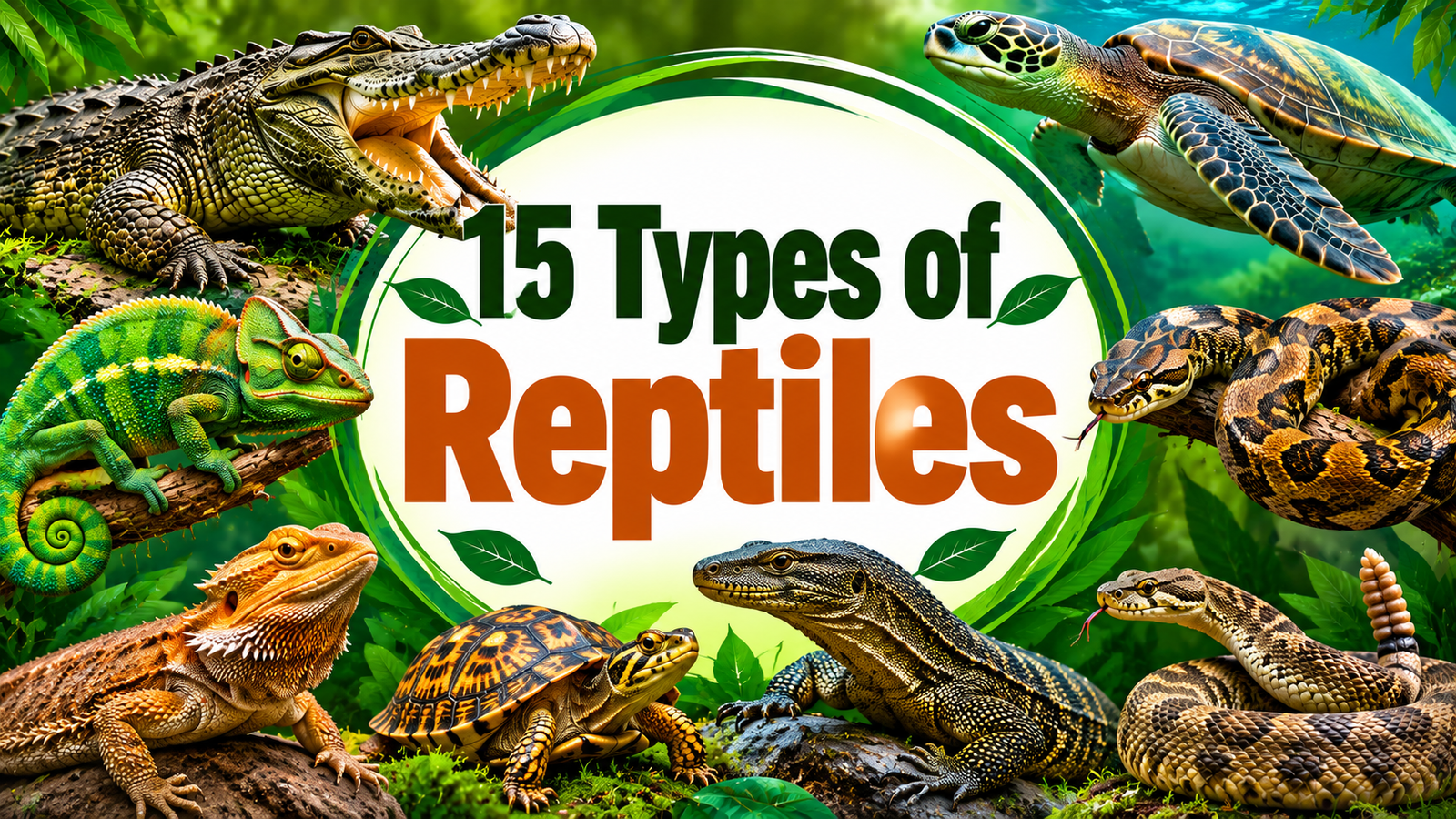
15 Types of Reptiles: Amazing Reptiles You Should Know
Reptiles are some of the most fascinating vertebrate animals on Earth. They include animals with scales, protective shells, powerful jaws, long bodies, and many other unusual adaptations. Reptiles can be found in deserts, forests, grasslands, wetlands, rivers, oceans, and even very cold regions.
When people think about types of reptiles, snakes and lizards may be the first animals that come to mind. You will discover ten interesting reptiles and learn about their appearance, habitat, diet, behavior, and unique adaptations. This list of reptiles is designed to make it easy to understand the incredible diversity within the reptile world.
Types of Reptiles List
The reptile world includes thousands of species with very different body shapes, sizes, habitats, and lifestyles. Here are different types of reptiles and examples to explore:
- Green Iguana
- Komodo Dragon
- Leopard Gecko
- King Cobra
- Ball Python
- Green Sea Turtle
- Galápagos Tortoise
- American Alligator
- Nile Crocodile
- Green Anaconda
- Chameleon
- Garter Snake
- Rattlesnake
- Box Turtle
- Leatherback Sea Turtle
- Caiman
- Bearded Dragon
- Monitor Lizard Tuatara Boa
These animals represent several major reptile groups and show how differently reptiles can survive in nature.
Green Iguana
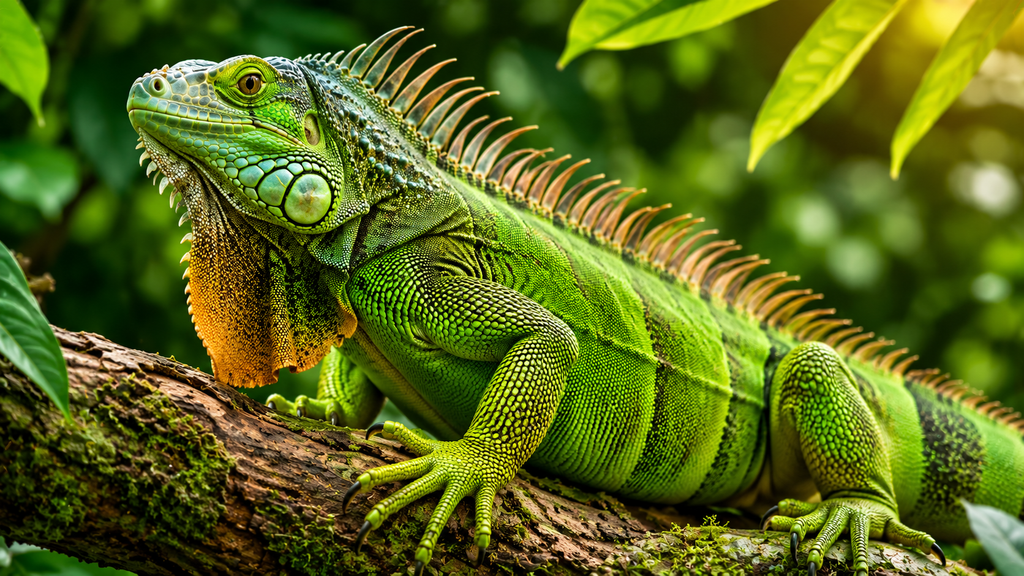
The green iguana is a large lizard native to parts of Central and South America and the Caribbean. It is usually recognized by its green or grayish body, long tail, strong claws, and row of spines running down its back. Green iguanas spend a lot of time in trees and are excellent climbers.
They mainly eat leaves, flowers, fruits, and other plant material, making them primarily herbivorous reptiles. Their long tail can help with balance and can also be used defensively when they feel threatened. Their ability to climb, swim, and adapt to different environments makes the green iguana one of the most recognizable different types of reptiles.
Komodo Dragon
The Komodo dragon is the largest living lizard and is native to several Indonesian islands. It has a muscular body, strong legs, sharp claws, and a long tail that helps it move and maintain balance. Komodo dragons are carnivores and can hunt or scavenge a wide variety of animals, including deer and smaller prey.
Their powerful jaws and serrated teeth make them highly effective predators. They also have an excellent sense of smell and can detect food from considerable distances. Despite being a lizard, its enormous size and predatory behavior make the Komodo dragon very different from small lizards commonly seen around homes.
Leopard Gecko
The leopard gecko is a small, ground-dwelling lizard known for its spotted pattern and large eyes. It is native to dry regions of parts of Asia and is well adapted to warm, rocky environments. Unlike many lizards, leopard geckos have movable eyelids that help protect their eyes.
They are mainly insectivores and feed on insects and other small invertebrates. Their thick tail stores fat, providing an energy reserve when food is not readily available. Leopard geckos are mostly active during the evening and night, helping them avoid the hottest part of the day.
King Cobra
The king cobra is one of the world’s longest venomous snakes and is found across parts of South and Southeast Asia. It has a slender body, a distinctive hood, and a highly developed ability to raise the front portion of its body when threatened. Unlike many snakes that primarily eat rodents, king cobras specialize heavily in feeding on other snakes.
Their venom helps them subdue prey quickly and provides an effective defense against threats. They are generally shy and prefer to avoid humans when possible. Their intelligence, size, specialized diet, and defensive behavior make the king cobra one of the most remarkable snakes among types of reptiles.
Ball Python
The ball python is a relatively small, heavy-bodied snake native to parts of West and Central Africa. It gets its name from its defensive behavior of curling its body into a tight ball and protecting its head when it feels threatened.
Their diet mainly consists of small mammals and other appropriately sized prey. They are often active at night and spend much of their time hiding in burrows or vegetation. Their attractive patterns and calm behavior have also made them popular in captivity.
Green Sea Turtle
The green sea turtle is a marine reptile found in tropical and subtropical oceans around the world. Its streamlined body and large flippers allow it to travel efficiently through the water, while its hard shell provides protection. Although adults are often associated with plant-based foods such as seagrasses and algae, younger turtles can have a more varied diet.
Females return to sandy beaches to lay their eggs, sometimes traveling long distances to reach suitable nesting sites. These turtles play an important role in marine ecosystems by influencing seagrass habitats. Pollution, fishing activity, habitat loss, and accidental capture can threaten their populations.
Galápagos Tortoise
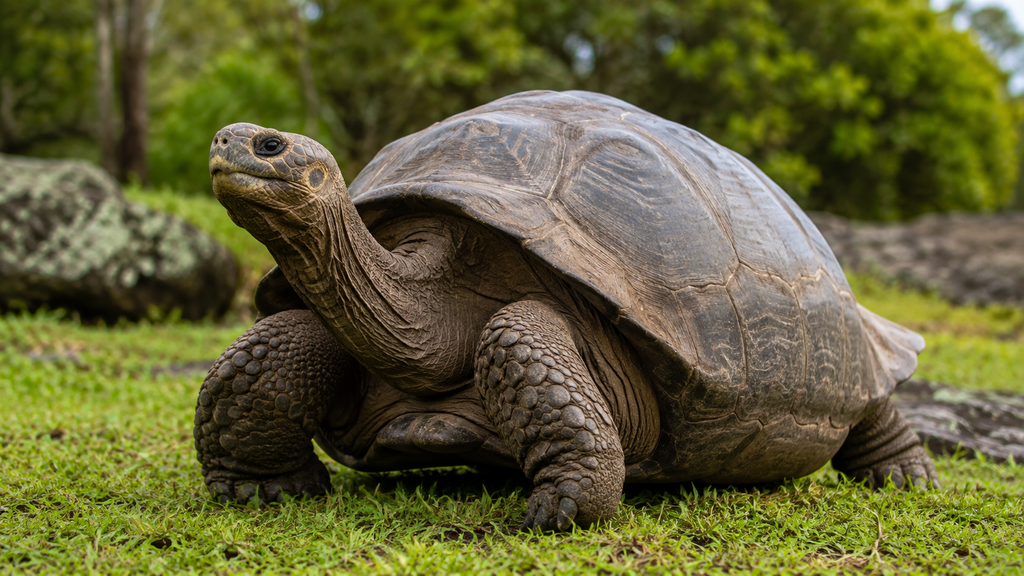
The Galápagos tortoise is one of the largest tortoises in the world and is native to the Galápagos Islands. It has a massive shell, thick legs, and a long lifespan that can extend for many decades. These tortoises are herbivores and feed on grasses, leaves, fruits, and other vegetation.
Their slow metabolism and ability to survive for long periods with limited food or water help them cope with island environments. They can travel significant distances while searching for vegetation and water. As they move around and consume plants, they also help disperse seeds, contributing to the health of their island ecosystems.
American Alligator
The American alligator is a large semi-aquatic reptile found mainly in freshwater wetlands, swamps, lakes, and slow-moving rivers in the southeastern United States. Its broad snout, powerful jaws, muscular tail, and armored body make it highly adapted to life in and around water. Alligators are opportunistic predators that eat frogs, fishes, turtles, birds, mammals, and other animals.
They often remain almost completely still while waiting for prey to come close. Their eyes and nostrils are positioned high on the head, allowing them to observe their surroundings while much of their body remains underwater. They are important predators within wetland ecosystems.
Nile Crocodile
The Nile crocodile is a large and powerful crocodilian found across many parts of sub-Saharan Africa. It lives in rivers, lakes, wetlands, and other aquatic environments where it can find suitable prey. Its muscular tail provides strong swimming power, while its jaws contain numerous sharp teeth designed for gripping prey.
Nile crocodiles are opportunistic hunters and may eat fish, birds, reptiles, and mammals. They can remain underwater for extended periods while waiting for an opportunity to strike. Their combination of size, strength, stealth, and aquatic adaptations makes them one of Africa’s most impressive reptiles.
Green Anaconda
The green anaconda is a massive snake native to South America and is closely associated with rivers, swamps, wetlands, and flooded forests. It has a thick, muscular body and spends a great deal of time in water, where its heavy body is easier to support. Green anacondas are nonvenomous constrictors that ambush prey near the water’s edge or while swimming.
Their diet can include fish, birds, turtles, rodents, and other animals. Females are considerably larger than males and can reach enormous sizes. Their semi-aquatic lifestyle makes the green anaconda a particularly unusual example among different types of reptiles.
Chameleon
Chameleons are tree-dwelling lizards famous for their ability to change color. They have independently moving eyes that allow them to look in different directions at the same time. Their long, sticky tongues help them catch insects from a distance.
They are mainly insectivores, although some larger species may also eat plant material. Their ability to blend into their surroundings also helps them communicate and avoid predators.
Garter Snake
Garter snakes are small to medium-sized snakes commonly found across North America. These animals live in forests, grasslands, wetlands, gardens, and areas near ponds or streams. Most species are nonvenomous and feed on earthworms, insects, frogs, small fish, and other small animals.
Their slender bodies and patterned stripes make them easy to recognize. Garter snakes are active hunters and often use their sense of smell to locate prey. Some species can also tolerate surprisingly cold conditions.
Rattlesnake
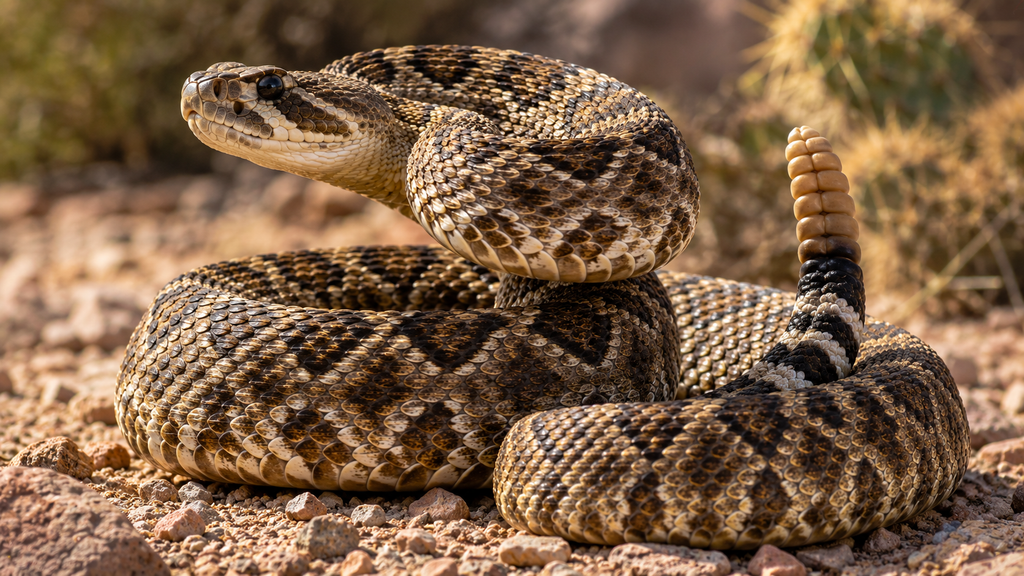
Rattlesnakes are venomous snakes native to the Americas and are best known for the rattle at the end of their tails. The rattle produces a distinctive sound when the snake feels threatened, warning potential predators or other animals to stay away. They use heat-sensitive pits near their eyes to detect warm-blooded prey.
Rattlesnakes are predators that commonly eat rodents, birds, and other small animals. Their venom helps them subdue prey after striking. Most rattlesnakes prefer to avoid humans and use their warning behavior before defending themselves.
Box Turtle
Box turtles are land-dwelling turtles known for their high-domed shells and hinged lower shells. The hinge allows some species to close the shell tightly when they feel threatened. They are found in forests, grasslands, wetlands, and other habitats depending on the species.
Box turtles are generally omnivorous and may eat insects, worms, fruits, mushrooms, and vegetation. They move slowly but can travel considerable distances while searching for food and suitable habitat. Some box turtles can live for several decades.
Leatherback Sea Turtle
The leatherback sea turtle is the largest living sea turtle and is easily recognized by its lack of a hard, bony shell. Instead, its back is covered by a flexible, leathery layer with several ridges running along the body. It spends most of its life in the ocean and can travel across entire ocean basins.
Leatherbacks mainly feed on jellyfish and other soft-bodied marine animals. Their streamlined bodies and powerful front flippers make them excellent long-distance swimmers. Females return to sandy beaches to lay their eggs.
Caiman
Caimans are crocodilian reptiles found mainly in Central and South America. They usually live in rivers, lakes, swamps, wetlands, and other freshwater habitats. Their strong jaws and sharp teeth make them effective predators of fish, amphibians, reptiles, birds, and mammals. Young caimans generally eat smaller prey than adults.
They spend much of their time in or around water and use their powerful tails for swimming. Caimans play an important role as predators within their freshwater ecosystems.
Bearded Dragon
Bearded dragons are medium-sized lizards native to Australia and are well adapted to dry and semi-desert environments. They get their name from the expandable skin under their throat, which can look like a beard when they feel threatened or display dominance.
Their strong claws help them climb, dig, and move across rocky terrain. Bearded dragons often bask in sunlight to raise their body temperature. Their calm nature and distinctive appearance have also made them popular reptiles in captivity.
Monitor Lizard
Monitor lizards are a diverse group of large and intelligent lizards found across Africa, Asia, and Australia. They have long bodies, strong legs, sharp claws, muscular tails, and forked tongues that help them investigate their surroundings. Depending on the species, they may eat insects, fish, birds, eggs, reptiles, or mammals.
Some monitor lizards are excellent swimmers and climbers, while others spend more time on the ground. The Komodo dragon is the largest living monitor lizard. Their intelligence and adaptability allow different species to survive in a wide range of habitats.
Tuatara
The tuatara is a unique reptile found only in New Zealand and is not actually a lizard, even though it looks similar to one. It belongs to its own reptile group, Rhynchocephalia, whose other members disappeared millions of years ago. Tuataras have a spiny crest along their backs and strong jaws adapted for eating insects, spiders, worms, and other small animals.
They can tolerate cooler temperatures than many other reptiles and are often active at night. A small light-sensitive structure on the top of the head is commonly called a third eye. The tuatara is therefore one of the most unusual examples in this list of reptiles.
Boa Constrictor
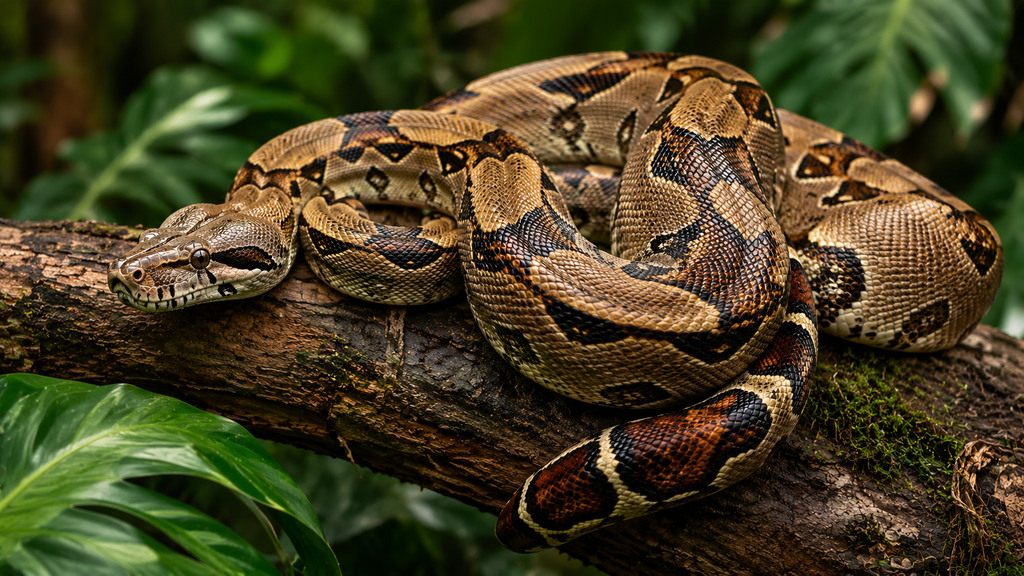
Boa constrictors are large, nonvenomous snakes found mainly in Central and South America and some nearby regions. They use their muscular bodies to squeeze and subdue prey rather than relying on venom. Their diet can include rodents, birds, bats, and other appropriately sized animals.
Boa constrictors are excellent climbers and swimmers, although many spend considerable time on the ground. Their patterned bodies provide camouflage among leaves, branches, and forest floors. Like other snakes, they swallow their prey whole and can go for extended periods between meals.
Reptile Adaptations
Reptiles have developed many adaptations that allow them to survive in environments ranging from deserts and forests to oceans and freshwater habitats.
Their scales or scutes help protect the body and reduce water loss in many species. Snakes have flexible bodies that allow them to move without legs, while lizards may use strong claws, tails, or specialized feet for climbing and defense.
Turtles and tortoises have protective shells, while crocodilians have powerful jaws and armored bodies. Many reptiles also rely on camouflage to remain hidden from predators or prey.
These adaptations are one reason reptiles have survived and diversified into so many forms over millions of years.
How Are Reptiles Different From Other Animals?
Reptiles are vertebrates, meaning they have backbones, and most have skin covered with scales or scutes. They breathe air using lungs and are ectothermic, meaning they rely heavily on external environmental heat to regulate their body temperature.
Unlike amphibians, reptiles generally have adaptations that allow them to spend much more of their lives away from water. Some reptiles, such as sea turtles, crocodiles, and anacondas, are strongly associated with aquatic environments.
Conclusion
Reptiles are an incredibly diverse group that includes much more than just snakes and lizards. From the enormous Komodo dragon and powerful Nile crocodile to the tiny leopard gecko and long-lived Galápagos tortoise, each species has its own unique adaptations.
This types of reptiles guide highlights ten fascinating animals and shows how reptiles have adapted to deserts, forests, oceans, rivers, wetlands, and other environments. Their scales, shells, powerful jaws, flexible bodies, camouflage, and specialized behaviors all help them survive.
Whether you are looking for a simple list of reptiles or want to learn about different types of reptiles, these animals provide countless examples of evolution and adaptation in the natural world.
FAQs
Are Snakes and Lizards the Same Type of Reptile?
Snakes and lizards are both reptiles and belong to the order Squamata, but they have important differences. Most lizards have limbs, external ear openings, and movable eyelids, while snakes lack limbs and have highly elongated bodies.
What is the Largest Living Reptile?
The saltwater crocodile is generally recognized as the largest living reptile by overall size. Large individuals can reach impressive lengths and weights, although size varies considerably between individuals.
Do all Reptiles lay Eggs?
No. Many reptiles lay eggs, but some species give birth to live young. Reproductive strategies vary among different reptile species, so egg-laying is not a universal characteristic of every reptile.
Are Reptiles Cold-Blooded?
Reptiles are commonly described as cold-blooded, but the more accurate term is ectothermic. They rely largely on environmental heat to regulate their body temperature, using behaviors such as basking in sunlight or moving into shade.