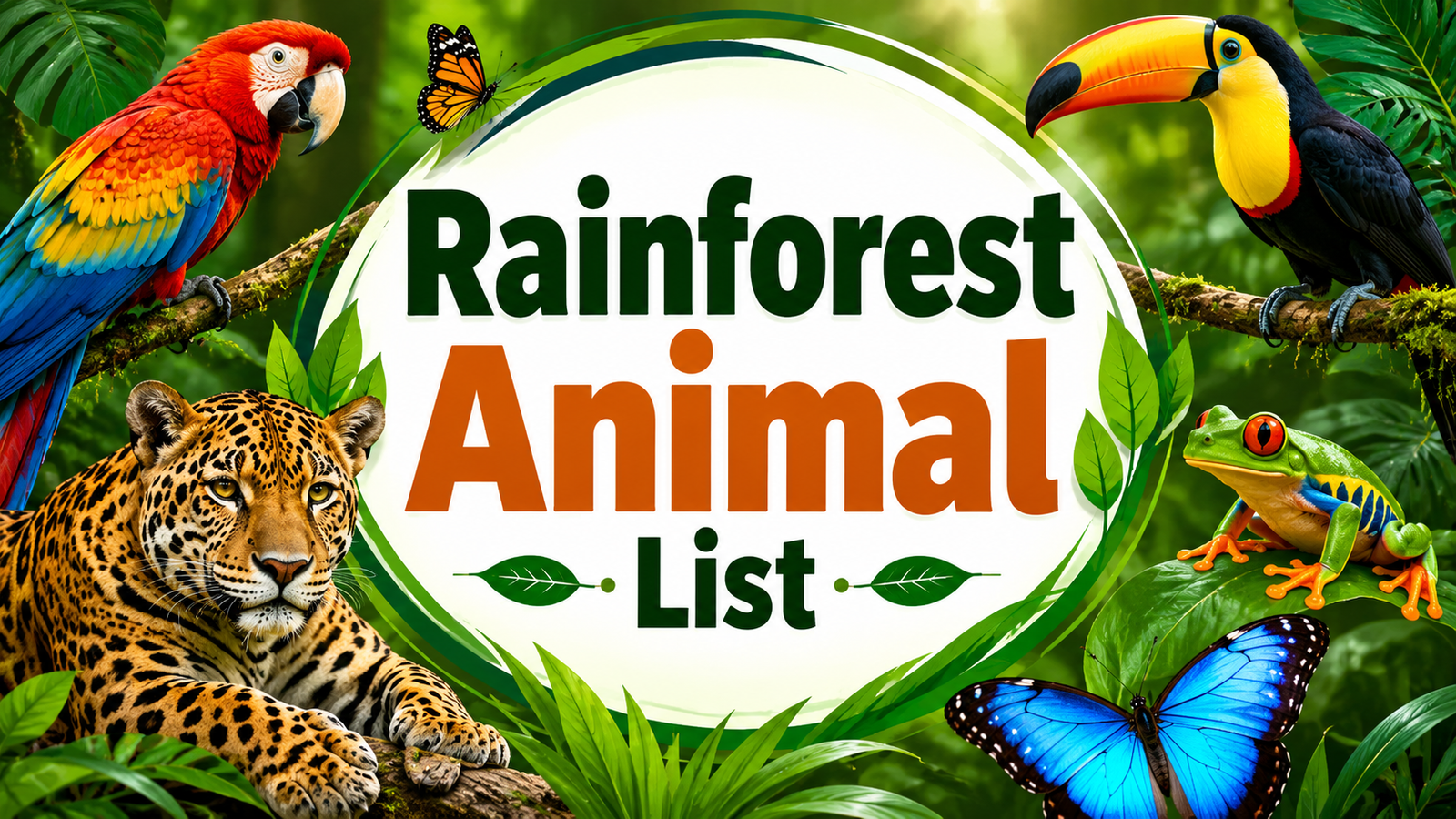
Rainforest Animals List: Guide About Tropical Rainforest Animals
Rainforests are among the most diverse ecosystems on Earth, filled with animals that have developed remarkable ways to survive in warm, wet, and densely vegetated environments. From powerful jaguars and colorful macaws to tiny tree frogs and hardworking leafcutter ants, these forests support an incredible variety of life.
This tropical rainforest animals list list explores some of the most fascinating species found in tropical rainforests around the world. If you are interested in tropical rainforest animals, this guide also covers species from different parts of the world, including the amazon rainforest animals list, Central American forests, African rainforest animal list , Madagascar, and Southeast Asia.
Rainforest Animals List
Rainforests contain mammals, birds, reptiles, amphibians, fish, and insects. Each species occupies a particular place in the forest ecosystem, from predators at the top of the food chain to insects and other animals that help recycle nutrients. Below are some of the most interesting rainforest animals list a-z to know.
- Jaguar
- Sloth
- Orangutan
- Harpy Eagle
- Green Anaconda
- Toucan
- Red-Eyed Tree Frog
- Poison Dart Frog
- Capybara
- Giant Anteater
- Howler Monkey
- Spider Monkey
- Macaw
- Ocelot
- Tapir
- Caiman
- Leafcutter Ant
- Binturong
- Blue Morpho Butterfly
- Goliath Beetle
- Goliath Birdeater
- Electric Eel
- Tarsier
- Vampire Bat
- White-Lipped Tree Frog
Jaguar
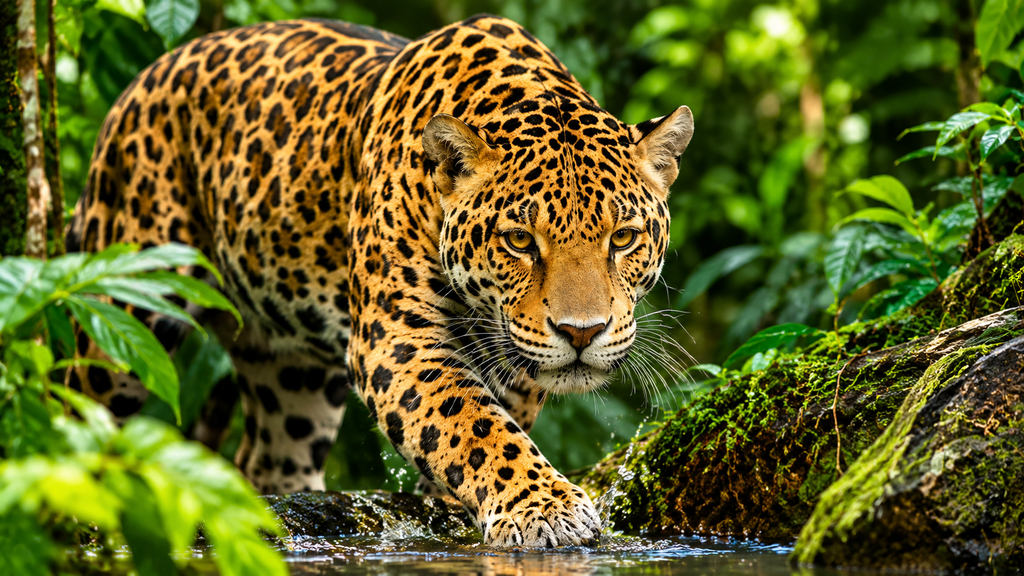
The jaguar is one of the most powerful predators found in the tropical forests of Central and South America. Its muscular body and distinctive rosette-patterned coat help it move through dense vegetation while remaining difficult to spot. Jaguars eat a wide variety of prey, including mammals, reptiles, fish, and birds.
They are also excellent swimmers and are often found near rivers, wetlands, and other water sources. Their extremely strong jaws allow them to tackle prey that many other predators would avoid. As an apex predator, the jaguar helps regulate populations of other animals and plays an important role in the rainforest food web.
Sloth
Sloths are slow-moving mammals that spend most of their lives hanging from trees in the rainforest canopy. Their long claws allow them to grip branches securely while their slow metabolism helps them survive on a diet that is mainly made up of leaves. Moving slowly also helps them conserve energy and avoid attracting the attention of predators.
Some sloths have algae growing in their fur, which can give their coat a greenish appearance and provide additional camouflage. They rarely come down to the ground and are highly adapted to life in the trees. Sloths are one of the best examples of how a rainforest animal can survive by conserving energy rather than constantly searching for food.
Orangutan
Orangutans are large great apes native to the rainforests of Southeast Asia, particularly the islands of Borneo and Sumatra. They have long arms, strong hands, and flexible feet that help them move between branches. Their diet consists mainly of fruit, leaves, bark, and other plant material, although they may eat insects and small animals as well.
Orangutans spend much of their lives high in the forest canopy, where they search for food and build sleeping nests. They are highly intelligent and can remember locations where seasonal fruits become available. Habitat loss caused by deforestation is one of the major threats facing wild orangutans.
Harpy Eagle
The harpy eagle is one of the largest and most powerful birds of prey associated with the tropical forests of Central and South America. It has broad wings, strong legs, and enormous talons designed for capturing prey among the trees. Harpy eagles can hunt animals such as monkeys and sloths, making them important predators in the canopy.
Their relatively short wings compared with their body size help them maneuver through dense forest vegetation. They usually build large nests high in mature trees and may return to the same nesting area over time.
Green Anaconda
The green anaconda is a massive snake associated with the rivers, swamps, and wetlands of South America. It is famous for its heavy body and excellent swimming ability, allowing it to move efficiently through water. Unlike venomous snakes, the green anaconda subdues prey by wrapping its powerful body around it. Its diet can include fish, birds, reptiles, and mammals.
Spending much of its time in or around water helps the snake support its enormous body and approach prey without being easily detected. The green anaconda is an important predator in aquatic parts of the rainforest ecosystem.
Toucan
Toucans are colorful rainforest birds best known for their enormous bills and bright plumage. Their large bills may look heavy, but they are relatively lightweight and help the birds reach fruit growing on thin branches. Toucans mainly eat fruit, although some species also consume insects, small reptiles, eggs, and young birds.
These animals live in forest canopy where food is abundant and visibility is better. Their diet makes them important seed dispersers because seeds can pass through their digestive systems and later grow in new locations. This means these beautiful birds contribute directly to the regeneration of the rainforest.
Red-Eyed Tree Frog
The red-eyed tree frog is one of the most recognizable amphibians of Central American rainforests. It has a bright green body, large red eyes, and colorful markings on its sides and legs. These frogs spend much of their lives in trees and use their sticky toe pads to grip leaves and branches.
When threatened, suddenly revealing their bright red eyes can startle a predator and give the frog a chance to escape. They are mainly active at night when temperatures are cooler and many insects are available. Their distinctive appearance makes them a popular example of the incredible adaptations found among tropical rainforest animals.
Poison Dart Frog
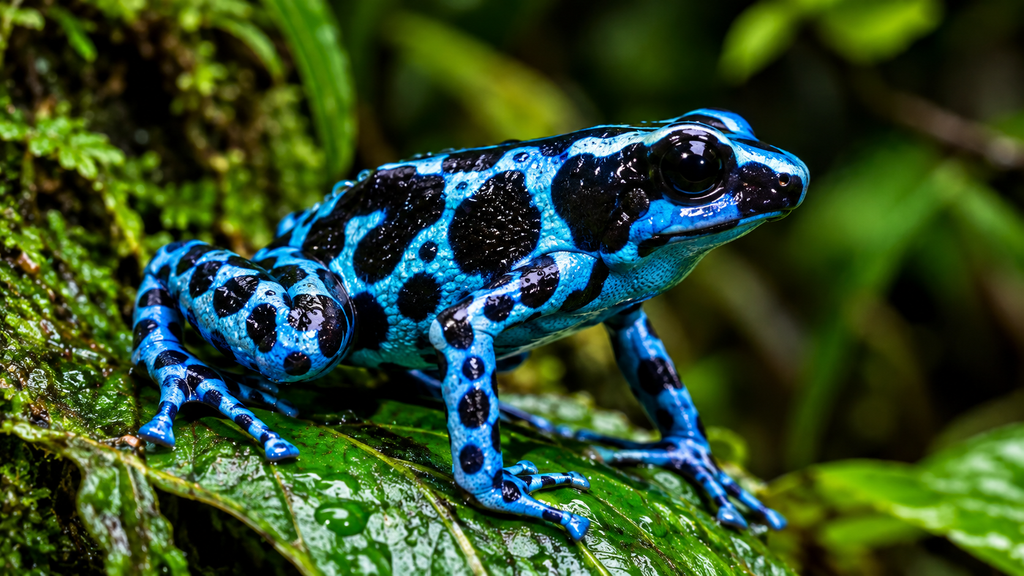
Poison dart frogs are a group of small, brightly colored frogs found in Central and South American rainforests. Their vivid colors often act as warning signals to predators that they may be dangerous to eat. Some species are associated with powerful toxins, although the level of toxicity varies greatly among different species.
These frogs live in humid forest environments where they can find small insects and other tiny prey. Their life cycle is closely connected to the rainforest because they depend on moisture for reproduction and survival.
Capybara
The capybara is the world’s largest living rodent and is commonly found near rivers, lakes, swamps, and other wet habitats in South and Central America. Its semi-aquatic lifestyle allows it to escape predators by entering the water when threatened. Capybaras are social animals and often live in groups, especially around reliable water sources.
They mainly feed on grasses and aquatic plants, making them herbivores. Jaguars, caimans, anacondas, and other predators may hunt them, particularly when they move away from water. Their close relationship with wetlands makes them an important part of rainforest and river ecosystems.
Giant Anteater
The giant anteater is a distinctive mammal found in Central and South America. Its long snout and extremely long tongue are specialized for feeding on ants and termites. Instead of using teeth to chew its food, the anteater uses its claws to open insect nests and then rapidly moves its tongue to collect insects.
Giant anteaters generally spend time searching through forests, grasslands, and other habitats where ant and termite populations are available. Their specialized feeding behavior makes them one of the most unusual mammals associated with tropical ecosystems.
Howler Monkey
Howler monkeys are famous for their extremely loud calls, which can travel long distances through dense rainforest vegetation. They live in groups and spend most of their time in the canopy, where they feed primarily on leaves, fruits, and other plant material.
A specialized digestive system allows them to process large amounts of leaves, although this food provides relatively little energy. Howler monkeys are important seed dispersers and herbivores within the forest ecosystem. Their loud calls are also one of the characteristic sounds of many tropical forests.
Spider Monkey
Spider monkeys are agile primates that live mainly animals that live in the forest canopy of Central and South America. Their long limbs and highly flexible, prehensile tails allow them to swing and balance between branches.
Their diet is dominated by fruits, although they may also consume leaves, flowers, and other plant material. Because they travel through large areas of forest while eating fruit, they can spread seeds over considerable distances.
Spider monkeys usually live in social groups but may divide into smaller groups while searching for food. Their dependence on large, connected forest areas makes them particularly vulnerable to habitat fragmentation.
Macaw
Macaws are large, brightly colored parrots found throughout tropical regions of the Americas. Their powerful curved bills can crack hard nuts and seeds that many other birds cannot access. Their strong feet have two toes pointing forward and two backward, helping them grip branches and manipulate food.
Macaws are generally social and may travel or feed in pairs and groups. Many species nest in tree cavities and depend on mature rainforest trees for shelter and reproduction. Besides being visually striking, macaws also help move seeds through the forest and contribute to plant regeneration.
Ocelot
The ocelot is a medium-sized wild cat that lives in forests and other habitats across Central and South America. Its beautiful spotted coat helps it blend into the patterns of leaves, shadows, and branches. Ocelots are primarily nocturnal, so they usually hunt after dark when many of their prey species are active.
They feed on small mammals, birds, reptiles, amphibians, and other animals they can overpower. Unlike larger cats, ocelots often hunt smaller prey and can move quietly through dense vegetation. Their role as predators helps keep populations of smaller rainforest animals balanced.
Tapir
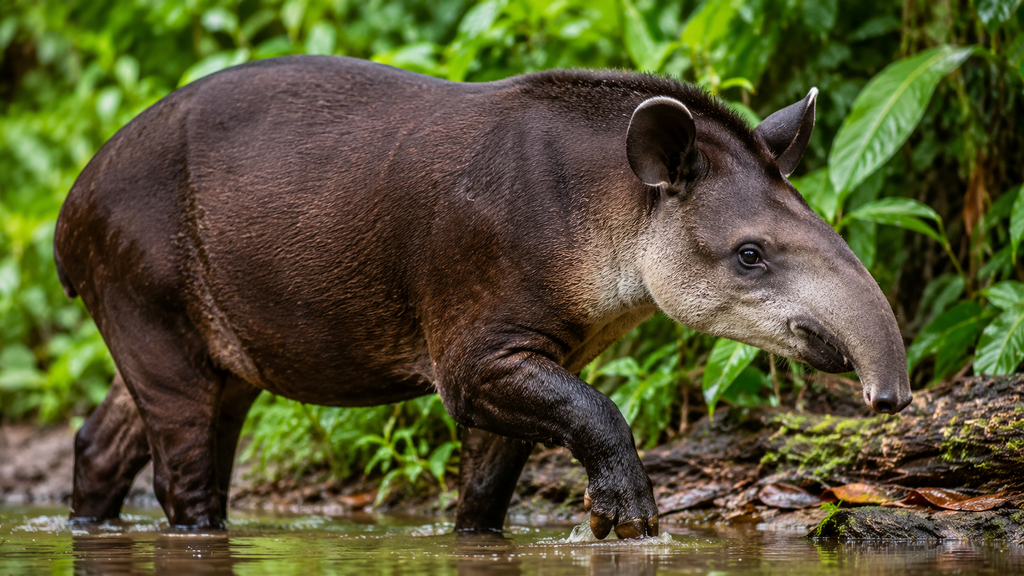
Tapirs are large mammals with unusual flexible snouts that they use to grasp leaves, fruits, and other vegetation. Several tapir species live in tropical forests, including species found in Central and South America and Southeast Asia. They often stay near rivers and other water sources and can swim surprisingly well.
Tapirs are mainly herbivores and consume a wide variety of plant material. Because they eat fruit and travel through the forest, they can disperse seeds over large areas. For this reason, tapirs are sometimes considered important seed dispersers that help maintain rainforest plant diversity.
Caiman
Caimans are crocodilian reptiles found in rivers, lakes, wetlands, and other freshwater habitats of Central and South America. They have powerful jaws and are adapted to life both in and around water.
Different caiman species vary considerably in size, with the black caiman being particularly large. Their diet can include fish, birds, reptiles, amphibians, and mammals depending on the species and size of the individual.
Caimans often remain still near the water’s edge while waiting for suitable prey to approach. They are important predators in rainforest waterways and form part of the complex aquatic food web.
Leafcutter Ant
Leafcutter ants may be tiny compared with jaguars or anacondas, but they are among the most important insects in many tropical forests. They cut pieces of leaves and carry them back to underground colonies. They do not eat the leaves directly.
The ants use the plant material to grow a special fungus that serves as their food source. Large colonies can contain enormous numbers of individual ants and include specialized workers with different jobs. Their underground nests can change soil structure and nutrient movement, making these insects important ecosystem engineers.
Binturong
The binturong is a distinctive mammal found in forests of South and Southeast Asia. It has dark shaggy fur, a strong body, and a long prehensile tail that can help it move through trees. Binturongs are omnivores and eat fruit, small animals, eggs, insects, and other available foods.
They are mainly arboreal and can spend considerable time moving through the forest canopy. Their diet includes fruit, which means they can also help disperse seeds. Although they resemble a mixture of different familiar animals, binturongs belong to the civet family rather than the bear or cat families.
Blue Morpho Butterfly
The blue morpho is famous for its brilliant blue wings, which can flash brightly as the butterfly moves through the rainforest. The name refers to several closely related butterflies in the Morpho group rather than a single species. Adults may feed on fruit and other food sources, while their caterpillars have different plant-based diets.
Blue morphos are commonly associated with the forests of Central and South America. Their reflective wing surfaces create the intense blue appearance that makes them so recognizable. When they suddenly open and close their wings, the changing flashes of color can make them surprisingly difficult for predators to follow.
Goliath Beetle
Goliath beetles are among the largest beetles in the world and are found in tropical forests of Africa. They have heavy bodies, strong legs, and distinctive patterns that vary among species. Adult beetles may feed on fruit, tree sap, and other plant materials, while their larvae develop in decaying organic matter.
Despite their large size, adults are capable of flight and can move between trees and feeding sites. Their life cycle connects them with the decomposition process because their young develop in nutrient-rich material.
Goliath Birdeater
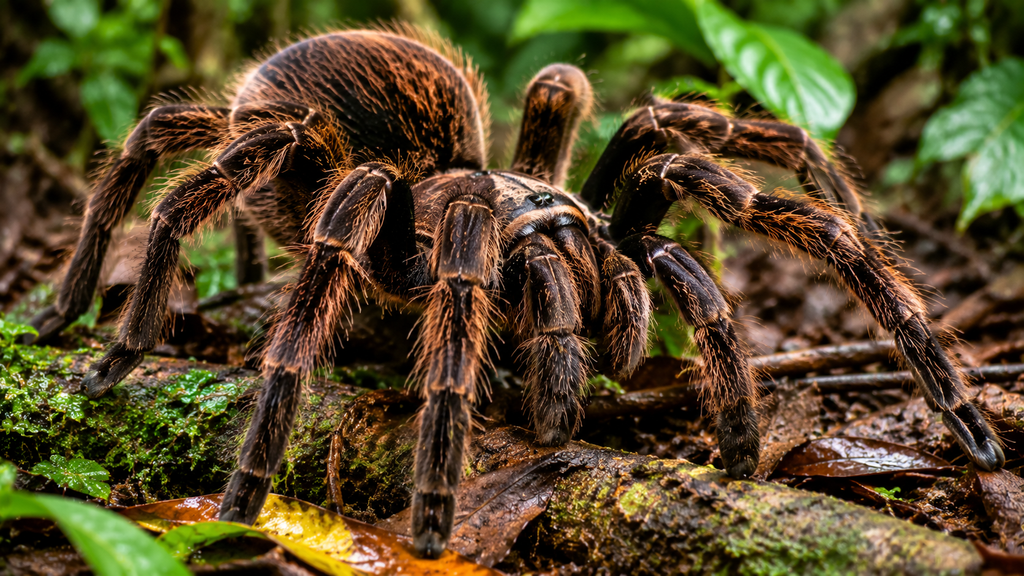
The Goliath bird eater is one of the largest spiders by mass and belongs to the tarantula family. It lives on the rainforest floor of northern South America, including areas of the Amazon region.
It is mostly active at night and relies on stealth rather than speed when hunting. When threatened, it can use defensive hairs and other behaviors to discourage predators. Its large body and impressive legs make it one of the most fascinating rainforest invertebrates.
Electric Eel
The electric eel is a freshwater fish from South America that lives in slow-moving rivers, streams, and flooded forest environments. Despite its name and eel-like appearance, it is not a true eel. It can produce powerful electrical discharges that help it locate prey, defend itself, and navigate in dark or muddy water.
Different species of electric eel have varying electrical capabilities. They mainly feed on fish and other aquatic animals, depending on their size and environment. Their ability to generate electricity is one of the most remarkable adaptations found among tropical rainforest biome animals.
Tarsier
Tarsiers are tiny nocturnal Animals found on islands in Southeast Asia. They have enormous eyes that help them see in low-light conditions and long hind legs that allow them to leap between branches. Unlike many other small primates, tarsiers feed heavily on insects and other small animals.
They can rotate their heads significantly, helping them monitor their surroundings without moving their entire bodies. Their compact size allows them to move through dense vegetation and narrow branches. Tarsiers are a good example of how even small rainforest mammals can develop highly specialized adaptations for their environment.
Vampire Bat
Vampire bats are small mammals found in parts of Central and South America. They are unusual because they feed on the blood of other animals rather than consuming fruit or insects. Their specialized teeth make a small cut, after which they drink flowing blood from their prey.
They have adaptations that help them locate suitable feeding sites and digest their unusual diet. Vampire bats are nocturnal and usually leave their roosts after dark. Although their feeding behavior may sound frightening, they are part of the complex food webs found in tropical forests.
White-Lipped Tree Frog
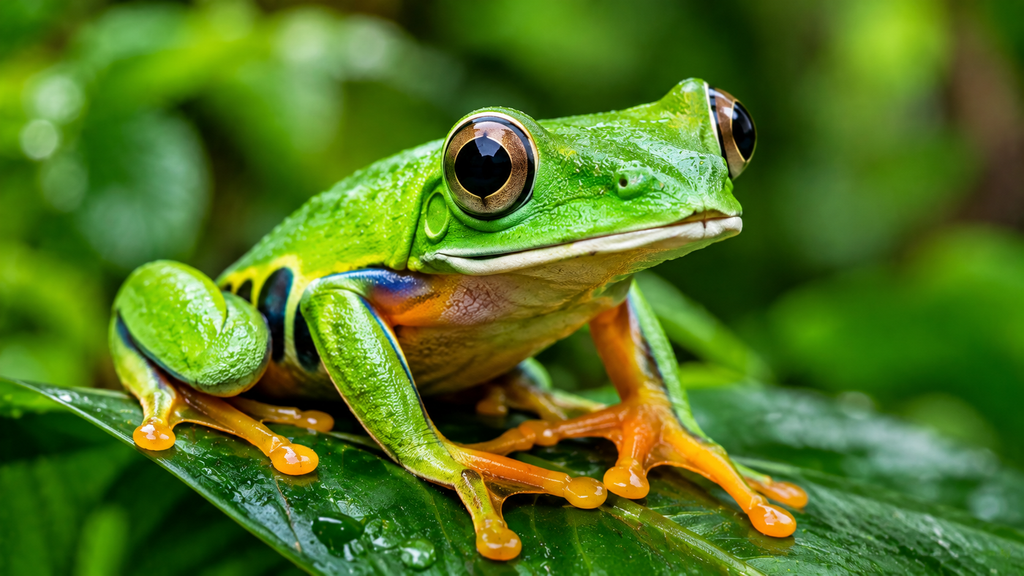
The white-lipped tree frog is a large tree frog native to northern Australia and New Guinea. It has a green body, large eyes, and a distinctive pale line around its mouth that gives the species its common name. Like other tree frogs, it is adapted to climbing and spends much of its time on vegetation.
Its sticky toe pads help it grip smooth leaves and branches in the humid rainforest environment. The frog feeds on insects and other small animals that it can capture. Its dependence on moisture makes healthy rainforest habitats especially important for its survival.
Rainforest Animals and Plants
Animals cannot be separated from the plants and other organisms around them because rainforest ecosystems depend on constant interactions between species. The relationship between rainforest animals and plants can involve feeding, pollination, seed dispersal, shelter, and competition.
For example, macaws and toucans consume fruits and can spread seeds to different areas of the forest. Leafcutter ants collect leaves to cultivate fungus, while herbivores such as sloths and tapirs depend directly on vegetation for food.
Predators also help maintain balance by controlling populations of herbivores and smaller animals. This interconnected system is one reason rainforests can support such extraordinary biodiversity.
Tropical Rainforest Biome Animals
The phrase tropical rainforest biome animals refers to animals adapted to the conditions found in tropical rainforest ecosystems. These environments are generally warm, humid, and receive substantial rainfall, creating several layers of vegetation.
Some animals live mainly on the forest floor, while others spend almost their entire lives in the canopy. Jaguars and tapirs are more closely associated with ground-level habitats, whereas orangutans, sloths, and many monkeys are strongly adapted to trees.
Birds, frogs, insects, reptiles, and mammals occupy different ecological niches. This division of space and resources allows many species to live within the same forest without competing for exactly the same food or shelter.
How Do Rainforest Animals Survive?
Rainforest species have evolved many adaptations that help them survive in dense forests.
- Camouflage: Jaguars, ocelots, and many insects use patterns or colors that help them blend into their surroundings.
- Tree climbing: Sloths, orangutans, monkeys, and many reptiles use strong limbs or specialized feet to move through the canopy.
- Specialized diets: Anteaters have long tongues for collecting ants and termites, while leafcutter ants cultivate fungus as their food.
- Water adaptations: Anacondas, caimans, capybaras, and electric eels are well adapted to rivers, wetlands, or flooded forest habitats.
- Powerful senses: Many nocturnal species rely on excellent hearing, smell, vision, or other sensory adaptations to find food in darkness.
- Defensive adaptations: Poison dart frogs use warning colors, while other species rely on armor, camouflage, speed, or powerful jaws.
These adaptations show why there is no single way to survive in a rainforest. Every species has its own strategy based on its body, diet, habitat, and place in the ecosystem.
Why Are Rainforest Animals Important?
Rainforest animals are essential to the health of their ecosystems. Predators help control prey populations, herbivores influence vegetation, and fruit-eating animals distribute seeds throughout the forest.
Birds and mammals can move seeds away from parent plants, helping forests regenerate. Insects such as leafcutter ants influence soil and nutrient cycles, while scavengers and decomposers help return nutrients to the ecosystem.
Protecting tropical rainforest animals therefore means protecting much more than individual species. Healthy animal populations are part of the natural processes that allow tropical forests to continue functioning.
Read May Also: What Animal Starts With X– Complete List With Pictures & Facts
Conclusion
Rainforests support an extraordinary variety of life, from giant predators and intelligent primates to tiny frogs, insects, and freshwater fish. The animals in this rainforest animals list show just how many different survival strategies have evolved in tropical forests.
Jaguars rely on strength and stealth, sloths conserve energy, orangutans use the forest canopy, electric eels produce electricity, and leafcutter ants cooperate in enormous colonies. Every species has a role in maintaining the balance of its ecosystem.
FAQs
What are Some Common Amazon Rainforest Animals?
Some common Amazon rainforest animals include jaguars, sloths, giant anteaters, capybaras, anacondas, toucans, macaws, spider monkeys, and poison dart frogs. The Amazon supports an enormous variety of mammals, birds, reptiles, amphibians, fish, and insects.
What Animals live in the Congo Rainforest?
The Congo rainforest animals include forest elephants, gorillas, chimpanzees, okapis, leopards, forest buffalo, colorful birds, reptiles, and many insects. The Congo Basin is one of the world’s most important tropical rainforest regions.
What are Temperate Rainforest Animals?
Temperate rainforest animals are species adapted to cooler, wetter rainforest environments found outside the tropics. Examples include black bears, Roosevelt elk, cougars, raccoons, owls, salamanders, and various forest birds.
What Animals Live in the Forest?
Forests are home to many animals, including deer, bears, wolves, foxes, squirrels, rabbits, owls, woodpeckers, snakes, frogs, and countless insects. The exact species depend on the type of forest and the region.
What are the Cutest Animals in the Rainforest?
Some of the cutest rainforest animals are sloths, red-eyed tree frogs, pygmy marmosets, kinkajous, baby orangutans, red pandas, toucans, and slow lorises.
What are the Top 10 Rainforest Animals?
Ten of the best-known rainforest animals are the jaguar, sloth, orangutan, gorilla, toucan, red-eyed tree frog, poison dart frog, anaconda, capuchin monkey, and harpy eagle.