Top 20 Animals That Eat Frogs (With Pictures & Fun Facts)
It might surprise you to learn that frogs are far from safe in their watery homes; they are prey to numerous fascinating creatures. In “Top 15 Animals That Eat Frogs,” we shine a light on these often-overlooked predators that shape frog populations and their ecosystems.
This article not only showcases stunning visual representations but also educates readers about the intricate relationships between species. Dive in to discover which animals feast on frogs and why it matters!
List of Animals That Eat Frogs
Frogs are an important food source for many predators in different ecosystems. From snakes and birds to turtles, fish, and mammals, many animals hunt frogs for nutrition. Here is a fascinating list of animals that eat frogs and how they catch them.
- Herons
- Hawks
- Opossums
- Otters
- Snakes
- Large Fish (Bass/Pike)
- Raccoons
- Alligators
- Turtles
- Skunks
- Owls
- Cranes
- Coyote
- Badger
- Other Frogs
Herons
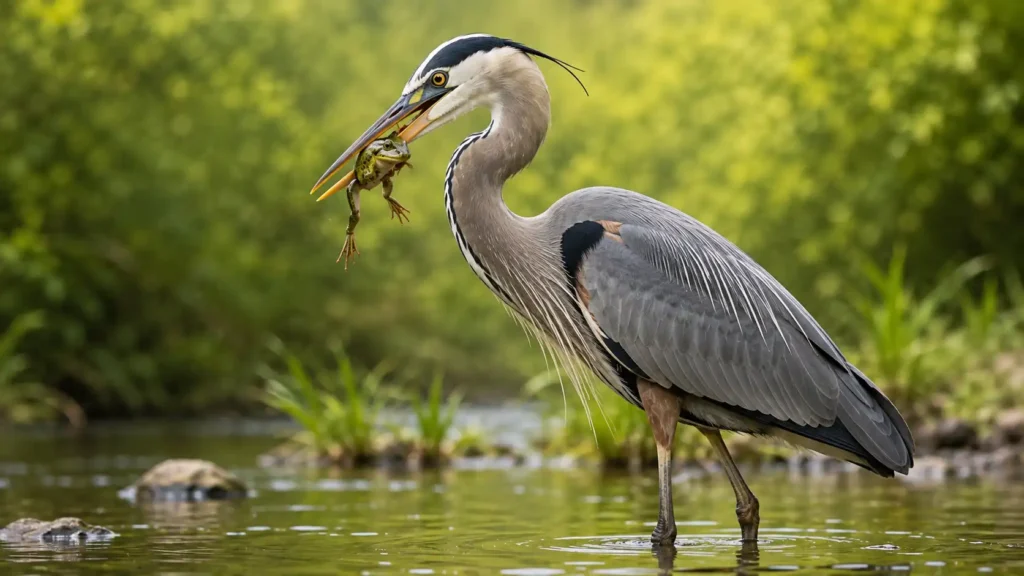
Herons are one of the well-known bird that eat frogs, often catching them in shallow water with their long, sharp beaks. Herons, with their striking long legs and sharp, pointed bills, are masterful hunters often found in wetlands and along rivers.
These elegant birds are known for their patience, standing still in the shallows as they await unsuspecting prey, making them formidable predators in the ecosystem.
To successfully catch frogs, herons exhibit remarkable adaptations. Their long necks and sharp beaks enable them to strike quickly and accurately, while their keen eyesight allows them to detect even the slightest movement in the water.
These birds are also wonderfully camouflaged, blending seamlessly into their surroundings as they stalk their prey. Many bird species that hunt frogs are excellent examples of animals adapted to walking on two legs.
Fun Facts:
- Herons can reach heights of up to 5 feet, making them one of the tallest birds in North America.
- They are known for their unique hunting technique called “stealth hunting,” where they freeze in place for extended periods.
- Herons are opportunistic feeders, often eating anything from fish to small mammals, but frogs make up a significant part of their diet during certain seasons.
- With about 64 species of herons worldwide, these birds display a variety of colors and sizes, from the great blue heron to the little egret.
- Many herons are migratory, traveling long distances to find ideal feeding and nesting grounds.
- Their nests are often built high in trees or in reed beds, providing safety from ground predators.
Opossums
Opossums, often misunderstood, are fascinating marsupials that play a unique role in their ecosystems. These nocturnal creatures are easily recognizable by their pointed snouts, prehensile tails, and white fur with black markings.
They typically thrive in diverse habitats, from woodlands to urban areas, demonstrating a remarkable ability to adapt to different environments. Their behavior is equally intriguing, known for their “playing dead” tactic when threatened, which can be quite effective in deterring predators.
When it comes to diet, opossums are opportunistic feeders, and yes, they are among the Creatures that eat frogs! Their omnivorous nature means they will consume a variety of foods, including insects, fruits, and, as a part of their balanced diet, small amphibians like frogs.
Fun Facts:
- Opossums can eat more than 5,000 ticks in a single season, helping control tick populations.
- They have immunity to certain snake venoms, allowing them to consume venomous snakes without harm.
- Unlike most mammals, they have a gestation period of just about 13 days, leading to relatively quick reproduction.
- An opossum’s prehensile tail aids in climbing, allowing them to navigate trees and other structures with ease.
- They are known to have a low body temperature, making them less susceptible to rabies compared to other mammals.
- Opossums are solitary animals and are typically shy, preferring to avoid conflict rather than confront predators.
Otters
Otters are sleek, playful mammals often found in rivers, lakes, and coastal areas around the world. Their distinctive thick fur, webbed feet, and long, streamlined bodies make them exceptional swimmers, enabling them to hunt a variety of prey, including frogs.
With a social and curious nature, otters are known for their clever hunting techniques and frequent playfulness, often seen sliding down riverbanks or engaging in water games.
These agile animals are equipped with sharp, strong teeth and an incredible ability to hold their breath underwater, allowing them to dive to depths where frogs may be hiding. Otters have a keen sense of sight and smell that aids them in locating frogs in both still and moving waters.
Fun Facts:
- Otters can hold their breath for up to five minutes while diving underwater.
- They have a special pouch under their forearms where they store their favorite rocks and tools used to crack open shells.
- Social creatures, otters often hunt in groups, enhancing their success rate when pursuing frogs and other prey.
- Their dens, called “holts,” are often located near water sources and can be intricately designed with multiple entrances.
- Otters communicate through a series of chirps, whistles, and growls, showcasing their vibrant social dynamics.
Hawks
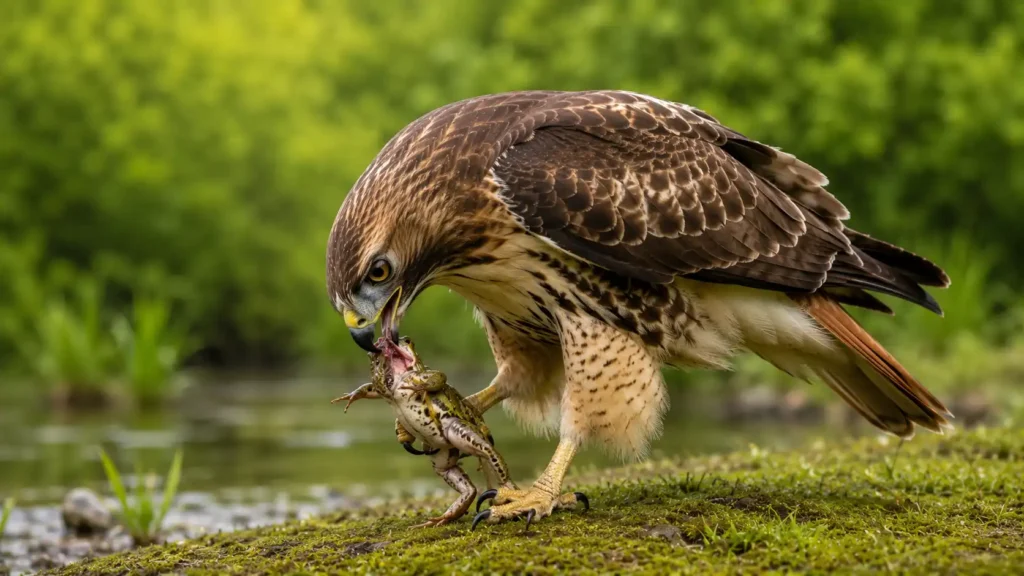
Hawks, with their sharp talons and keen eyesight, are masterful hunters that roam a variety of habitats, from forests to open fields. These raptors are often spotted soaring high above, scanning the ground for movement, thanks to their excellent vision and swift reflexes.
Adapted for predation, hawks possess strong, curved beaks that allow them to tear into their prey effectively, including frogs. Their agility in the air and ability to swoop down at impressive speeds make them formidable hunters, and their keen observational skills keep them several steps ahead of any potential escapees.
Fun Facts:
- Hawks can spot a frog from nearly a mile away, thanks to their extraordinary eyesight.
- They primarily hunt during the day, leveraging their keen vision for identifying movement in lush habitats.
- Some species, like the Red-tailed Hawk, are known to rely heavily on a diet that includes amphibians like frogs, especially during the breeding season when other food sources may be scarce.
- Hawks have excellent hearing, which helps them locate frogs even in dense cover.
- Their flight feathers are specially designed to allow silent gliding, enabling them to approach their prey unnoticed.
- After a successful hunt, hawks often store uneaten food in trees, allowing them to return later to feed.
Snakes
Snakes are fascinating predators known for their stealthy hunting techniques and diverse habitats, ranging from lush rainforests to arid deserts. These legless reptiles have striking appearances, often featuring vibrant colors and patterns that provide camouflage, making them efficient hunters of various prey, including frogs.
Snakes possess unique characteristics, such as flickering tongues to sense their environment and highly flexible bodies that allow them to maneuver through tight spaces.
Their adaptations enable them to thrive in various ecosystems. Most animals that eat snakes are proficient climbers, utilizing muscular bodies and specialized scales that allow them to grip onto branches effortlessly.
Some species have evolved to detect vibrations, making them exceptional at locating frogs hidden among foliage or water. This keen sense of awareness, coupled with their distinctive ambush tactics, allows them to seize frogs with remarkable speed and precision.
Fun Facts:
- Snakes can consume prey up to twice their size, including larger frogs.
- Certain species, like the Eastern Garter Snake, have developed a preference for amphibians as a primary food source.
- Some snakes, like tree boas, are excellent climbers, often waiting for frogs to come within striking distance.
- Snakes use their bifurcated tongues to taste the air, enhancing their hunting prowess.
- Many snakes have a unique way of swallowing dislocating their jaws to consume whole animals.
- The snake’s camouflage patterns often mimic surroundings, offering them an advantage while stalking air-breathing amphibians.
Large Fish (Bass/Pike)
Large fish such as bass and pike are formidable predators in freshwater ecosystems, known for their elongated bodies and sharp teeth. Often lurking in weedy areas or near structures, these apex hunters exhibit keen eyesight and stealthy behavior, making them effective at ambushing unsuspecting prey, including frogs.
Bass and pike have evolved several adaptations that enhance their hunting efficiency. Their sleek bodies allow for swift movements through water, while their sharp teeth help them grasp slippery amphibians.
Both species are opportunistic feeders, meaning they seize the chance to eat frogs when they’re vulnerable, especially during warmer months when frogs are plentiful.
Fun Facts:
- Ambush Artists: Bass and pike prefer to lie in wait before striking their prey, making them expert ambushers in their aquatic environments.
- Aggressive Feeders: They aren’t picky eaters; frogs are just one part of a varied diet that may include smaller fish and crustaceans.
- Seasonal Behavior: Frogs often become more active during spring and summer, increasing the chances of encountering these large fish.
- Anglers’ Delight: Because of their size and the thrill they provide, both bass and pike are popular targets for sport fishing.
- Competition: These large fish face competition for food from other predators like otters and birds, making their hunting skills crucial for survival.
- Ecological Impact: As apex predators, bass and pike play a vital role in maintaining the balance of their aquatic ecosystems, controlling frog populations and supporting biodiversity.
Raccoons
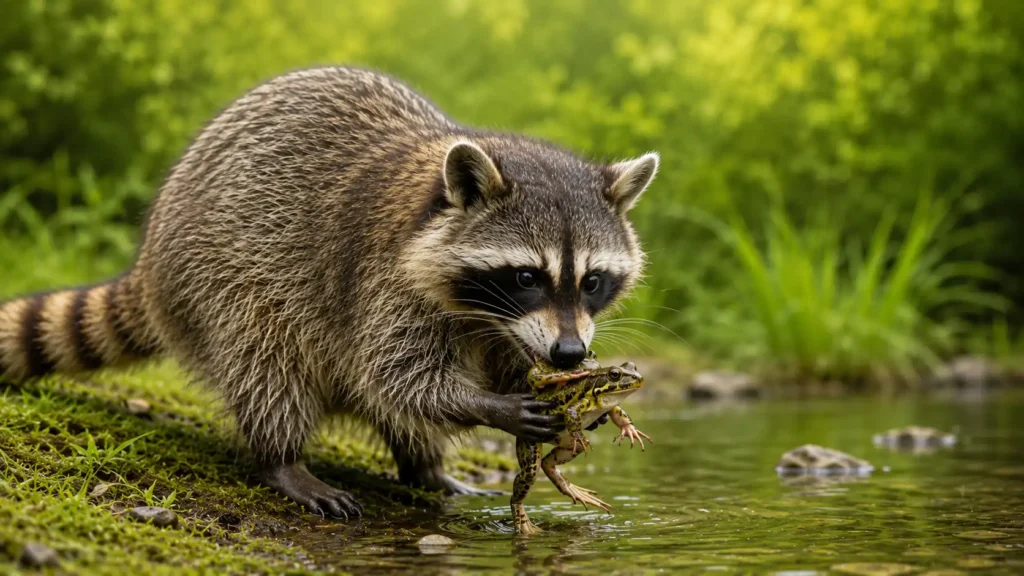
Raccoons are fascinating creatures, easily recognized by their distinctive black “mask” across their eyes and bushy tails with ring-like patterns. Found across North America, these adaptable omnivores thrive in a variety of habitats, from forests to urban areas, and are known for their curious and clever behavior.
Their dexterous front paws allow them to manipulate objects with surprising finesse, contributing to their reputation as the “bandits” of the animal world. In exploring the diet of raccoons, it’s clear they are opportunistic feeders; frogs are among the many animals that eat frogs.
Raccoons are opportunistic predators that may eat frogs when they find them near ponds and streams. If you enjoy learning about similar wild predators, explore our guide to animals like foxes.
Fun Facts
- Raccoons have a highly developed sense of touch due to their sensitive paws, allowing them to feel and manipulate food in dark environments.
- They can eat almost anything, from fruits and nuts to small mammals, making them adaptable survivors in diverse ecosystems.
- When raccoons wash their food in water a behavior known as “dousing” it is more about feeling the texture than cleaning.
- These mammals can run up to 15 miles per hour and are excellent climbers, using trees to escape predators or to find food.
- Raccoons are social animals and often live in family groups, showing strong bonds with their young.
- Their playful and inquisitive nature often leads to endearing, if chaotic, interactions with human habitats.
Alligator
Alligators, the apex predators of freshwater habitats, are known for their powerful jaws and armored bodies. Often found lurking in swamps, rivers, and lakes, these reptiles exhibit a stealthy, ambush behavior, waiting patiently for unsuspecting prey, including frogs, which form part of their diverse diet.
Adapted to thrive in aquatic environments, alligators possess specialized features that aid in hunting. Their keen eyesight and sensitive tactile organs allow them to detect movements in murky waters, making them efficient hunters. With strong, muscular tails that propel them through their habitats, alligators can quickly strike when frogs hop too close to the water’s edge.
Fun Facts:
- Alligators can consume large quantities of food at once, often storing them in their jaws for later digestion.
- These reptiles have a hunting technique called “death roll,” which helps them twist and tear prey apart.
- An adult alligator’s bite can exert a staggering 2,000 pounds of pressure.
- They can hold their breath underwater for several hours, making it easy for them to ambush frogs.
- Alligators are surprisingly social creatures, often seen basking together and communicating through vocalizations.
- Both male and female alligators protect their young, showcasing their surprisingly nurturing side.
Turtles
Turtles are fascinating reptiles known for their hard shells and slow, methodical movements. Found in diverse habitats such as freshwater lakes, rivers, and marshes, these creatures often bask in the sun while waiting for their next meal. One surprising aspect of their diet is that many turtles are opportunistic feeders, frequently indulging in frogs when given the chance.
Adapted for life both in water and on land, turtles exhibit remarkable flexibility. Their strong jaws help them crack open shells and nibble on various food sources, including frogs. With a keen sense of sight and limited movement, they rely on stealth and patience to ambush unsuspecting frogs near the water’s edge.
Fun Facts:
- Turtles have been around for over 200 million years, making them one of the oldest living reptiles.
- Some species, like the snapping turtle, can stretch their necks far back to capture prey.
- Many turtles can live for several decades, with some even reaching 100 years!
- Unlike mammals, turtles cannot regulate their body temperature, so they rely on their environment to warm up.
- Turtles’ shells come in various patterns and colors, acting as camouflage in different habitats.
- In some cultures, turtles are considered symbols of wisdom and longevity.
Skunks
Skunks are fascinating creatures that often surprise people with their dietary choices. Typically recognized by their black and white fur and the characteristic pungent odor they emit when threatened, skunks are adept foragers.
They thrive in a variety of habitats, ranging from forests and grasslands to suburban areas. Their omnivorous diet includes a range of small animals, making them one of the unexpected animals that eat frogs.
When it comes to hunting, skunks use their keen senses of smell and hearing to locate prey like frogs. Their nocturnal behavior means they are most active after dusk, prowling through the underbrush in search of food.
A skunk’s light frame allows it to be agile while navigating through different terrains, enabling it to catch frogs when the opportunity arises. Despite their cute appearance, skunks are resourceful predators, demonstrating both intelligence and adaptability in their quest for survival.
Fun Facts:
- Skunks can spray a foul-smelling liquid up to 10 feet away as a defense mechanism, deterring potential threats.
- They have a varied diet that also includes insects, small mammals, and plant matter, showcasing their adaptability.
- Despite their reputation, skunks are often misunderstood; they can be sociable creatures that engage in playful interactions.
- Skunks have excellent hearing, allowing them to detect prey even in the dark.
- They are known to dig for food, using their sharp claws to unearth insects and other hidden snacks.
- Their unique black and white coloration serves as a warning to predators, signaling that they are not to be trifled with.
Owls
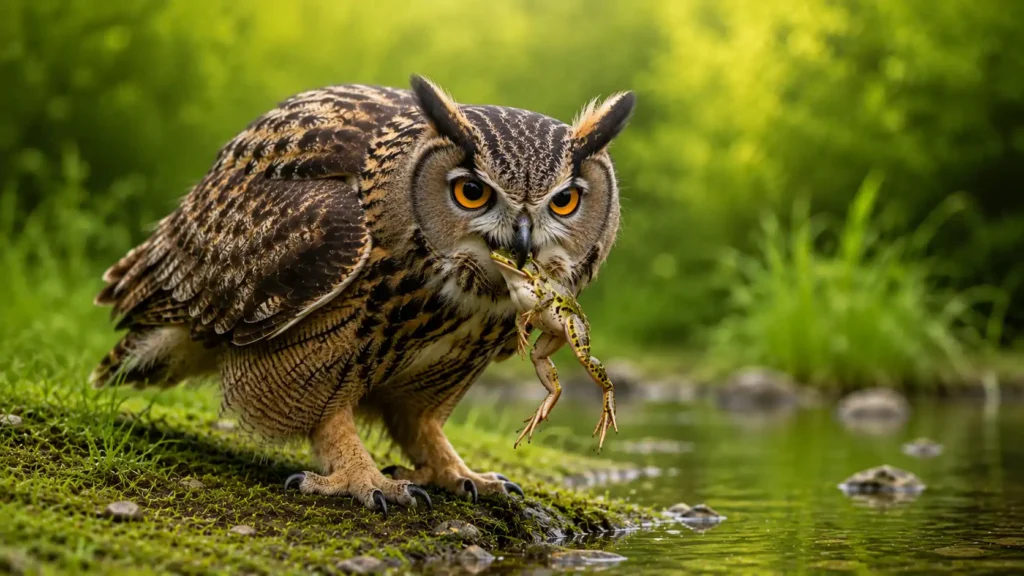
Owls are fascinating birds of prey known for their distinct round faces, large eyes, and silent flight. Often found in various habitats, including forests, grasslands, and even urban areas, these nocturnal hunters possess remarkable adaptations that enable them to thrive in the dark.
Adapted perfectly for their predatory lifestyle, do owls eat frogs have specialized feathers that minimize sound during flight, making them stealthy hunters. Their powerful talons easily grasp and capture slippery frogs, while their exceptional night vision allows them to spot movement in low light conditions.
Many frog predators are active at night, especially owls and other nighttime hunters. You can learn more about owls in our guide to nocturnal animals.
Fun Facts:
- Owls are considered apex predators, meaning they have no natural enemies when hunting.
- Certain species, like the Great Horned Owl, can consume frogs as large as themselves!
- The Barred Owl is known for its distinctive “Who cooks for you?” call, echoing through wooded areas where frogs often reside.
- An owl’s relatively silent wings allow it to swoop down on frogs without warning, making them incredibly effective hunters.
- Their unique ability to rotate their heads up to 270 degrees helps them spot their next meal from various angles.
- Owls can swallow frogs whole, digesting them over time, which makes them efficient feeders and minimizes energy spent on hunting.
Cranes
Cranes are elegant, tall birds known for their striking long legs and graceful necks. Typically found in wetlands, marshes, and grassy plains, these birds possess a diverse diet that includes insects, seeds, and notably, frogs.
Their social behavior often sees them foraging in pairs or groups, as they communicate with a series of distinct calls, creating a symphony of sounds that echo across their habitats. Adapted for survival, cranes have powerful legs that allow them to wade through water with ease, enabling them to hunt for frogs effectively.
Their sharp eyesight helps them spot these amphibians hidden among reeds and mud. By employing stealth and quick movements, cranes can snatch frogs swift as lightning, showcasing the fascinating dynamics of predator and prey in the animal kingdom.
Fun Facts:
- Cranes can be found on every continent except Antarctica, showcasing their adaptability to various ecosystems.
- These birds are known for their elaborate courtship dances, which strengthen pair bonds and enhance mating behavior.
- Some crane species can live up to 20 years in the wild, demonstrating their resilience and longevity.
- Cranes are often considered symbols of love and fidelity in many cultures, thanks to their lifelong partnerships.
- Crane chicks are precocial, meaning they can walk and forage for themselves shortly after hatching.
- Certain species of cranes can migrate over 2,500 miles to reach their breeding grounds, displaying incredible navigational skills.
Coyote
Coyotes are resourceful predators known for their adaptability to various habitats, ranging from deserts to urban areas. With a slender build and a bushy tail, these canines have a keen sense of hearing and an unmistakable howl that echoes across the land.
While they primarily hunt small mammals, they won’t pass up the opportunity to feast on frogs when the chance arises. Their opportunistic nature allows them to thrive in diverse environments, adjusting their diet based on available prey.
Adaptations that aid coyotes in hunting include sharp senses and an agile body, which help them stalk and ambush frogs effectively. Their varied diet reflects survival strategies that make them versatile hunters; in addition to frogs, they can consume fruits and insects, demonstrating their ability to adapt to food availability.
Fun Facts:
- Coyotes are known to hunt in packs, but they can also be solitary, making them versatile in finding food.
- In addition to frogs, coyotes will consume birds, rodents, and even carrion, showcasing their omnivorous nature.
- These skilled hunters can travel several miles in search of food, utilizing their acute sense of smell to locate prey.
- Coyotes are experienced at living close to humans, often adapting their hunting strategies to urban environments.
- Vocal communication is essential for coyotes; their howls can coordinate pack movements and signal their presence to other coyotes.
- Despite their adaptability, the coyote’s role as a predator helps control the population of frogs, which can impact the local ecosystem.
Badger
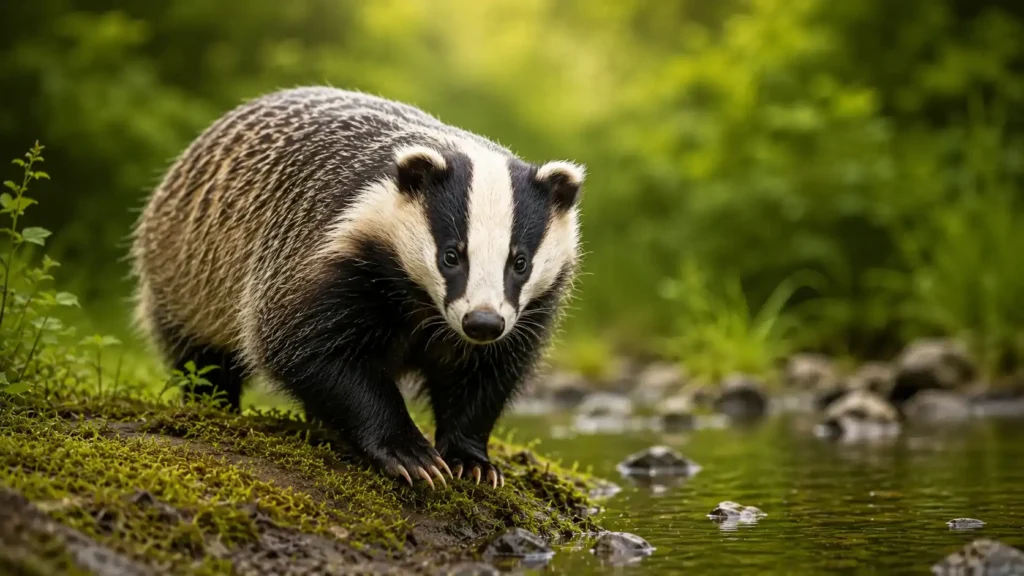
Badgers are robust, stocky carnivores known for their distinctive stripes and thick fur. Primarily found in North America, Europe, and parts of Asia, these clever creatures tend to inhabit woodlands, grasslands, and even urban areas, displaying a surprising adaptability.
Badgers are nocturnal and exhibit fascinating behaviors; often seen digging burrows in search of food, they are relentless hunters with a varied diet, which occasionally includes frogs.
One of the key adaptations that help badgers thrive in diverse habitats is their sturdy build, designed for digging and burrowing. Equipped with strong claws, they can easily excavate earth in search of prey, including frogs, insects, and small mammals.
Their sense of smell is exceptional, allowing them to locate frogs hidden under leaves or brush. This keen hunting ability ensures they find sustenance even in challenging environments.
Fun Facts:
- Badgers have a fierce reputation and are known for their boldness when threatened.
- They can cover up to three miles in a single night while searching for food.
- A group of badgers is called a “cete,” highlighting their social nature during certain seasons.
- They can dig a new burrow in just a few hours, showcasing their impressive physical adaptations.
- Badgers have a unique way of communicating through vocalizations and scent markings.
- They play a vital role in their ecosystem, helping control the populations of frogs and other small animals.
Other Frogs
Frogs may seem like easy prey in the animal kingdom, but they have some surprising dietary competitors other than frogs! These amphibians, both stealthy hunters and sometimes cannibals, lurk in various habitats ranging from lush wetlands to dense forests, showcasing vibrant colors and diverse sizes.
Some species, like the Northern Leopard Frog, are known for their striking patterns, making them both beautiful and vulnerable in the interconnected web of life.
Among their many adaptations, certain frogs have developed a remarkable ability to ambush their own kind. Larger frog species often capitalize on the abundance of smaller ones, utilizing their excellent jumping skills and keen eyesight to spot potential meals.
Fun Facts:
- Some frogs can consume others of their own species, showcasing an interesting survival tactic.
- The Goliath frog, one of the largest frogs, can eat smaller frogs, insects, and even small mammals.
- Many frogs utilize camouflage to avoid being spotted by potential predators or prey.
- Red-eyed tree frogs are known for their vibrant colors, which can distract or startle other frogs.
- Cannibalism among frogs isn’t limited to survival; it can occur during mating seasons when food is scarce.
- Some species can leap upwards of 20 times their body length, making them agile hunters and escape artists.
Read May Also: Top 20 Cleanest Animals in The World (With Pictures)
Final Thoughts
Understanding the top provides valuable insight into the complexities of nature’s animals that consume frogs’ food web. Each predator, whether it’s a fearsome reptile or an adept mammal, signifies the interdependence of species in maintaining ecological balance.
By appreciating these natural dynamics, we can better understand the challenges frogs face in their habitats. As we delve deeper into wildlife studies, let’s advocate for conservation efforts that protect both frogs and their predators. Join the conversation and discover more about these fascinating animals and their roles in our ecosystems!
FAQs
What Animals Eat Frogs In The Rainforest?
Many Rainforest Animals Eat Frogs, Including Snakes, Birds, Lizards, Turtles, Fish, And Larger Mammals. Some Insects And Larger Amphibians May Also Prey On Frogs.
What Eats Frogs In Minecraft?
In Minecraft, Frogs Are Not Normally Eaten By Other Mobs. However, Frogs Can Be Killed By Various Hostile Mobs, Players, Or Environmental Hazards.
Who Eats Frogs In The Food Chain?
Frogs Are Eaten By Snakes, Birds, Fish, Lizards, Turtles, Mammals, And Larger Amphibians. They Are An Important Part Of Many Food Chains.
Do Small Birds Eat Frogs?
Some Small Birds May Eat Very Small Frogs Or Froglets, But Larger Birds Such As Herons, Egrets, And Kingfishers Are More Common Frog Predators.
What Eats Frogs At Night?
At Night, Frogs May Be Hunted By Snakes, Owls, Bats, Raccoons, And Other Nocturnal Predators. Their Nighttime Activity Can Make Them Easier To Detect By Some Predators.
What are Some Animals that Eat Frogs?
Many animals eat frogs, including snakes, herons, egrets, storks, owls, hawks, raccoons, foxes, otters, skunks, large fish, turtles, and even other frogs. Frogs are an important food source in many ecosystems.
What animals eat tree frogs?
Tree frogs are eaten by snakes, owls, birds of prey, bats, lizards, spiders, raccoons, opossums, and larger frogs. Because they live in trees, shrubs, and near water, they face predators both on land and in the canopy.
What Animals Eat Frog Eggs?
Frog eggs are eaten by fish, newts, salamanders, dragonfly larvae, water beetles, leeches, snails, turtles, ducks, and other waterbirds. Because eggs are soft, unprotected, and often laid in shallow water, they are an easy meal for many animals.
What Animal would Eat a Frog?
Many animals would eat a frog, including snakes, herons, owls, hawks, raccoons, foxes, otters, large fish, turtles, and even larger frogs. If a frog is small enough to swallow, it is a possible meal for most carnivores and omnivores that share its habitat.