
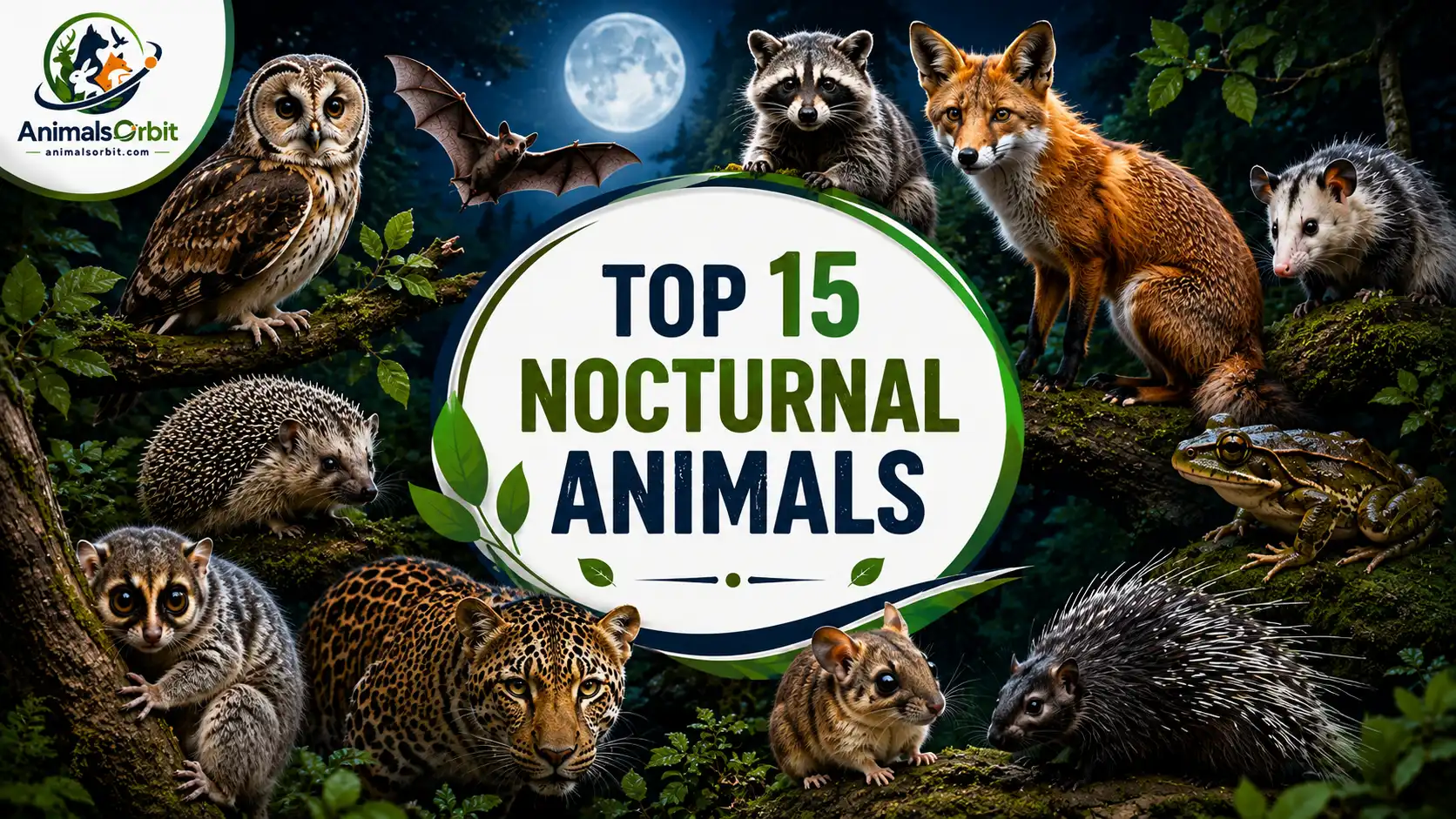
Top 15 Nocturnal Animals List, Pictures & Interesting Facts
Nocturnal animals are the unseen players of the night, engaging in fascinating activities that most of us miss! These animals also play an important role in maintaining the balance of nature.
This article offers a comprehensive list of these remarkable creatures, accompanied by striking images and interesting facts that shed light on their unique adaptations. Dive in to discover why these animals matter and the roles they play in maintaining the balance of nature.
Nocturnal Animals Meaning
Nocturnal animals, also known as night animals, are creatures that are active after sunset and rest during the day. They have developed special abilities that help them survive in the dark. For example, owls have excellent eyesight and can fly silently, allowing them to find and catch prey easily at night.
Nocturnal animals belong to different Nocturnal animals cast or classes including Mammalia, Aves, Reptilia, Amphibia, and Insecta, depending on the species. These animals also play an important role in maintaining the balance of nature.
Top 15 Nocturnal Animals List
The animal kingdom is home to many fascinating nocturnal creatures that become active after sunset. From owls and bats to raccoons and foxes, these animals have developed unique adaptations that help them hunt, hide, and survive in the dark.
Lets explore 15 amazing nocturnal animals and discover pictures of nocturnal animals and the special traits that make them masters of the night.
- Owl
- Bat
- Raccoon
- Red Fox
- Hedgehog
- Opossum
- Aardvark
- Slow Loris
- Leopard
- Porcupine
- Flying Squirrel
- Bush Baby
- Kangaroo Rat
- Tasmanian Devil
- Civet
Owls
- Type of Animal: Mammal
- Where Found: Africa
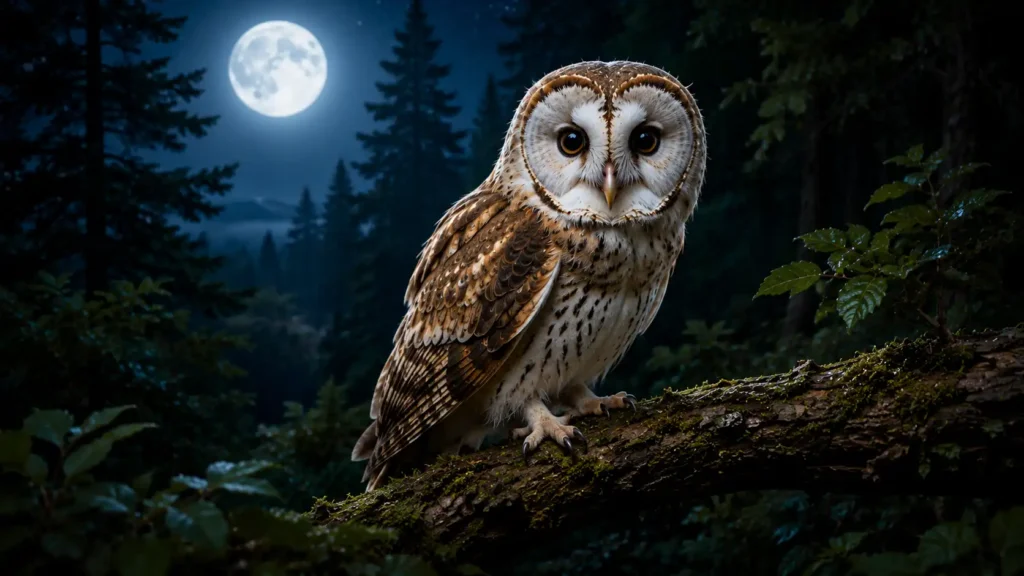
Owls, often regarded as the enigmatic sentinels of the night, exhibit a striking appearance with their large, expressive eyes and silent flight. Found across diverse habitats in Africa, these nocturnal animals have adapted to various environments, from lush forests to arid savannas.
Their unique behaviors, such as hunting primarily in the dark and roosting during the day, set them apart as skilled nighttime predators.
Scientific research reveals that owls possess remarkable adaptations. Their exceptional hearing allows them to detect even the quietest prey movements, while their silent wing structures facilitate stealthy hunting.
Fun Facts:
- Owls can rotate their heads almost 270 degrees, giving them a wide field of vision.
- A group of owls is known as a “parliament,” emphasizing their wise reputation in folklore.
- Owls are essential for maintaining rodent populations, making them valuable for ecosystems.
- Despite their serious appearance, some owls can be quite vocal, producing a range of hoots, screeches, and whistles.
- Many owl species have feathers designed for silent flight, enhancing their ability to stalk prey without detection.
- The African Spotted Owl, native to the continent, is known for its distinctive dark spotted plumage, making it a striking sight during night surveys.
Bat
- Type of animal: Mammals (order Chiroptera)
- Where found: Every continent except Antarctica
Bats, belonging to the order Chiroptera, are fascinating mammals that thrive across every continent except Antarctica. These remarkable creatures come in various shapes and sizes, with their characteristic wings allowing them to navigate the night sky with unparalleled agility.
With their diverse habitats ranging from tropical rainforests to arid deserts, bats play a crucial role in ecosystems as pollinators, seed dispersers, and pest controllers.
What sets bats apart are their unique adaptations. Their ability to use echolocation enables them to hunt and navigate in complete darkness, thriving in nocturnal environments. This complex sonar system is complemented by their highly flexible wrists and lightweight bodies, making them expert climbers as well when roosting in trees or caves.
Fun Facts:
- Bats make up about 20% of all mammal species, showcasing incredible diversity.
- Some species can eat up to 1,200 insects in a single night, significantly helping to control pest populations.
- The tiny bumblebee bat holds the title for the smallest mammal in the world, weighing less than a penny!
- Bats can live for more than 30 years in the wild, far surpassing the lifespan of many mammals.
- Some bat species are known to migrate over 1,000 miles to find warmer climates during colder months.
- Contrary to popular belief, not all bats feed on blood; the vast majority consume fruit, nectar, or insects.
Raccoon
- Type of animal: Mammal (family Procyonidae)
- Where found: North America
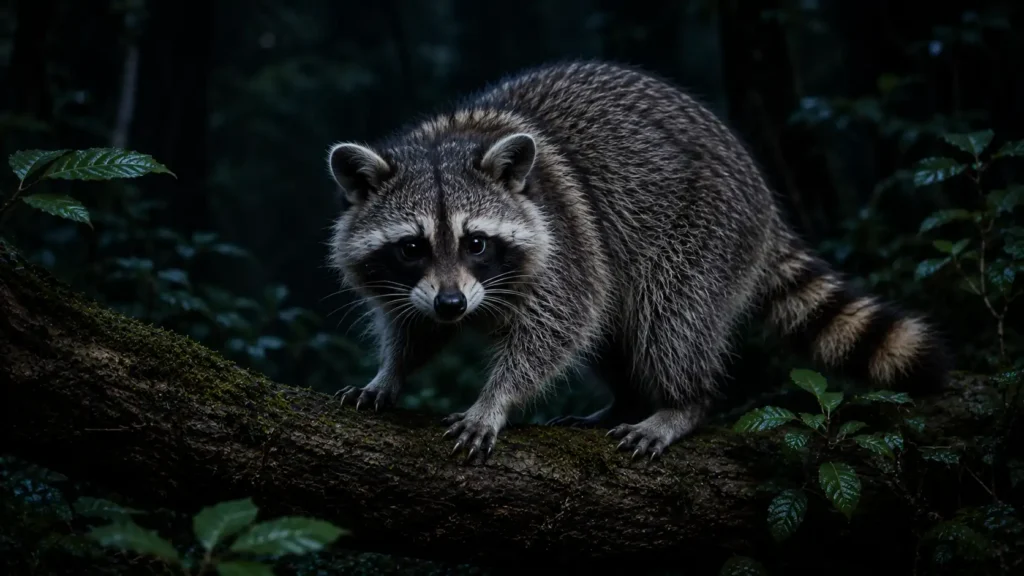
Raccoons, those masked bandits of the urban jungle, are perhaps some of the most intriguing nocturnal animals. Recognizable by their distinctive black facial masks and ringed tails, these adaptable creatures flourish in a variety of habitats, from dense forests to suburban backyards.
Their curious nature makes them incredibly resourceful, often rummaging through trash cans in search of food under the cloak of night.With their agile paws and keen sense of touch, raccoons are well-equipped for scavenging and exploring their environments.
Their nocturnal lifestyle not only aids in avoiding predators but also allows them to thrive in areas where they can find sustenance, ranging from fruits and nuts to delectable human leftovers. Many small nocturnal animals share characteristics with hamsters, including their tiny bodies, burrowing habits, and active nighttime lifestyles.
Fun Facts:
- Raccoons are known for their dexterous front paws, which allow them to manipulate objects.
- They have a unique “handwashing” behavior, where they wet their food before eating.
- These creatures can run at speeds up to 15 miles per hour when startled.
- A group of raccoons is called a “gaze,” showcasing their social nature.
- Raccoons have a diverse diet and can adapt to various food sources, including insects and pet food.
- Despite their seemingly cute appearance, they have strong jaws and sharp teeth, making them formidable when threatened.
Red Fox
- Type of Animal: Mammal
- Where Found: North America, Europe, Asia, and parts of North Africa
The red fox, known for its striking reddish-orange coat and iconic bushy tail, is a master of adaptability. Typically found in woodlands, grasslands, and even urban areas, these cunning creatures exhibit a mix of playful behavior and stealth as they navigate their habitats under the veil of darkness, making them fascinating nocturnal animals.
Red foxes have developed a range of adaptations that make them effective nocturnal hunters. With excellent night vision and acute hearing, they can detect the faintest sounds and movements of prey, enabling them to thrive in various environments.
Fun Facts:
- Red foxes can hear low-frequency sounds up to a mile away, helping them locate their prey.
- They communicate through a series of barks, yips, and howls, showcasing their social nature.
- A red fox can run up to 30 miles per hour, making them agile hunters.
- Red foxes have a unique hunting technique known as “cache,” where they bury surplus food to consume later.
- They are highly territorial and will mark their territory with scent markings to ward off rivals.
- The red fox’s fur changes color with the seasons, often becoming more muted in winter for camouflage.
Hedgehog
- Type of Animal: Mammal
- Where Found: Europe, Asia, Africa, and New Zealand.
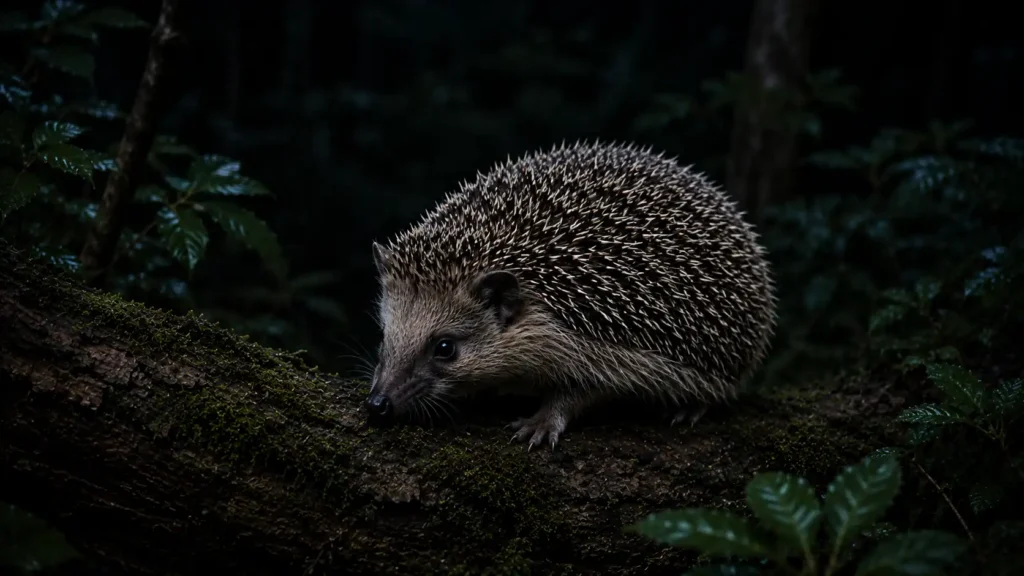
The hedgehog is a fascinating nocturnal animal, easily recognizable by its spiny coat and rounded body. Commonly found in gardens, forests, and hedgerows, these small mammals are nocturnal foragers, emerging at night to scan their surroundings for insects, worms, and other tasty treats.
One of the hedgehog’s remarkable adaptations is its ability to curl into a tight ball, utilizing its spines as a defense mechanism. Their keen sense of smell and hearing enhances their hunting prowess at night.
Several animals featured in this guide are also included in our Skinny Animals articles. Their remarkable adaptations help them thrive in challenging environments and make them some of the most fascinating creatures in the animal kingdom.
Fun Facts:
- Hedgehogs can run at speeds of up to 4 miles per hour when startled.
- They have an excellent sense of smell, which helps them locate food even in darkness.
- A group of hedgehogs is called an “array.”
- Despite their prickly exterior, they are generally friendly and can even be kept as pets.
- Hedgehogs are solitary creatures, preferring to live alone except during mating season.
- They can eat up to 100 grams of insects in a single night, showcasing their role as natural pest controllers.
Opossum
- Type of Animal: Mammal
- Where Found: North America, Central America, and South America.
Opossums are fascinating marsupials known for their distinctive appearance, with a pointed snout and a long, hairless tail. Found across North America, these nocturnal animals thrive in diverse habitats, from urban areas to wooded regions.
Opossums exhibit unique behaviors, including playing dead as a defense mechanism, and they are skilled tree climbers thanks to their prehensile tails and opposable thumbs on their hind feet.
These nocturnal creatures have evolved various adaptations that help them survive in the wild. Their ability to climb efficiently allows them to evade predators and access food sources, like fruits, insects, and even carrion.
Fun Facts:
- Opossums are North America’s only marsupials, carrying their babies in pouches.
- With a body temperature lower than many mammals, they are resistant to rabies.
- They have a remarkable immunity to snake venom, making them resilient against rattlesnake bites.
- Opossums can consume thousands of ticks in a season, significantly contributing to disease prevention.
- They are adept at “playing possum,” mimicking the appearance of a dead animal to deter threats.
Aardvark
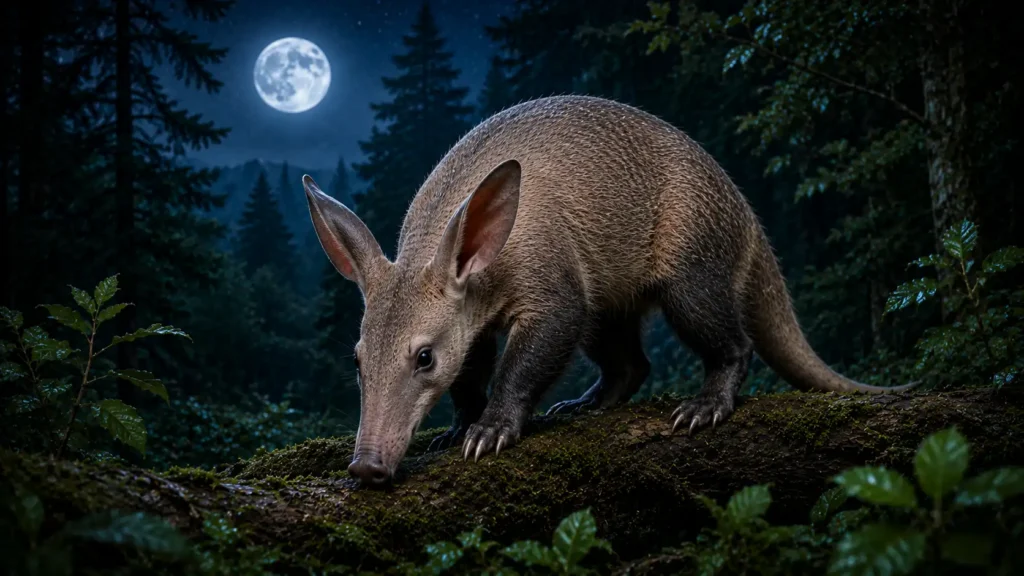
- Type of Animal: Mammal
- Where Found: Sub-Saharan Africa
Aardvarks are fascinating, nocturnal mammals that roam the African savannahs and woodlands under the cover of darkness. With a long snout, large ears, and a stout body covered in coarse fur, these unique creatures are often likened to a blend of an anteater and a pig.
They are primarily solitary and exhibit a range of behaviors to adapt to their environments, including digging extensive burrows that provide shelter and protection from predators.
These remarkable animals have developed specialized adaptations that make them especially suited for a life spent almost entirely in the dark.
Fun Facts:
- Aardvarks can consume up to 50,000 ants and termites per night.
- They have a strong sense of smell, allowing them to locate food from a distance.
- Aardvarks are excellent diggers, often creating burrows that can be up to 3 meters deep.
- Their ears can swivel independently, helping them detect sounds from various directions.
- When threatened, aardvarks can quickly burrow into the ground to escape danger.
- Unlike most mammals, aardvarks are the only living representatives of their order, Tubulidentata, making them truly unique.
Slow Loris
- Type of Animal: Mammal
- Where Found: Southeast Asia, including Indonesia, Malaysia
The Slow Loris is a fascinating nocturnal animal that captivates nature enthusiasts with its endearing large eyes and slow, deliberate movements. These small, primate-like mammals thrive in tropical rainforests, where they expertly navigate the trees with a blend of grace and caution.
Their soft, velvety fur and rounded faces contribute to their charming appearance, yet their unique adaptations make them formidable nighttime foragers.
One of the Slow Loris’s most intriguing traits is its specialized diet, primarily consisting of tree gum, fruits, and insects.
With their flexible wrists and strong grip, they are superb climbers, adept at traversing branches in search of food. Specialized glands in their elbows secrete toxins, which they use for self-defense, making them the only venomous primates known to science.
Fun Facts:
- Slow Lorises can rotate their heads almost 180 degrees, giving them a wide field of vision.
- Despite their name, these creatures can move swiftly when startled, but they often prefer to take things slow.
- They have a unique communication system that includes vocalizations and scent-marking to convey information to others.
- Unlike most primates, Slow Lorises lack a tail, which adds to their distinctive profile.
- Their big eyes not only enhance their night vision but also create an adorable appearance that often draws human fascination.
- Due to habitat loss and the exotic pet trade, Slow Lorises are classified as vulnerable, sparking conservation efforts worldwide.
Leopard
- Type of Animal: Mammal
- Where Found: Africa and parts of Asia
The majestic leopard, often shrouded in mystery as it prowls the underbrush under the cloak of night, is a fascinating nocturnal animal. With its sleek, rosette-patterned coat, the leopard blends seamlessly into its surroundings, primarily found in diverse habitats like savannas, jungles, and mountainous regions.
Known for its agility and strength, this elusive predator is primarily solitary, marking its territory through scent and vocalizations. These remarkable leopards have adapted superbly to their environments.
Their keen night vision and acute sense of hearing allow them to hunt effectively in darkness, making them formidable nocturnal hunters. Their physical prowess is complemented by their ability to climb trees, providing them with both vantage points for stalking prey and a safe retreat from rivals.
Fun Facts:
- Leopards can leap up to 20 feet in a single bound, demonstrating their incredible strength and agility.
- These big cats are not just nocturnal; they can also be active during the day, depending on their environment and prey.
- A leopard’s rosette spots are unique to each individual, much like human fingerprints.
- They are excellent swimmers, often enjoying a swim in rivers and lakes.
- Leopards have a diverse diet that includes ungulates, birds, and even small primates, showcasing their adaptability.
- In some cultures, leopards symbolize power and grace, making them a significant part of local folklore.
Porcupine
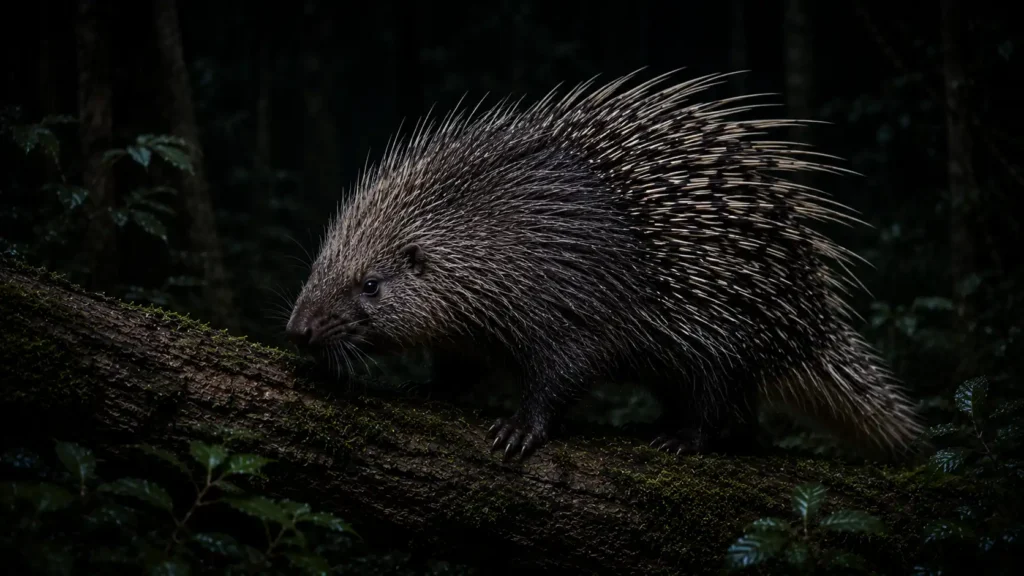
- Type of Animal: Mammal
- Where Found: North America, South America, Europe, Africa
The porcupine, a fascinating member of the rodent family, embodies a unique blend of quirkiness and resilience. Instinctively nocturnal, these animals thrive in various habitats, from forests to grasslands, primarily in North America and parts of South America, Africa, and Asia.
Porcupines are well-adapted to their environment with strong climbing abilities and a diet that heavily leans towards vegetation, primarily feeding on leaves, roots, and, interestingly, tree bark. Their flexible wrists and sturdy claws allow for effective climbing, which is essential not only for foraging but also for escaping threats.
Fun Facts:
- Porcupines can have up to 30,000 quills that they shed and regrow throughout their lives.
- Contrary to popular belief, porcupines do not shoot their quills; instead, they can release them if a predator gets too close.
- Animals that are nocturnal known for their solitary behavior but can occasionally be spotted in small family groups during foraging.
- They have a keen sense of smell and strong teeth, which allow them to gnaw through tough plant materials.
- Porcupines love salt and often seek out human-made objects like sweat-soaked tools for a tasty treat.
- Porcupines have a slow reproduction rate, typically giving birth to just one offspring at a time, which takes considerable care and nurturing.
Flying Squirrel
- Type of Animal: Mammal
- Where Found: North America, Europe, and Asia.
The flying squirrel, a fascinating nocturnal animal, boasts a unique gliding capability thanks to its membrane stretching from wrist to ankle. These agile creatures inhabit wooded areas where they thrive among a variety of trees, often nesting in tree cavities or holes.
Flying squirrels are specially adapted for their nocturnal lifestyle. Equipped with wide gliding membranes, they can soar between trees, navigating their forested homes with remarkable agility. Their keen eyesight allows them to forage for food under the cover of darkness, primarily relying on a diet of fruits, nuts, and tree sap.
Fun Facts:
- Flying squirrels can glide up to 150 feet, making them exceptional aerial acrobats.
- Unlike many other rodents, they create strong social bonds and often live in small family groups.
- Their large, expressive eyes aren’t just for show; they enhance their night vision significantly. Flying squirrels communicate through a series of vocalizations, including chirps and barks, to keep in touch with each other while foraging.
- They play a crucial role in their ecosystem by dispersing seeds, which helps maintain forest health.
- Despite their name, flying squirrels don’t actually “fly”; they glide using their skin membrane, allowing for graceful descents and rapid stops.
Bush Baby
- Type of Animal: Mammal
- Where Found: Sub-Saharan Africa
Bush babies, also known as galagos, are small primates that come alive as night descends, showcasing the vibrant world of nocturnal mammals. With large eyes adapted for low-light visibility and a tufted tail for balance, these charming creatures inhabit the forests and savannas of Africa, where they leap from tree to tree in search of insects and fruits.
The bush baby’s adaptations are fascinating; their powerful hind legs allow them to jump leaps of up to 2.5 meters (about 8.2 feet), making them one of the most agile primates.Coupled with their exceptional sense of hearing, they can easily detect predators while navigating the dense foliage at night.
Fun Facts:
- Bush babies have impressive hearing, which helps them locate prey and avoid danger.
- Their large, expressive eyes can see in near darkness, a critical trait for a nocturnal lifestyle.
- They primarily feed on insects, but their diets can also include fruits and tree sap.
- The name “bush baby” comes from their large, baby-like eyes and their playful, bouncing movements.
- These primates are social creatures, often found in small family groups to enhance survival and foraging success.
- Bush babies communicate through a variety of sounds, some resembling a barking dog, to signal alarm or call family members.
Kangaroo Rat
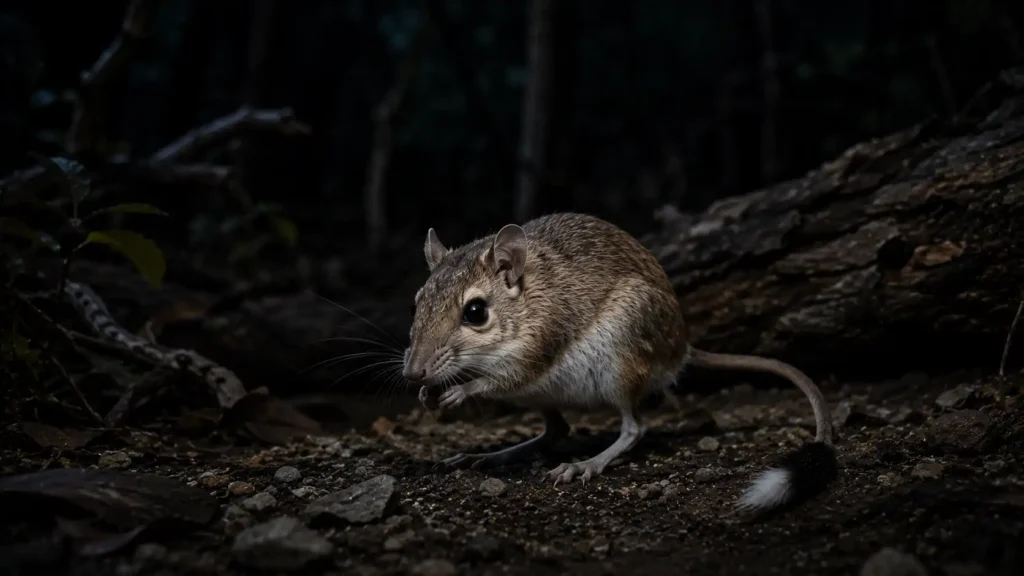
- Type of Animal: Mammal
- Where Found: North America
The kangaroo rat is a fascinating nocturnal animal that’s perfectly adapted to the arid landscapes of North America. With its long, powerful hind legs and tufted tail, this small rodent can leap remarkable distances to evade predators and navigate its sandy habitat.
Despite its diminutive size often weighing less than a quarter of a pound the kangaroo rat showcases unique behaviors and characteristics that make it a survival expert in extreme conditions.
Kangaroo rats have evolved several incredible adaptations that allow them to thrive in environments where water is scarce. Their ability to go without drinking water for months is primarily due to their efficient metabolism that extracts moisture from their mainly seed-based diet.
Fun Facts:
- They can leap up to nine feet in a single bound, making them agile escape artists!
- Their cheek pouches allow them to store food while foraging at night, which is crucial for survival.
- Kangaroo rats are known for their distinctive “bipedal” hopping style, similar to that of kangaroos, earning them their name.
- These tiny rodents communicate through ultrasonic vocalizations that humans can’t hear, enhancing communication among their species.
- Kangaroo rats cannot sweat and have adapted to regulate their body temperature by being active at night.
- They have fur on their feet that helps protect them from the hot desert sand, acting as natural booties!
Read Also: Top 15 Adorable Animals Like Hamsters From Around the World
Tasmanian Devil
- Type of Animal: Mammal
- Where Found: Tasmania, Australia
The Tasmanian Devil, with its stocky build and stunning black fur, thrives in the dense shrublands and eucalyptus forests of Tasmania. Known for its fierce demeanor and distinctive vocalizations, this nocturnal predator is primarily active during the night, hunting and scavenging for food.
These fascinating creatures have evolved unique adaptations that enhance their survival in the wild. Their impressive nocturnal vision and keen sense of smell make them adept hunters in the dark, while their strong immune system helps them combat diseases in the wild.
Fun Facts:
- Surprising Snarl: The Tasmanian Devil’s signature growl can be heard across the forest, often described as a form of eerie vocalization.
- Tiny but Mighty: Despite their small size (about the size of a large dog), they can consume up to 40% of their body weight in a single meal!
- Endangered Status: Once abundant, the Tasmanian Devil is now endangered due to a contagious cancer called Devil Facial Tumor Disease (DFTD).
- Playful Youngsters: Devil pups are born blind and hairless, usually emerging from the pouch after about three months.
- Territorial Creatures: They are highly territorial animals, often engaging in vocal displays or aggressive behaviors to defend their hunting grounds.
Final Thoughts
Exploring the world of nocturnal animals unveils the mysteries that thrive in the shadows of our environment. These animals have evolved remarkable traits to survive and thrive in darkness, showcasing nature’s ingenuity. Whether it’s the masterful camouflage of the gecko or the keen senses of the fox, each species highlights the richness of life on Earth.
By raising awareness about their roles in ecosystems, we can foster a greater respect for wildlife as a whole. It’s time to deepen our curiosity and advocate for the preservation of these nighttime wonders.
FAQs
Can Nocturnal Animals See in Complete Darkness?
Nocturnal animals can see well in Low-Light Conditions but still need some light to navigate, as complete darkness affects their vision.
Are Cats Nocturnal Animals?
Cats are not completely nocturnal animals, but they are considered crepuscular, which means they are most active during dawn and dusk. Their excellent night vision, sharp hearing, and strong hunting instincts allow them to move and hunt effectively in low-light conditions.
Are Foxes Night Animals?
Foxes are generally considered nocturnal animals because they are most active during the night. However, some species can also be active at dawn and dusk, making them crepuscular.
Are Nocturnal Animals at Risk Due to Urbanization?
Yes, urban areas can disrupt their habitats and natural behaviors, leading to increased risks from vehicles, pollution, and habitat loss.
How Do Nocturnal Animals Navigate in the Dark?
They often have enhanced senses, such as Acute Hearing, excellent Night Vision, and a heightened Sense of Smell, which help them navigate and hunt effectively.