Top 25 Birds With Long Legs With Images and Facts
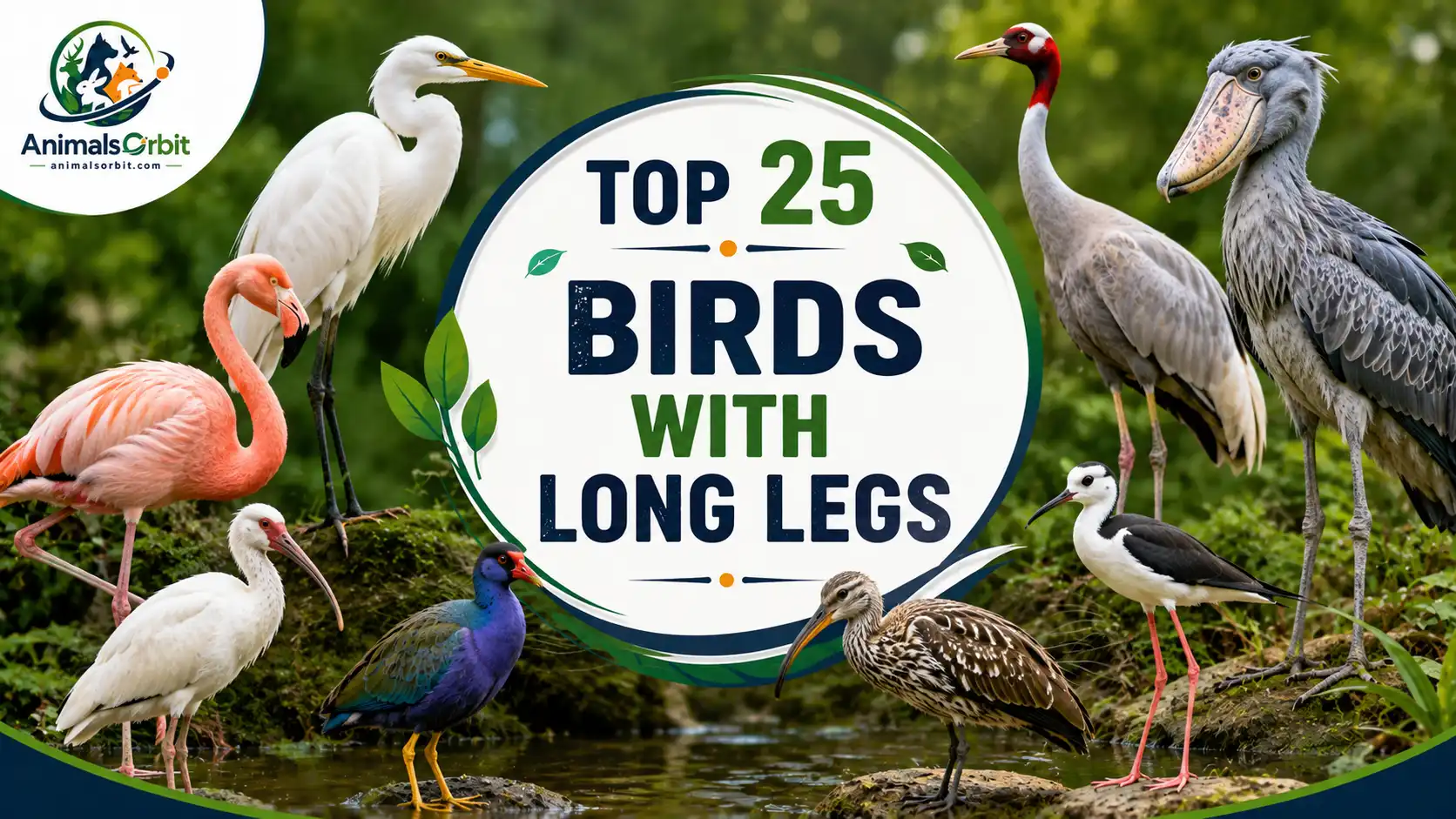
Birds with long legs are some of the most beautiful and interesting birds found in nature. Their long, strong legs help them move easily through shallow water, muddy wetlands, grasslands, and other places where shorter-legged birds may struggle. Many of these birds use their long legs to search for fish, frogs, insects, and other small animals.
We’ll explore the Top 25 Birds With Long Legs, along with beautiful pictures and interesting facts about each bird. You’ll learn how their long legs help them find food, walk through water, stay safe from predators, and survive in their natural habitats.
List of Top 25 Birds With Long Legs
With breathtaking images and intriguing facts, you’ll gain a deeper appreciation for these incredible avian species. Below, you’ll find 25 pictures of birds with long legs, along with interesting facts about their appearance, habitat, diet, and behavior.
- Great Egret
- Sarus Crane
- Limpkin
- Scarlet Ibis
- Secretary Bird
- Purple Gallinule
- Green Heron
- Jabiru
- Purple Heron
- Shoebill
- Whooping Crane
- Reddish Egret
- Cattle Egret
- Flamingos
- Great Blue Heron
- Ostrich
- Black-winged Stilt
- White-faced Ibis
- Tricolored Heron
- Sandhill Crane
- Snowy Egret
- Roseate Spoonbill
- Gray Heron
- Wood Stork
- Emu
Great Egret
Scientific Name: Ardea alba
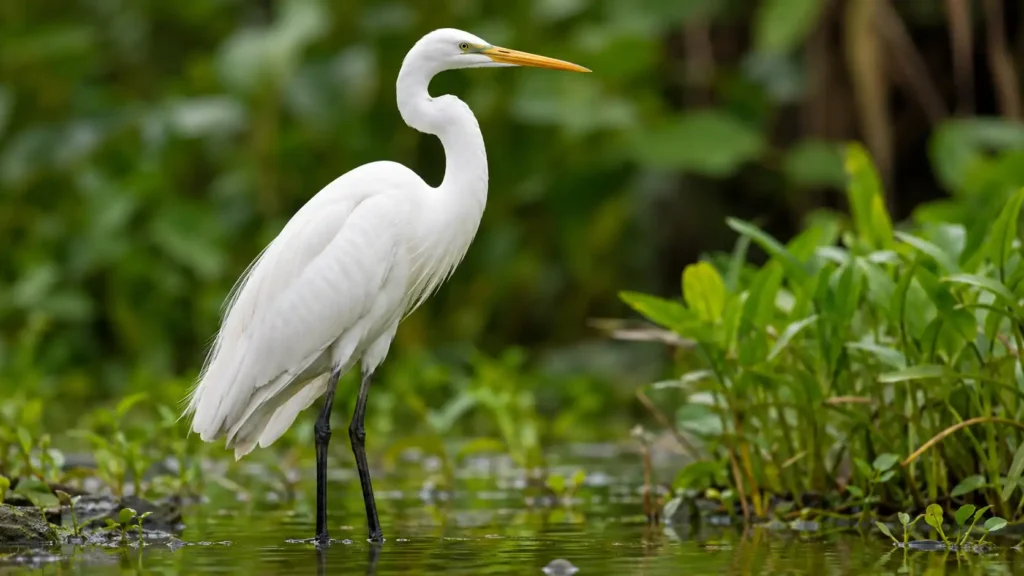
The Great Egret, easily recognized by its striking white plumage and long, slender legs, is a majestic bird that graces wetlands, marshes, and shorelines across the globe. Standing tall at nearly four feet, these birds are often spotted wading gracefully through shallow waters, using their sharp bills to hunt for fish and amphibians.
The Great Egret’s long legs are specially adapted for wading through water, enabling them to access deeper feeding grounds. Their remarkable climbing abilities, coupled with flexible necks, help them swiftly maneuver while hunting.
Fun Facts:
- The Great Egret is known for its impressive courtship display, where males showcase their plumage and engage in graceful dances.
- They can be found on every continent except Antarctica, demonstrating their adaptability to diverse environments.
- During the breeding season, their feathers take on a strikingly iridescent quality, attracting potential mates.
- The Great Egret plays a vital role in its ecosystem, helping maintain fish populations by controlling their numbers.
- In many cultures, this bird symbolizes purity and patience, making it a beloved subject in art and literature.
- The Great Egret was once nearly hunted to extinction for its beautiful feathers, but conservation efforts have helped restore its populations.
Sarus Crane
Scientific Name: Grus Antigone
The Sarus Crane is a remarkable bird characterized by its towering height and long, slender legs, often seen wading through wetlands and rice paddies in Southeast Asia. With striking red skin around its head and a graceful mix of grey and white feathers, this bird stands out in its habitat, where it engages in elaborate mating dances that fascinate observers.
Adapted to an aquatic lifestyle, the Sarus Crane uses its impressive legs to navigate shallow waters and forage for food, primarily consisting of grains, seeds, and tubers. Its long legs not only enhance its ability to stay above water but also grant it exceptional agility when escaping predators and transitioning between different terrains.
Fun Facts:
- The Sarus Crane is the tallest flying bird in the world, reaching heights of up to 6 feet!
- They are monogamous and often mate for life, performing synchronized dances as part of their courtship ritual.
- These birds are known for their deep, trumpeting calls that can be heard up to 3 kilometers away!
- Sarus Cranes play a vital role in their ecosystem, controlling plant growth and supporting biodiversity in their wetlands.
- They have a unique way of cooling themselves down by spreading their wings wide to catch the breeze.
- The Sarus Crane is revered in many cultures and is considered a symbol of love and fidelity in some Indian traditions.
Limpkin
Scientific Name: Aramus Guarauna
The Limpkin, a unique wading bird, showcases long legs and a distinctive, slender body that can reach up to 40 inches in height. Commonly found in freshwater swamps and marshes in the southeastern United States and parts of Central America, these birds thrive in dense vegetation where they can forage for food and nest safely.
Adapted for a specialized diet, the Limpkin primarily feeds on apple snails, utilizing its long, curved bill to expertly extract the soft-bodied creatures from their shells. This bird’s habits include a unique vocalization that resonates through wetlands, making it a haunting yet beautiful presence in its habitat.
Fun Facts:
- Limpkins are often mistaken for herons but are more closely related to cranes.
- Their haunting calls can be heard at dawn and dusk, resembling a mournful, echoing “koon-koon.”
- Unlike many wading birds, Limpkins are often solitary or found in small birds with long legs groups.
- They have a distinctive, brown-speckled plumage that helps them blend into their wetland homes.
- Limpkins play a significant role in controlling apple snail populations, impacting local ecosystems.
- The Limpkin’s long legs enable it to navigate through dense roots and vegetation, showcasing incredible agility in challenging terrains.
Scarlet Ibis
Scientific Name: Eudocimus ruber
The Scarlet Ibis, a striking bird with its vibrant red plumage, is often found in the wetlands and swamps of South America and the Caribbean. These elegant creatures are known for their long legs, which help them wade through the shallow waters in search of food, primarily crustaceans and insects.
With their curved bills and social behavior, Scarlet Ibises often gather in flocks, creating a stunning display against lush green backdrops. Adapted for life in wet environments, these birds showcase remarkable agility and balance, allowing them to navigate through muddy terrain with ease.
Their long legs not only aid in foraging but also contribute to their unique ability to fly gracefully, even with such a distinct body shape. As expert foragers, they utilize their specialized bills to probe for food hidden in vegetation, emphasizing a diet that revolves around the rich offerings of their marshy habitats.
Fun Facts:
- The bright red coloration of the Scarlet Ibis comes from the carotenoid pigments found in their diet, particularly in crustaceans.
- These birds are often seen performing communal roosting, creating a beautiful sight in the twilight sky.
- In some cultures, the Scarlet Ibis is regarded as a symbol of good fortune and happiness.
- The Ibis can often be observed engaging in cooperative foraging, showcasing their social nature.
- Juvenile Scarlet Ibises are initially brown and white; their color changes to vibrant red as they mature.
- The unique leg length of the Scarlet Ibis allows it to thrive in a range of aquatic environments, from mangroves to lagoons.
Secretary Bird
Scientific Name: Sagittarius Serpentarius
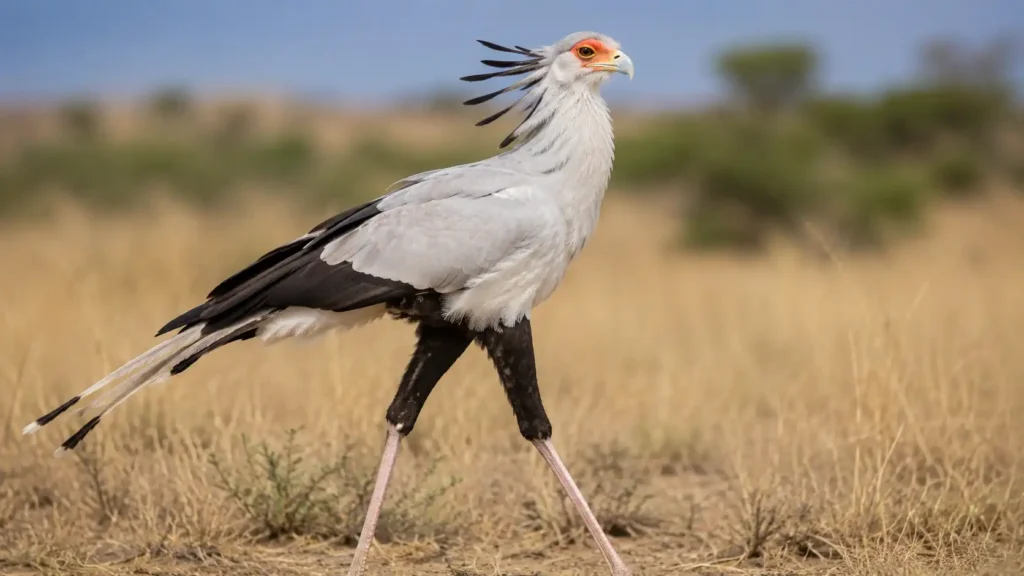
The Secretary Bird is an impressive bird of prey, characterized by its long, slender legs and striking plumage. Typically found in open grasslands and savannas across sub-Saharan Africa, these birds are known for their unique hunting style, which involves stalking and striking at snakes, their primary prey.
Adapted for this lifestyle, the Secretary Bird boasts remarkable long legs that provide both speed and agility, allowing it to navigate its environment effortlessly. Its potent combination of excellent vision and hunting skills make it a successful predator, as it primarily feeds on a diet that includes snakes, lizards, and small mammals, using its long legs to deliver swift, powerful strikes.
Fun Facts:
- The Secretary Bird can reach heights of up to 4 feet, making it one of the tallest birds of prey.
- Its distinctive crest of feathers resembles a quill pen, leading to its unique name.
- These birds are known for their elaborate courtship displays, which include intricate dance moves.
- Secretary Birds are not closely related to other birds of prey but belong to their own family, Sagittariidae.
- A single Secretary Bird can consume over 100 snakes in a year, showcasing its prowess as a snake hunter.
- They are also ground-nesting birds, often building their nests in acacia trees or tall shrubs, providing safety for their chicks.
Purple Gallinule
Scientific Name: Porphyrio Martinicus
The Purple Gallinule is a striking waterbird known for its vibrant plumage and distinctive long legs. Usually found in wetlands, marshes, and along the edges of lakes in North America, these birds exhibit both grace and agility as they navigate through dense vegetation and shallow waters.
Their colorful bodies, highlighted by a deep purple hue paired with green and yellow accents, make them an eye-catching presence in their habitats. Adapted for life in marshy environments, the Purple Gallinule has long, slender legs that allow it to walk on floating vegetation with ease.
They are also remarkable climbers, often seen ascending thick reeds and rushes to forage for their main dietary staple: tender seeds and stems of wetland plants. Their flexible wrists and ability to pivot while perched help them maneuver through the dense foliage to find food and evade predators.
Fun Facts:
- The Purple Gallinule’s vivid coloration can vary depending on the light, creating a captivating visual spectacle.
- These birds are excellent swimmers, often using their long toes to paddle through water with remarkable speed.
- Their diet is not limited to plants; they also consume insects and small fish when available.
- Purple Gallinules are known for their unique vocalizations, ranging from whistles to croaks, that add to their personality.
- During breeding season, males engage in elaborate displays to attract females, showcasing their striking feathers.
- They build their nests above water using reeds and grasses, which helps protect their young from predators.
Green Heron
Scientific Name: Ardea cinerea
The Green Heron, known scientifically as *Butorides virescens*, boasts a striking appearance with its dark greenish-blue back, chestnut neck, and slender physique. This medium-sized wader thrives in freshwater habitats like marshes, ponds, and rivers, where it employs stealth and patience to catch fish and amphibians.
Adaptations play a crucial role in its survival; the Green Heron’s long legs enable it to wade gracefully through shallow waters, while its remarkable climbing abilities allow it to perch on branches and hunt from above.
Fun Facts:
- The Green Heron is known for its unique hunting technique, often using tools like leaves or twigs to lure fish.
- These birds are highly adaptable and can thrive in both urban and rural environments.
- A group of Green Herons can be referred to as a “baker’s dozen” or simply ‘herons.’
- They are also known for their loud and distinctive calls, especially during mating season.
- Green Herons have been observed engaging in playful behavior, such as dropping and catching small objects.
- Their striking plumage may change slightly with the seasons, making them a visual delight throughout the year.
Jabiru
Scientific Name: Jabiru Mycteria
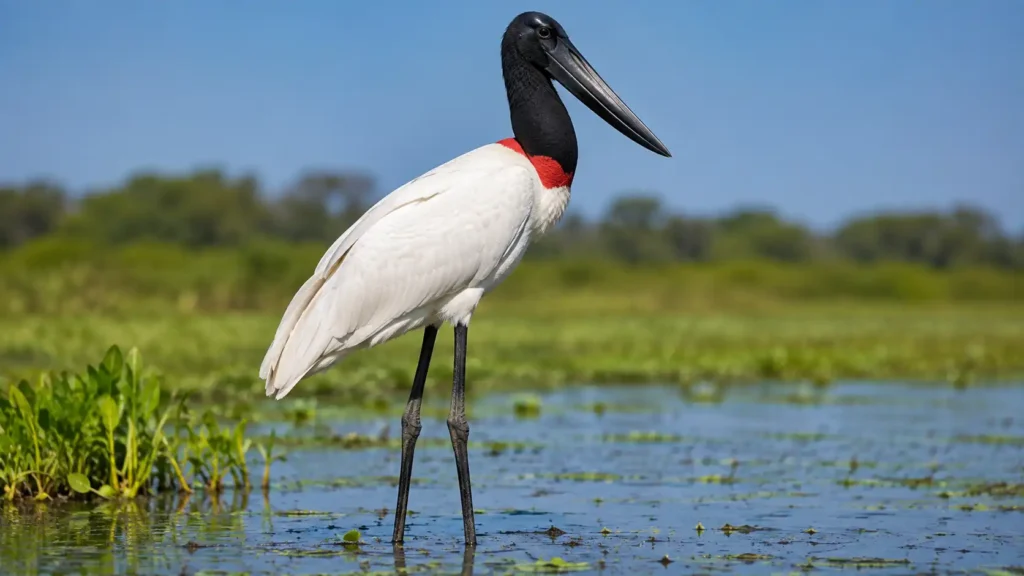
The Jabiru, scientifically known as *Jabiru mycteria*, is a strikingly tall stork found primarily in wetlands across Australia, parts of Asia, and Africa. With long, slender legs and a large, distinctive beak, this bird is often seen gracefully wading through shallow waters, foraging for fish and amphibians.
Adapted perfectly for its habitat, the Jabiru boasts impressive flight capabilities, soaring above vast expanses with its wide wingspan. Its diet primarily consists of aquatic prey, making use of its long legs to probe mud and shallow waters, while its strong neck allows it to access deeper areas.
Fun Facts:
- The Jabiru can reach heights of up to 5 feet, making it one of the tallest flying birds.
- They often build massive nests perched high in trees, which can be up to 2 meters wide!
- The bird’s striking black-and-white plumage makes it easily recognizable against the lush backdrop of its habitat.
- Juveniles have a completely different appearance, showcasing a mottled brown coloration until they mature.
- Jabirus plays an important role in their ecosystem by helping to control fish populations and maintaining wetland health.
- They typically mate for life and are known for their elaborate courtship displays, which include synchronized dancing.
Purple Heron
Scientific Name: Ardea Purpurea
The Purple Heron is a stunning wader that showcases striking purple-brown plumage accented with slate and white details. Primarily found in wetlands across Europe and parts of Africa, this elegant bird thrives in shallow marshes and reed beds, where it hunts fish and amphibians with stealth and precision.
Known for its solitary behavior, the Purple Heron often stands motionless, patiently waiting for its prey to come into striking range. Adapted for life in watery environments, the Purple Heron possesses long legs that aid in wading through deep waters.
Fun Facts:
- The Purple Heron can grow up to 90 cm in height, giving it a commanding presence in its habitat.
- Unlike many herons, this species is known for occasionally hunting at night, taking advantage of lower light conditions.
- They are skilled at using their long legs to tread carefully through muddy waters, making minimal noise to avoid scaring away potential prey.
- During the breeding season, these birds engage in elaborate mating displays, showcasing their vibrant plumage.
- Purple Herons are social during nesting time, often forming small colonies, which helps maximize security from predators.
- They primarily dine on fish, frogs, and aquatic invertebrates, playing a crucial role in maintaining the ecological balance of their freshwater habitats.
Shoebill
Scientific Name: Balaeniceps Rex
The Shoebill, with its strikingly large, shoe-shaped bill, is a fascinating bird that can be found predominantly in the swamps and wetlands of East Africa. These magnificent creatures exhibit a unique combination of grayish-blue plumage and long, spindly legs, allowing them to wade gracefully through their marshy habitats, where they deftly hunt for fish.
Adapted for both survival and efficiency, the Shoebill showcases incredible hunting prowess, blending seamlessly into its surroundings as it waits patiently for prey.
Its specialized diet primarily consists of lungfish and other aquatic species, and it utilizes its remarkable bill not only for catching food but also for producing distinct vocalizations that can carry over great distances.
Fun Facts:
- The Shoebill can reach heights of up to 4.5 feet, making it one of the tallest birds with long legs.
- It often stands motionless for long periods, displaying incredible patience while hunting.
- Despite its intimidating appearance, the Shoebill is known for its quirky behavior, often striking poses that resemble dance.
- These birds can live up to 35 years in the wild, making them a long-lived species.
- The Shoebill has a conservation status of “vulnerable” due to habitat loss, making it vital for conservation efforts to protect these unique wetlands.
- They have been nicknamed “whalehead” due to their distinctively large bill and unique silhouette.
Whooping Crane
Scientific Name: Grus Americana
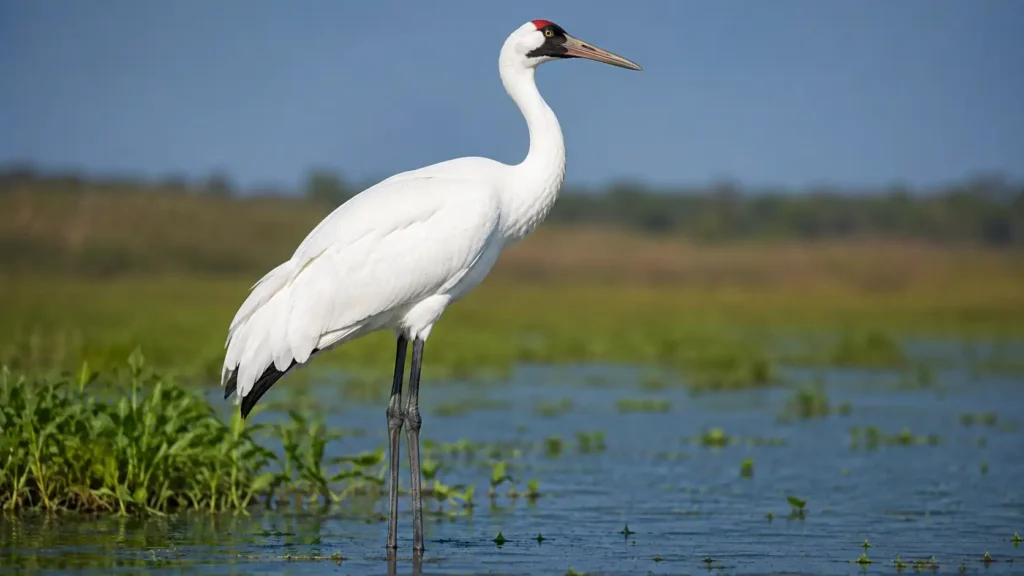
The Whooping Crane is a magnificent bird distinguished by its striking white plumage and long, slim legs. These cranes thrive in wetlands and grasslands, primarily found in North America, where they perform graceful courtship dances that are a spectacle to behold.
Beyond their breathtaking appearance, Whooping Cranes exhibit a strong sense of family, often seen foraging together in their natural habitats. Adapted for long-distance travel, the Whooping Crane has lengthy, slender legs that allow them to wade through shallow waters in search of food.
With a diet primarily consisting of aquatic plants, small fish, and invertebrates, these cranes have developed excellent foraging strategies and can easily navigate their wetland environments. Their long wings, paired with their resilience, enable them to cover vast distances during migration, showcasing their remarkable endurance.
Fun Facts:
- Whooping Cranes are one of the tallest North American birds, standing nearly five feet tall.
- Their distinctive, trumpeting calls can be heard over long distances, allowing them to communicate effectively within their flocks.
- These cranes are known for their impressive courtship dances, which involve elaborate movements and synchronized steps.
- The Whooping Crane population was once critically endangered, but conservation efforts have helped increase their numbers in the wild.
- A Whooping Crane can live up to 30 years in the wild, showcasing their long lifespan relative to other bird species.
- They typically mate for life, forming strong bonds that contribute to their family-centric behavior.
Reddish Egret
Scientific Name: Egretta rufescens
The Reddish Egret is a striking bird characterized by its graceful stature and long legs, ideal for wading through marshes and shallow coastal waters. With its distinctive plumage that ranges from a soft reddish-brown to slate gray, this elegant bird often displays a lively and playful hunting style, darting through the water in pursuit of fish.
Adapted for life near water bodies, the Reddish Egret possesses impeccable agility, making it a skilled hunter. Its long legs are not just for show; they allow this bird to navigate diverse aquatic environments, while its unique fishing technique often involves elaborate dances and fast, acrobatic movements to catch prey.
Fun Facts:
- Reddish Egrets are known for their lively fishing behavior, often stomping and flapping their wings to scare fish into striking distance.
- They are monogamous and engage in elaborate courtship displays to attract their mates.
- These birds are highly social and frequently forage in the company of other wading birds.
- Reddish Egrets typically nest in mangrove trees or low shrubs, providing safety from predators.
- Their striking coloration can vary based on age and breeding season, making each sighting unique.
- Although considered stable in population, they are sensitive to habitat disruption, underlining the importance of conservation efforts.
Cattle Egret
Scientific Name: Bubulcus ibis
The Cattle Egret is a striking bird often seen foraging in fields and pastures, distinguished by its white plumage that glistens in the sun. Found in warm, tropical, and subtropical regions, these birds frequently accompany livestock, feeding on insects stirred up by grazing animals.
Adapted to a range of environments, the Cattle Egret boasts long legs that allow it to wade through shallow waters and grasslands with ease. Its diet primarily consists of insects, particularly grasshoppers and flies, enabling it to thrive wherever it can find food sources, making it a versatile survivor in various habitats.
Fun Facts:
- Cattle Egrets can often be seen riding on the backs of cattle and other large animals, where they glean insects and other small prey.
- Their captivating courtship involves elaborate displays, including puffing out their feathers and bowing to attract mates.
- The Cattle Egret is one of the few bird species that have successfully expanded their range into urban areas.
- They are known for their remarkable adaptability, quickly adjusting to changes in their environment, such as seasonal shifts and habitat destruction.
- Thanks to their mutualistic relationship with livestock, Cattle Egrets often thrive in agricultural lands, making them beneficial to farmers.
- Their impressive migratory patterns can cover thousands of miles, showcasing their resilience in search of optimal feeding grounds.
Flamingos
Scientific Name: Phoenicopterus
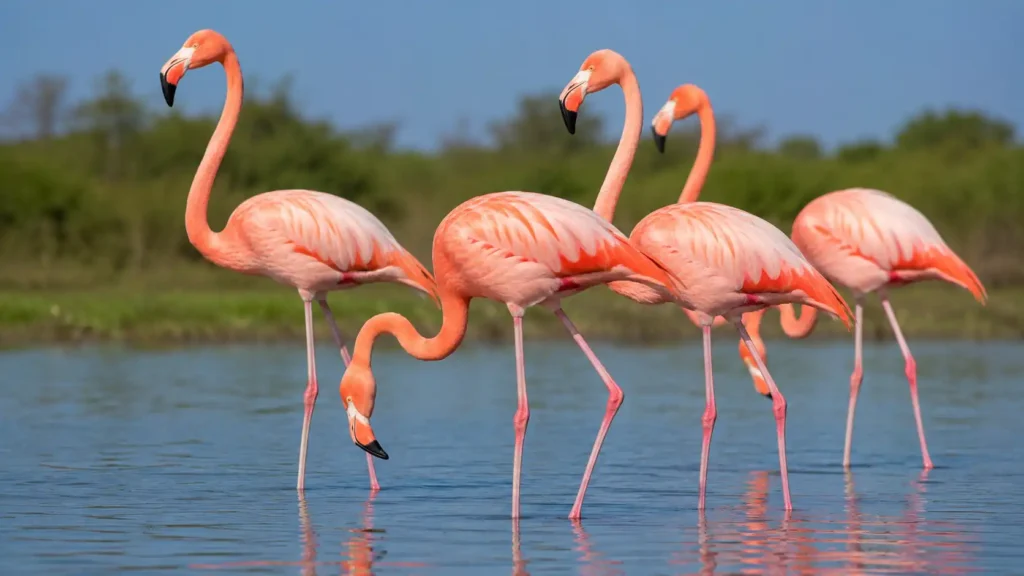
Flamingos are strikingly elegant birds known for their long legs and vivid pink plumage. Typically found in shallow lagoons and muddy wetlands, these social creatures thrive in large flocks, engaging in captivating synchronized movements during courtship and feeding rituals.
Adapted to their aquatic lifestyle, flamingos possess specialized feet that enable them to wade through deep mud while maintaining balance. Their diet primarily consists of algae and shrimp, which is responsible for their stunning coloration. Many long-legged birds use their strong legs for walking, running, and finding food.
Fun Facts:
- Flamingos can stand on one leg for extended periods, a behavior thought to conserve body heat.
- Their pink color comes from the carotenoids in their diet, showcasing the influence of nutrition on appearance.
- A group of flamingos is called a “flamboyance,” aptly named for their vibrant look and lively behavior.
- They can fly up to 37,000 feet, making them one of the highest-flying birds.
- Flamingos can live over 30 years in the wild, demonstrating their adaptability and resilience.
- Despite their size, flamingos have very few natural predators, primarily due to their communal living and large flock sizes.
Great Blue Heron
Scientific Name: Ardea Herodias
The Great Blue Heron is a striking bird with a stately appearance, showcasing long legs and a distinctive blue-gray plumage. Typically found in wetlands, marshes, and along coastlines, this wading bird is a master of patience, often standing still for extended periods while hunting for fish and other prey.
Adapted for life near water, the Great Blue Heron has long, slender legs that allow it to wade through shallow waters gracefully. Its sharp eyesight and keen hunting skills are complemented by its unique flexible neck, enabling it to strike quickly at unsuspecting fish or amphibians.
Many long-legged birds hunt frogs in shallow water and wetlands, making them important frog predators. Explore our guide to animals that eat frogs to discover more frog-eating species.
Fun Facts:
- Great Blue Herons can stand up to 4.5 feet tall, making them the largest heron species in North America.
- Their wingspan can reach an impressive 6.5 feet, allowing for powerful, gliding flight.
- These birds exhibit a fascinating nesting behavior, often forming colonies known as heronries.
- A Great Blue Heron can consume up to a pound of food each day, primarily consisting of fish, but they also enjoy frogs and small mammals.
- During courtship, males perform elaborate displays, such as bowing and puffing up their plumage, to attract females.
- They are known for their solitary hunting techniques, but can occasionally be spotted fishing in groups during plentiful seasons.
Ostrich
Scientific Name: Struthio Camelus
The ostrich, the world’s largest bird, boasts long, sturdy legs that allow it to sprint at impressive speeds, reaching up to 45 miles per hour. Primarily found in the open savannas and grasslands of Africa, ostriches are social animals often seen in groups, showcasing a mix of vibrant plumage and a distinctive body shape that helps them blend seamlessly into their environment.
Adapted to survival in harsh conditions, ostriches have exceptional eyesight and can see for miles, helping them detect predators from afar. Their powerful legs are not just for speed; they can deliver a formidable kick, making them effective at defending themselves.
With a diet primarily consisting of plants, leaves, and seeds, these birds exhibit unique behavioral adaptations, foraging for their bamboo-inspired diet in varied terrains while having flexible wrists to help them navigate their surroundings efficiently.
Fun Facts:
- Ostriches can run faster than horses and outpace most predators.
- Their eyes are larger than their brains, giving them superior vision.
- Despite their size, ostriches can’t fly, but they excel at running.
- The ostrich egg is the largest of any bird, weighing up to 3 pounds!
- They have a complex social structure often led by a dominant male.
- Ostriches can go for long periods without water, obtaining moisture from their food.
Black-Winged Stilt
Scientific Name: Himantopus Himantopus
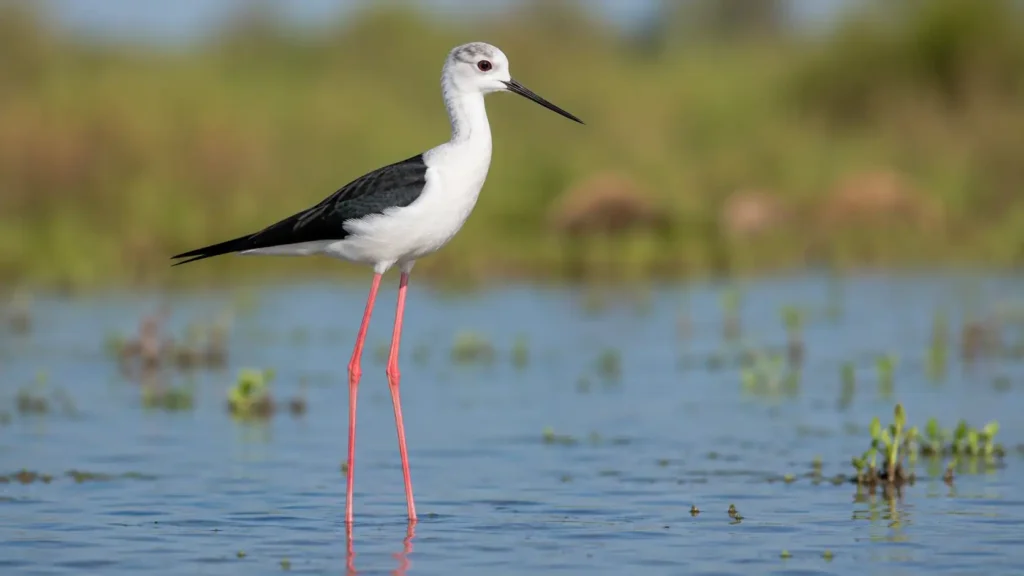
The Black-winged Stilt is a striking bird known for its long, slender legs and distinctively black and white plumage. These elegant birds typically inhabit shallow wetlands, marshes, and estuarine environments where they can forage for small invertebrates and aquatic life.
Their agile behavior includes probing the mud with their specialized beaks, a skill honed over time for optimal feeding. Adapted perfectly to their environments, Black-winged Stilts have remarkably long legs that allow them to wade through water effortlessly.
Their diet predominantly features insects and crustaceans, which they diligently search for in the mud. With flexible wrists enabling them to maneuver with grace, these birds are also known to showcase impressive flight skills when evading predators.
Fun Facts:
- Black-winged Stilts are social birds, often found in groups, where they communicate through a variety of calls.
- Their long legs can measure up to 15 inches, making them some of the tallest waders in their habitats.
- During breeding season, males engage in elaborate courtship displays, including synchronized flying and striking poses.
- These birds are highly protective of their nests, which are typically built in low vegetation near water.
- Black-winged Stilts demonstrate strong parental instincts, with both parents participating in caring for their young.
- Their unique foraging technique involves a rhythmic, sweeping movement of their beaks, allowing them to stir up prey from the substrate.
White-Faced Ibis
Scientific Name: Plegadis chihi
The white-faced ibis, scientifically known as *Plegadis chihi*, is a wading bird characterized by its long, slender legs and striking iridescent plumage, blending shades of green and bronze. Found primarily in shallow marshes and wetlands across North America, these birds exhibit social behavior, often seen foraging in groups as they probe the mud for invertebrates.
Their adaptations make them exceptional foragers; their long legs allow them to wade through water while keeping their bodies dry. With a diet primarily consisting of insects and crustaceans, they possess flexible wrists that enable dexterous movements for catching prey.
Fun Facts:
- The white-faced ibis has a distinct, bald face, which helps them stay cooler in hot climates.
- They are most active during dawn and dusk, allowing them to avoid daytime predators.
- Unlike many birds, these ibises roost in trees rather than on the ground, adding an extra layer of safety.
- Their glossy feathers can appear more vibrant depending on the angle of the sunlight.
- They engage in a fascinating courtship display that includes synchronized aerial acrobatics.
- Due to habitat destruction, their populations are monitored closely, making conservation efforts vital for their future.
Tricolored Heron
Scientific Name: Egretta Tricolor
The scientific name of the Tricolored Heron is *Egretta tricolor*. This elegant bird features a striking mix of deep blue-gray plumage, a white chest, and a russet-colored neck, making it a magnificent sight in coastal and freshwater habitats.
Found primarily in wetlands and marshes throughout North America, it is known for its patience and grace as it wades through shallow waters in search of fish and other small aquatic creatures.
With notable adaptations for survival, the Tricolored Heron has long legs that allow it to navigate through different water depths effortlessly. This bird’s excellent hunting technique involves standing still and then launching into action to catch prey with lightning-fast strikes.
Fun Facts:
- Tricolored Herons can reach up to 27 inches in height with wingspans of nearly 40 inches.
- They are solitary feeders, often hunting alone or in small groups.
- Their long legs help them to wade into deeper waters where fish tend to congregate.
- During the breeding season, their plumage becomes more vibrant, displaying shades of purple and blue.
- These herons have a special patience for fishing, often standing still for long periods before striking with precision.
- The Tricolored Heron is known for its elaborate courtship displays, including intricate dances and vocalizations.
Sandhill Crane
Scientific Name: Grus Canadensis
The Sandhill Crane, with its towering stature and graceful movement, is easily recognized by its long legs and slender neck. These magnificent birds typically inhabit wetlands, grasslands, and marshes, where they can find ample food and nesting sites, making them a common sight across North America.
Known for their elaborate courtship dances and characterized by a distinctive trumpeting call, Sandhill Cranes are social creatures that often travel in large flocks, showcasing their strong bonding behavior during migrations.
Their diet mainly consists of grains, seeds, and small aquatic animals, which they skillfully forage for in fields and marshes. Notably, their flexible wrists allow them to maneuver effectively while foraging, showcasing their unique survival strategies in diverse environments.
Fun Facts:
- Sandhill Cranes can reach heights of up to 4 feet and have wingspans that stretch nearly 7 feet.
- They are one of the oldest bird species still in existence, dating back over 2.5 million years.
- Their migration cycle can cover thousands of miles, often traveling from Canada to Mexico.
- Sandhill Cranes can live up to 20 years in the wild, showcasing their resilience.
- Their courtship displays involve intricate dances, involving bowing, jumping, and even picking up objects.
- During the breeding season, they form strong monogamous pairs, often bonding for life.
Snowy Egret
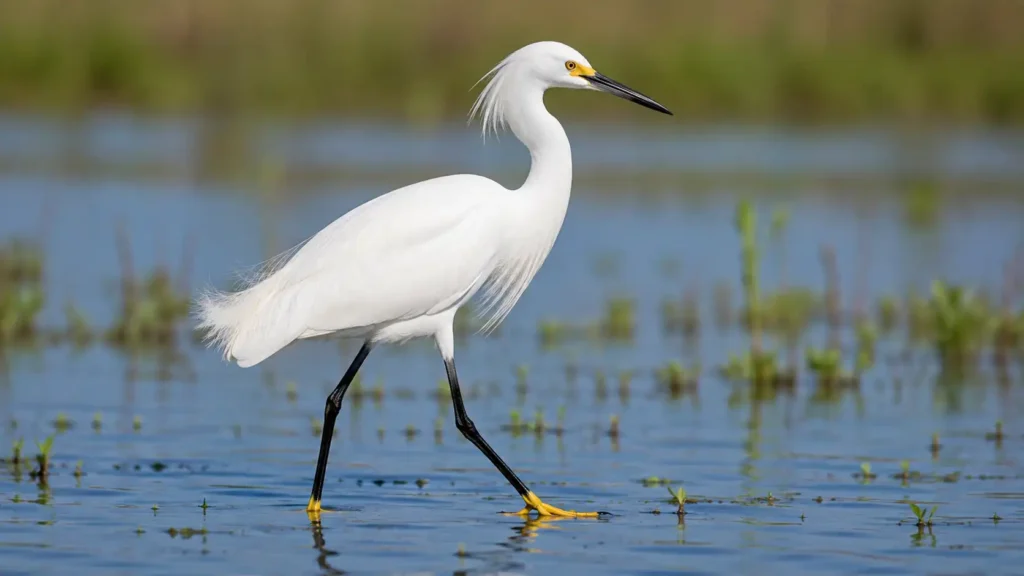
Scientific Name: Egretta Thula
The Snowy Egret is an elegant water bird, easily recognized by its striking white plumage and long, slender legs that give it a graceful stance. Typically found in shallow coastal waters or wetlands, they exhibit a keen hunting behavior, often seen stalking prey with precise movements and rapid strikes.
These birds have adapted perfectly to their aquatic environment, thanks to their long legs that allow them to wade easily through various water depths. Their diet primarily consists of fish and small invertebrates, and they utilize their flexible wrists to maneuver through dense vegetation while foraging.
Fun Facts:
- Known for their striking yellow feet, Snowy Egrets use these vibrant appendages to lure fish close enough for a catch.
- During breeding season, they sport impressive long feathers that trail behind them, adding to their allure.
- Snowy Egrets can be quite social, often seen in large groups wading together in search of food.
- Their feeding technique, called “foot-stirring,” involves tapping the water’s surface to startle fish into view.
- Unlike many birds, they display remarkable agility, allowing them to pivot and change direction rapidly when hunting.
- Despite their beautiful appearance, Snowy Egrets were once heavily hunted for their feathers, leading to significant conservation efforts to protect their populations today.
Roseate Spoonbill
Scientific Name: Platalea Ajaja
The Roseate Spoonbill is a striking wading bird known for its vibrant pink plumage and elongated, spoon-shaped bill. Typically found in marshes, wetlands, and coastal areas, these birds are highly social, often gathering in large flocks and engaging in elaborate courtship displays during the breeding season.
Their graceful stance on long legs allows them to wade through shallow waters while foraging for crustaceans and small fish. Adapted for a life on the water, Roseate Spoonbills possess unique feeding techniques, using their bill to sweep through mud and shallow waters to catch prey.
Their resilient nature enables them to thrive in various habitats, including mangroves and estuaries, while their fascinating nesting behavior showcases the importance of collaboration, as they often build nests in communal rookeries.
Fun Facts:
- Roseate Spoonbills derive their vibrant color from the carotenoid pigments in their diet.
- They can be found from the southern United States down to South America.
- These birds have a wingspan of nearly three feet, making them an impressive sight in flight.
- Roseate Spoonbills are often observed engaging in playful behaviors, such as splashing in water.
- Their distinctive bill shape is perfectly adapted to their feeding habits, giving them a unique edge in the wetlands.
- These birds can often be seen gracefully foraging in shallow waters at sunrise and sunset, showcasing their beauty amidst the serene landscape.
Gray Heron
Scientific Name: Ardea cinerea
The Gray Heron, distinguished by its tall stature and elongated legs, can often be spotted standing majestically along rivers, lakes, and marshes. With a striking gray-blue plumage and a sharp, pointed beak, this bird is a master at blending into its aquatic surroundings, making it an adept hunter of fish and small invertebrates.
Adapted to life near water, the Gray Heron’s long legs are perfect for wading through shallow waters, helping it navigate its habitat with ease. Its remarkable hunting skills are complemented by keen eyesight, allowing it to spot prey from a distance.
Fun Facts:
- Gray Herons can reach heights of up to four feet, making them one of the tallest birds in Europe.
- With a wingspan that can exceed six feet, these birds are capable of soaring gracefully over vast distances.
- They are often seen hunting alone, but during breeding season, they gather in colonies known as heronries.
- Their diet primarily consists of fish, but they also enjoy frogs, small mammals, and insects.
- Gray Herons are known for their interesting courtship rituals, which include elaborate displays of preening and bowing.
- They can live for over 15 years in the wild, showcasing their resilience against various environmental challenges.
Wood Stork
Scientific Name: Mycteria Americana
The Wood Stork, a remarkable bird with striking long legs, stands out with its white plumage and distinctive bald head. Commonly found in wetlands across the southeastern United States, this fascinating species thrives in shallow waters where it forages for fish and crustaceans.
Adapted to wade while hunting, its long legs not only provide stability but also allow it to navigate through muddy environments with ease. One of its most impressive adaptations is its ability to stand still for extended periods, waiting for the perfect moment to strike at its prey.
With a diet primarily consisting of fish, the Wood Stork has evolved a unique hunting strategy that relies on its excellent vision and tactile sense, helping it identify prey in the murky waters. Its flexible ankles allow it to maneuver effortlessly through its aquatic habitat, showcasing its remarkable climbing and wading abilities.
Fun Facts:
- Storks are known for their long, curved beaks, perfect for catching slippery fish.
- They often feed in groups, creating cooperative hunting strategies that enhance their catch.
- Unlike many birds, they rely heavily on their sense of touch to find food, often probing the water with their bills.
- During the breeding season, Wood Storks perform elaborate courtship displays with synchronized flying and dancing.
- These birds are social and can often be seen nesting in colonies, providing safety in numbers from predators.
- The Wood Stork’s populations are closely monitored as they serve as indicators of wetland ecosystem health.
Emu
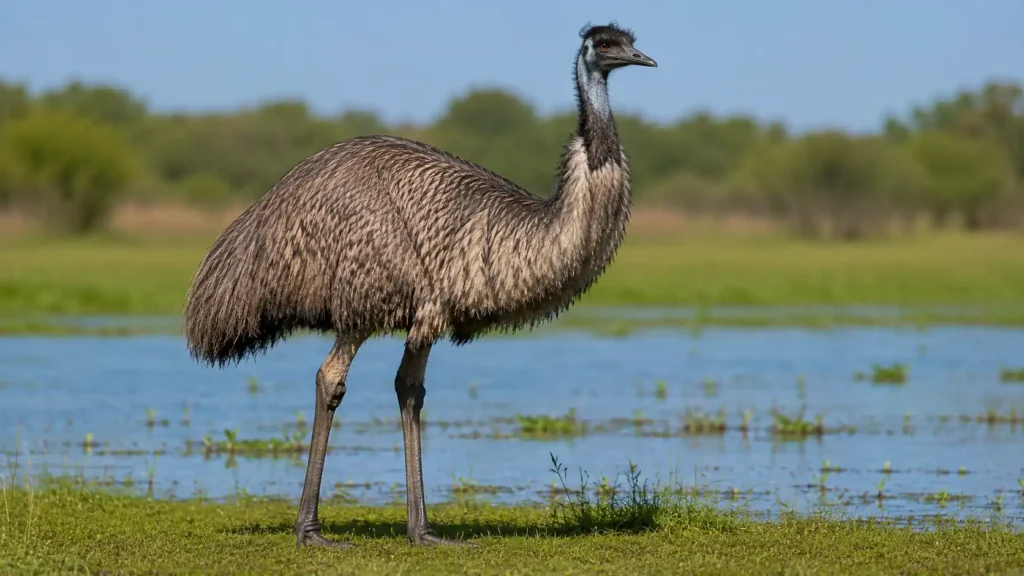
Scientific Name: Dromaius Novaehollandiae
The Emu, a remarkable flightless bird native to Australia, stands tall with long legs designed for speed and efficiency. These stunning creatures flaunt fluffy, brown feathers and can be found in a variety of habitats, from open forests to grasslands, navigating their environment with ease due to their keen sense of sight and hearing.
Adapted to the Australian outback, Emus are surprisingly agile despite their size, able to run at speeds of up to 30 miles per hour. Their diet primarily consists of seeds, fruits, and insects, making them opportunistic foragers. With strong, flexible legs that allow them to cover great distances in search of food and water, Emus have evolved to thrive in their arid surroundings.
Fun Facts:
- Emus can run up to 30 mph, making them one of the fastest birds on land.
- They have a unique vocalization that resembles a deep booming sound, often used to communicate.
- Emus are known to have excellent eyesight, allowing them to spot predators from far away.
- The males are responsible for incubating the eggs and caring for the chicks after hatching.
- Emus can travel long distances in search of food, sometimes covering up to 100 km in a day.
- They play a vital role in their ecosystem by dispersing seeds, promoting plant growth across their habitat.
Read May Also: 25 Weird Creatures in the World: Strange Creatures With Amazing Features
Final Thoughts
The fascinating world of birds with long legs is a testament to nature’s ingenuity. The top 25 birds featured in this article exemplify how various species have evolved to utilize their long limbs for survival and efficiency in different environments.
From wading through shallow waters to traversing vast landscapes, these birds illustrate the remarkable balance of form and function in the avian world. As you reflect on these stunning creatures, consider the vital roles they play within their ecosystems.
FAQs
What Are Some Tall Wading Birds?
Some well-known Tall Wading Birds include the Great Blue Heron, Great Egret, Gray Heron, Purple Heron, and Wood Stork. They use their long legs to walk through shallow water while searching for food.
What Bird Has Long, Thin Legs?
The Black-winged Stilt is famous for its extremely long, thin legs. Other birds with similar legs include Flamingos, Stilts, Herons, and Egrets.
What Are 5-Letter Bird Names?
Some 5-Letter Bird Names include Egret, Crane, Heron, Ibis, and Terns. These birds can be found in different habitats around the world.
What Kind Of Bird Is Tall?
Many Tall Birds are wading birds, cranes, and flightless birds. Examples include Ostriches, Emus, Cranes, Herons, Egrets, and Flamingos.
What Are The Tall, White Birds With Long Legs?
Great Egrets are tall, white birds with long black legs and long, pointed yellow bills. They are commonly found near Wetlands, Rivers, Lakes, and Marshes.
What Bird Is 4 Feet Tall?
The Great Blue Heron can reach around 4 feet in height, making it one of the tallest common wading birds in North America. Great Egrets can also approach 4 feet tall.
What are the Types of Birds with Long Legs?
Common long-legged birds include herons, egrets, storks, cranes, flamingos, ibises, spoonbills, stilts, avocets, and ostriches. Most of them live near water, though some, like the ostrich and secretary bird, live on land.