
25 Types of Butterflies: Beautiful Butterflies You Should Know
Butterflies are among the most beautiful insects in the world. Their colorful wings, delicate patterns, and graceful flight make them easy to recognize and fascinating to watch. There are thousands of butterfly species around the world, and each one has its own appearance, habitat, and survival adaptations.
You will discover 25 types of butterflies, including some of the most beautiful butterfly species from different parts of the world. You will also learn about their scientific names, habitats, diets, appearance, and interesting facts.
Types of Butterflies List
Here are 25 types of beautiful butterfly species you should know:
- Monarch Butterfly
- Blue Morpho
- Glasswing Butterfly
- Ulysses Butterfly
- Queen Alexandra’s Birdwing
- Peacock Butterfly
- Black Swallowtail
- Zebra Longwing
- Crimson Rose
- Red Admiral
- Common Blue
- Gulf Fritillary
- Malachite Butterfly
- Common Jezebel
- Old World Swallowtail
- Zebra Swallowtail
- Orange-Barred Sulphur
- Clipper Butterfly
- Comma Butterfly
- Scarlet Swallowtail
- Painted Lady
- Purple Emperor
- Apollo Butterfly
- Common Buckeye
- Common Bluebottle
Butterflies Types and Key Features
| Butterfly Name | Scientific Name | Main Feature | Habitat |
|---|---|---|---|
| Monarch Butterfly | Danaus plexippus | Orange-and-black wings | North & Central America |
| Blue Morpho | Morpho helenor | Brilliant blue wings | Central & South America |
| Glasswing Butterfly | Greta oto | Transparent wings | Central & South America |
| Ulysses Butterfly | Papilio ulysses | Bright blue wings | Australia & nearby regions |
| Queen Alexandra’s Birdwing | Ornithoptera alexandrae | Very large wingspan | Papua New Guinea |
| Peacock Butterfly | Aglais io | Large eyespots | Europe & Asia |
| Black Swallowtail | Papilio polyxenes | Black wings with yellow spots | North America |
| Zebra Longwing | Heliconius charithonia | Yellow-and-black stripes | Central & South America |
| Crimson Rose | Pachliopta hector | Red-and-black wing pattern | South Asia |
| Red Admiral | Vanessa atalanta | Red bands on dark wings | Europe, Asia & North America |
| Common Blue | Polyommatus icarus | Attractive blue wings | Europe & Asia |
| Gulf Fritillary | Agraulis vanillae | Orange wings with silver spots | North & South America |
| Malachite Butterfly | Siproeta stelenes | Green-and-black patterns | Central & South America |
| Common Jezebel | Delias eucharis | Yellow, red & white markings | South & Southeast Asia |
| Old World Swallowtail | Papilio machaon | Yellow wings with long tails | Europe & Asia |
| Zebra Swallowtail | Protographium marcellus | Black-and-white stripes | Eastern USA |
| Orange-Barred Sulphur | Phoebis philea | Bright yellow and orange wings | Americas |
| Clipper Butterfly | Parthenos sylvia | Blue, green & brown patterns | Asia & Australasia |
| Comma Butterfly | Polygonia c-album | Irregular wing edges | Europe & Asia |
| Scarlet Swallowtail | Papilio rumanzovia | Red-and-black wings | Southeast Asia |
| Painted Lady | Vanessa cardui | Orange, brown & white patterns | Worldwide |
| Purple Emperor | Apatura iris | Purple-blue wing shine | Europe & Asia |
| Apollo Butterfly | Parnassius apollo | Red or orange wing spots | European & Asian mountains |
| Common Buckeye | Junonia coenia | Large eyespots | North & Central America |
| Common Bluebottle | Graphium sarpedon | Blue-green wing bands | Asia & Australasia |
Monarch Butterfly
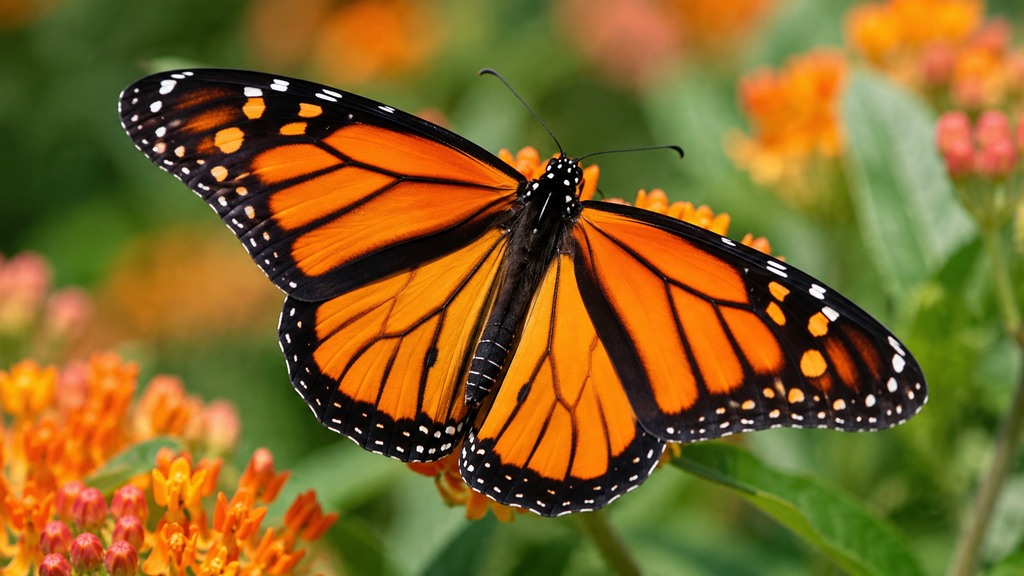
Scientific Name: Danaus plexippus
Family: Nymphalidae
Habitat: North and Central America, parts of South America
The monarch butterfly is one of the most recognizable pretty butterflies in the world. It has bright orange wings covered with black veins and white spots along the edges.
Monarchs are especially famous for their long-distance migration. Some populations travel thousands of miles between breeding and overwintering areas.
Their caterpillars mainly feed on milkweed plants. These plants provide chemicals that help make monarchs unpleasant to many predators.
Blue Morpho
Scientific Name: Morpho helenor
Family: Nymphalidae
Habitat: Central and South American rainforests
Diet: Fruit juices and other plant materials
The blue morpho is one of the most famous beautiful butterfly species. Its wings display an intense blue color that can appear almost metallic when sunlight reflects from them.
Interestingly, the brilliant blue color is mainly produced by the microscopic structure of the wing scales rather than ordinary blue pigment.Blue morphos usually live in tropical forests and often feed on fermenting fruits.
Glasswing Butterfly
Scientific Name: Greta oto
Family: Nymphalidae
Habitat: Central and South American forests
Diet: Flower nectar
The glasswing butterfly has almost transparent wings, making it one of the most unusual butterfly species in the world.
Its clear wings can make it difficult for predators to see against different backgrounds. The butterfly spends much of its life in tropical forest environments.
As caterpillars, glasswings feed on plants from the Cestrum group. Some of the chemicals obtained from these plants help protect the adults from predators.
Ulysses Butterfly
Scientific Name: Papilio ulysses
Family: Papilionidae
Habitat: Northern Australia, Papua New Guinea, Indonesia, and nearby islands
Diet: Flower nectar
The Ulysses butterfly is a stunning blue butterfly with large wings surrounded by dark borders. Its brilliant blue appearance makes it one of Australia’s most beautiful butterfly species. It is commonly associated with tropical forests and can often be seen flying around the forest canopy.
The Ulysses butterfly is also strongly associated with Queensland and is widely recognized as an important symbol of the region.
Queen Alexandra’s Birdwing
Scientific Name: Ornithoptera alexandrae
Family: Papilionidae
Habitat: Tropical forests of Papua New Guinea
Diet: Flower nectar
Queen Alexandra’s birdwing is one of the world’s largest butterfly species. Females can have a wingspan of around 30 centimeters.
The females have brown wings with contrasting markings, while males are smaller and display striking green and blue colors.
This rare butterfly has a very limited natural range, making it one of the most remarkable species for butterfly watchers and conservationists.
Peacock Butterfly
Scientific Name: Aglais io
Family: Nymphalidae
Habitat: Europe and temperate parts of Asia
Diet: Flower nectar
The peacock butterfly gets its name from the large eyespots on its wings. These markings look like eyes and can help startle predators.
Its wings have reddish-brown tones combined with blue, black, and cream eyespots. This beautiful butterfly can be found in gardens, woodland areas, and grassy habitats. Caterpillars commonly feed on stinging nettles.
Black Swallowtail
Scientific Name: Papilio polyxenes
Family: Papilionidae
Habitat: North America
Diet: Flower nectar
The black swallowtail has dark wings decorated with yellow spots, blue markings, and small red areas near the hindwings.
Like other swallowtail butterflies, it has tail-like extensions on its hindwings. Its caterpillars often feed on plants such as parsley, dill, fennel, and related plants, making this species familiar to many gardeners.
Zebra Longwing
Scientific Name: Heliconius charithonia
Family: Nymphalidae
Habitat: Southern United States, Central America, and northern South America
Diet: Nectar and pollen
The zebra longwing has long, narrow wings decorated with yellow stripes on a black background. This pattern gives the butterfly its zebra-like appearance. Unlike many butterflies, adults can obtain nutrients from both nectar and pollen. The species is often found around forests, gardens, and warm tropical habitats.
Crimson Rose
Scientific Name: Pachliopta hector
Family: Papilionidae
Habitat: South Asia
Diet: Flower nectar
The crimson rose is a striking and most beautiful butterfly with black wings, bright crimson patches, and a reddish body. It is one of the most attractive swallowtail butterflies found in South Asia.
Its bright colors can act as a warning to predators because the butterfly obtains defensive chemicals from plants eaten during its caterpillar stage.
Red Admiral
Scientific Name: Vanessa atalanta
Family: Nymphalidae
Habitat: Europe, Asia, North America, and North Africa
Diet: Flower nectar and tree sap
The red admiral has dark wings decorated with bright red bands and small white spots.It is a medium-sized butterfly that can live in different environments, including gardens, parks, woodland edges, and open grassy areas.
Adult red admirals visit flowers for nectar, while their caterpillars commonly use nettles as food plants.
Common Blue
Scientific Name: Polyommatus icarus
Family: Lycaenidae
Habitat: Europe, North Africa, and parts of Asia
Diet: Flower nectar
The common blue is a small pretty butterfly with attractive blue wings in males. Females are usually more brownish and can have orange markings.
It commonly lives in meadows, grasslands, gardens, and other open habitats. Although it is small, its bright wings make it one of the most beautiful small butterfly species.
Gulf Fritillary
Scientific Name: Agraulis vanillae
Family: Nymphalidae
Habitat: Southern United States, Central America, and South America
Diet: Flower nectar
The Gulf fritillary is an orange butterfly with black markings and attractive silver spots underneath its wings.
It is commonly found in warm open areas, gardens, and meadows. Passionflower vines are important food plants for its caterpillars, while adults visit flowers for nectar.
Malachite Butterfly
Scientific Name: Siproeta stelenes
Family: Nymphalidae
Habitat: Central and South America
Diet: Nectar, fruit, and other organic material
The malachite butterfly is named after the green mineral malachite because of its bright green and black wing pattern.
It is commonly found in tropical and subtropical forests.The unusual green pattern makes this butterfly easy to recognize and gives it a place among the world’s most colorful butterfly species.
Common Jezebel
Scientific Name: Delias eucharis
Family: Pieridae
Habitat: South and Southeast Asia
Diet: Flower nectar
The common Jezebel has white wings with black borders and bright yellow and red markings.Its colorful underside is particularly striking. These bright colors can act as warning signals to potential predators.
This butterfly can be found in a variety of habitats, including gardens, forests, and areas close to human settlements.
Old World Swallowtail
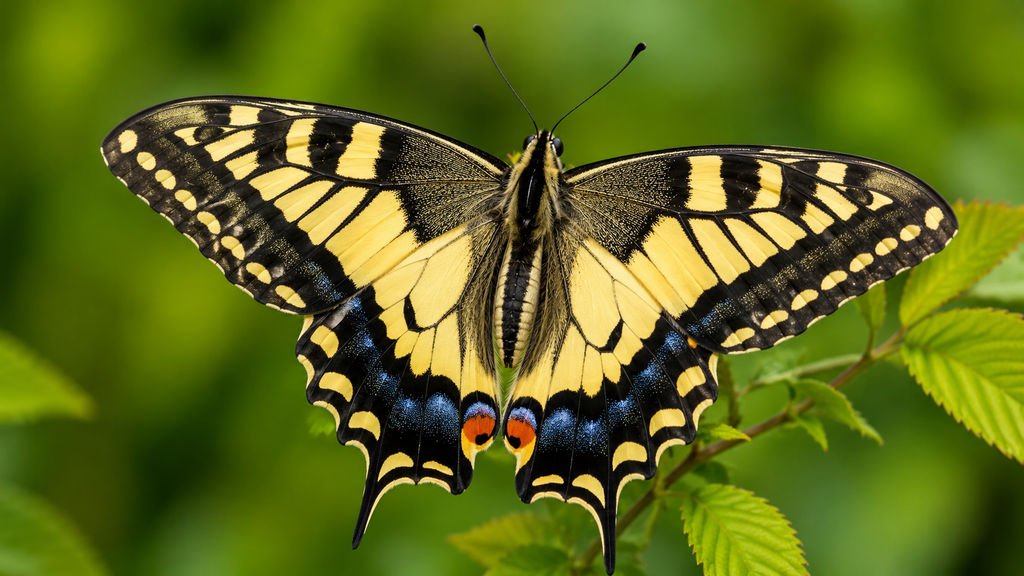
Scientific Name: Papilio machaon
Family: Papilionidae
Habitat: Europe, Asia, and parts of North America
Diet: Flower nectar
The Old World swallowtail has yellow wings with black markings, blue patches, and red spots near the hindwing tails.
Its long tail-like extensions are a characteristic feature of swallowtail butterflies.This species can live in meadows, gardens, wetlands, river valleys, and other areas where suitable host plants are available.
Zebra Swallowtail
Scientific Name: Protographium marcellus
Family: Papilionidae
Habitat: Eastern and southeastern United States
Diet: Flower nectar
The zebra swallowtail has pale wings covered with black stripes. Small red and blue markings can also be seen near the hindwings.
Its long tails give it the classic swallowtail appearance.The caterpillars mainly depend on pawpaw trees, so the butterfly is commonly associated with habitats where these plants grow.
Orange-Barred Sulphur
Scientific Name: Phoebis philea
Family: Pieridae
Habitat: Southern United States, Central America, and northern South America
Diet: Flower nectar
The orange-barred sulphur is a bright yellow butterfly with orange markings that are especially noticeable in males.
It is one of the larger sulphur butterflies and is often seen flying through warm, sunny habitats. Males may gather around wet soil or mud to obtain minerals and salts.
Clipper Butterfly
Scientific Name: Parthenos sylvia
Family: Nymphalidae
Habitat: South and Southeast Asia and parts of Australasia
Diet: Flower nectar
The clipper butterfly has attractive combinations of blue, green, brown, and black across its wings. It is known for fast flight and can often be found around forest clearings.Its caterpillars feed on particular host plants, while adults visit flowers for nectar.
Comma Butterfly
Scientific Name: Polygonia c-album
Family: Nymphalidae
Habitat: Europe and temperate Asia
Diet: Flower nectar, tree sap, and fruit
The comma butterfly gets its name from a small white comma-shaped mark on the underside of its hindwing.
Its orange-brown wings have irregular edges that help it resemble a dry leaf when resting. This natural camouflage can make the butterfly difficult for predators to notice.
Scarlet Swallowtail
Scientific Name: Papilio rumanzovia
Family: Papilionidae
Habitat: Southeast Asia and parts of Australasia
Diet: Flower nectar
The scarlet swallowtail is known for its dramatic black and deep-red wing pattern. It is a relatively large swallowtail butterfly and is especially striking when its wings are fully open.
The species can be found in tropical and subtropical habitats where its caterpillar food plants are available.
Painted Lady
Scientific Name: Vanessa cardui
Family: Nymphalidae
Habitat: Many parts of the world
Diet: Flower nectar
The painted lady is one of the most widely distributed butterflies in the world. Its wings have orange, brown, black, and white patterns, while the underside provides additional camouflage when the butterfly rests. Painted ladies are also known for their impressive migrations in some regions.
Purple Emperor
Scientific Name: Apatura iris
Family: Nymphalidae
Habitat: Woodlands of Europe and parts of Asia
Diet: Tree sap, honeydew, and other fluids
The purple emperor is a large butterfly known for the purple-blue shine that can appear on the wings of males when light hits them at certain angles.
This color is produced by the structure of the wing scales rather than simple pigmentation. The species is closely associated with woodland habitats and often spends time high in the tree canopy.
Apollo Butterfly
Scientific Name: Parnassius apollo
Family: Papilionidae
Habitat: Mountainous areas of Europe and Asia
Diet: Flower nectar
The Apollo butterfly has pale or white wings decorated with dark markings and distinctive red or orange spots.
It is commonly associated with sunny mountain slopes and rocky habitats. Its attractive appearance and specialized habitat make it a favorite among butterfly enthusiasts.
Common Buckeye
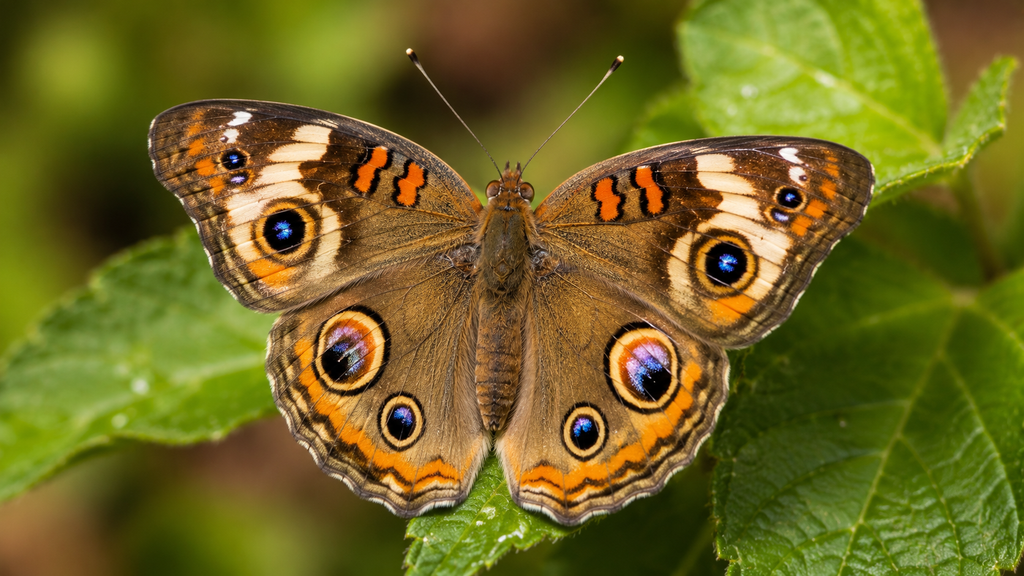
Scientific Name: Junonia coenia
Family: Nymphalidae
Habitat: North and Central America
Diet: Flower nectar
The common buckeye has several large eyespots on its wings. These markings can help confuse or frighten predators.
Its wings combine brown, orange, cream, blue, and black colors. It often lives in open areas such as fields, roadsides, gardens, and meadows.
Common Bluebottle
Scientific Name: Graphium sarpedon
Family: Papilionidae
Habitat: South and Southeast Asia and parts of Australasia
Diet: Flower nectar
The common bluebottle is a fast-flying swallowtail with dark wings crossed by bright blue-green bands.
Its colorful pattern makes it one of the most attractive butterflies found in tropical and subtropical regions. It is commonly seen around forests, gardens, and flowering plants.
Why Are Butterflies So Colorful?
Butterfly wings are colorful for several important reasons. Bright colors can help butterflies communicate, attract mates, warn predators, or confuse animals that try to eat them.
- Attracting Mates: Bright colors can help butterflies attract potential mates.
- Warning Predators: Some bright colors warn predators that a butterfly may be toxic or unpleasant to eat.
- Camouflage: Certain colors and patterns help butterflies blend into leaves, flowers, bark, and other surroundings.
- Mimicry: Some butterflies resemble other species that predators usually avoid.
- Scaring Predators: Eyespots and sudden flashes of color can startle or confuse predators.
- Temperature Control: Dark and light wing colors can help butterflies absorb or reflect sunlight and regulate their body temperature.
- Communication: Wing colors and patterns can provide visual signals to other butterflies of the same species.
You May Also Like: Top 25 Birds With Long Legs With Images and Facts
What Is the Difference Between Butterflies and Moths?
Butterflies and moths both belong to the Lepidoptera group, but they have some noticeable differences. Butterflies are usually active during the day, while most moths are active at night. Butterflies often have slender bodies and colorful wings, whereas many moths have thicker, hairy bodies and more muted colors.
Another difference is how they rest. Butterflies commonly hold their wings upright when resting, while moths often keep their wings flat or folded over their bodies. These are general differences, and there are exceptions to each rule.
| Feature | Butterflies | Moths |
|---|---|---|
| Activity | Mostly active during the day | Mostly active at night |
| Antennae | Usually have thin antennae with club-shaped tips | Often have feathery or thread-like antennae |
| Body | Usually slender and less hairy | Often thicker and more hairy |
| Wing Position At Rest | Often hold wings upright | Often rest with wings flat or folded over the body |
| Colors | Many species have bright and colorful wings | Many species have brown, gray, or muted colors, but some are very colorful |
| Cocoon/Pupa | Usually form a chrysalis without a silk cocoon | Many species form a cocoon, often using silk |
| Examples | Monarch, Blue Morpho, Peacock Butterfly | Luna Moth, Atlas Moth, Hawk Moth |
| Number of Species | Fewer species than moths | Much more numerous than butterflies |
Conclusion
Butterflies are much more than beautiful insects flying from flower to flower. Their colors, patterns, wing shapes, and behaviors are connected to survival, communication, feeding, and reproduction.
The 25 types of butterflies in this guide show just how diverse these insects can be. Whether you enjoy wildlife photography, gardening, or simply learning about nature, these beautiful butterfly species offer plenty of fascinating facts to explore.
FAQs
What Is The Most Beautiful Butterfly?
There is no single scientifically recognized most beautiful butterfly. The blue morpho, Ulysses butterfly, and Queen Alexandra’s birdwing are often admired because of their striking colors, large wings, or unusual patterns.
What Is The Most Colorful Butterfly?
Many butterflies have extremely colorful wings. The blue morpho, Ulysses butterfly, malachite butterfly, and common Jezebel are good examples of species with striking colors and patterns.
What Do Beautiful Butterflies Eat?
Adult butterflies mainly drink flower nectar, although some species also consume fluids from ripe fruit, tree sap, mud, and other natural sources. Caterpillars usually eat leaves from specific host plants.
Where Can You Find Beautiful Butterfly Species?
Beautiful butterfly species can be found in many habitats, including rainforests, gardens, meadows, woodlands, wetlands, and mountains. Tropical regions are especially rich in butterfly diversity.